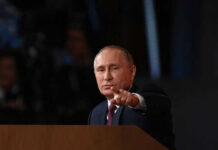

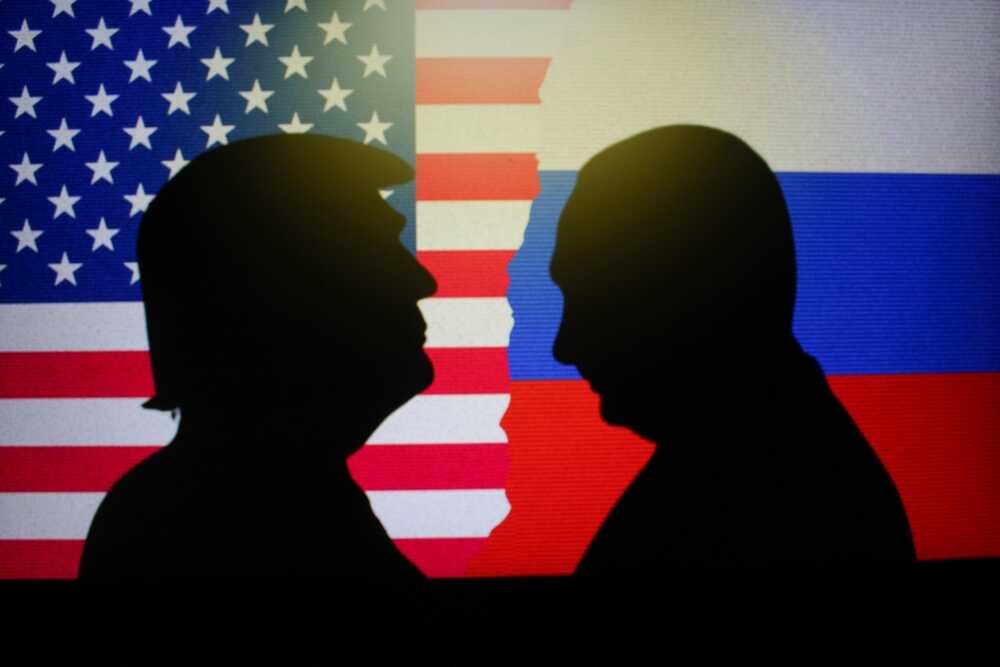
Russian President Vladimir Putin directed officials in late 2024 to begin preparations for potential live nuclear tests, a move that challenges international nonproliferation norms. The preparations come amidst heightened tensions between Russia and Western powers, particularly following NATO expansion and the ongoing conflict in Ukraine. The international community is closely monitoring the situation, as the potential resumption of nuclear testing by a major power raises concerns about the future of global security architecture.
Story Highlights
- Putin orders preparations for potential nuclear tests, defying global norms.
- Heightened tensions with the West following NATO expansion and the Ukraine conflict.
- Russia’s move challenges the Comprehensive Nuclear-Test-Ban Treaty (CTBT).
- Concerns about a renewed nuclear arms race and its impact on global security.
Putin’s Directive Signals Strategic Readiness
Vladimir Putin’s directive for preparations for potential live nuclear tests signals Russia’s readiness to confront Western powers amidst ongoing geopolitical friction. This action could potentially undermine the global norm against nuclear testing, which is central to the Comprehensive Nuclear-Test-Ban Treaty (CTBT).
The decision is set against a backdrop of deteriorating relations, including the 2014 annexation of Crimea and the conflict in Ukraine. Russia has also suspended key arms control treaties, including the INF Treaty in 2019 and New START in 2023, while highlighting advancements in its nuclear arsenal. The directive is viewed by some as a response to NATO’s expansion and perceived provocations from Western nations.
Putin orders plans to resume nuclear testing, raising global tension and security fears amid Russia-West standoff. #Russia #Putin #Nuclear #GlobalSecurity pic.twitter.com/3WFx4aGpU3
— APT News (@APT__News) November 6, 2025
Implications for Global Security and Nonproliferation
The consideration of resuming nuclear testing by a nuclear-armed state has created significant discussion regarding global security. Arms control professionals have noted that such a move would mark a shift from the decades-long ban and could potentially lead to an acceleration of the nuclear arms race, with other nuclear states potentially reevaluating their own policies.
The impact on the CTBT is notable, as Russia’s actions test the authority of a treaty not yet fully ratified by all key nations, including the U.S. and China. Immediate effects may include increased geopolitical tensions. Long-term risks include the potential erosion of nuclear nonproliferation norms and destabilization of the global security framework. Western governments and international organizations like the CTBTO are monitoring the situation and calling for continued adherence to nonproliferation standards.
International Response and Analysis
Western governments, including the United States and NATO allies, have responded to Russia’s nuclear signaling with statements of condemnation, reiterating the importance of upholding the nuclear test ban norm.
While some analysts, such as those from Russia Matters, have provided detailed analysis of the strategic context, there are varying perspectives on Russia’s intent. Some analysts suggest the move may function more as a strategic signal within the current geopolitical context than an indication of immediate operational necessity. Verification efforts are complicated by the lack of independent access to Russian test sites and the opaque nature of its decision-making process. The situation remains in flux, with the international community urging restraint and dialogue to mitigate further tensions.
Watch the report: LIVE: Russia’s Putin Mulls Testing Nuclear Weapons After Trump’s Move | Firstpost Live | N18G
Sources:
Are the U.S. and Russia Poised to Resume Nuclear Testing?
Putin orders proposals on possible Russian nuclear test | Reuters
Nuclear tensions rise: Putin orders preparations for possible tests