

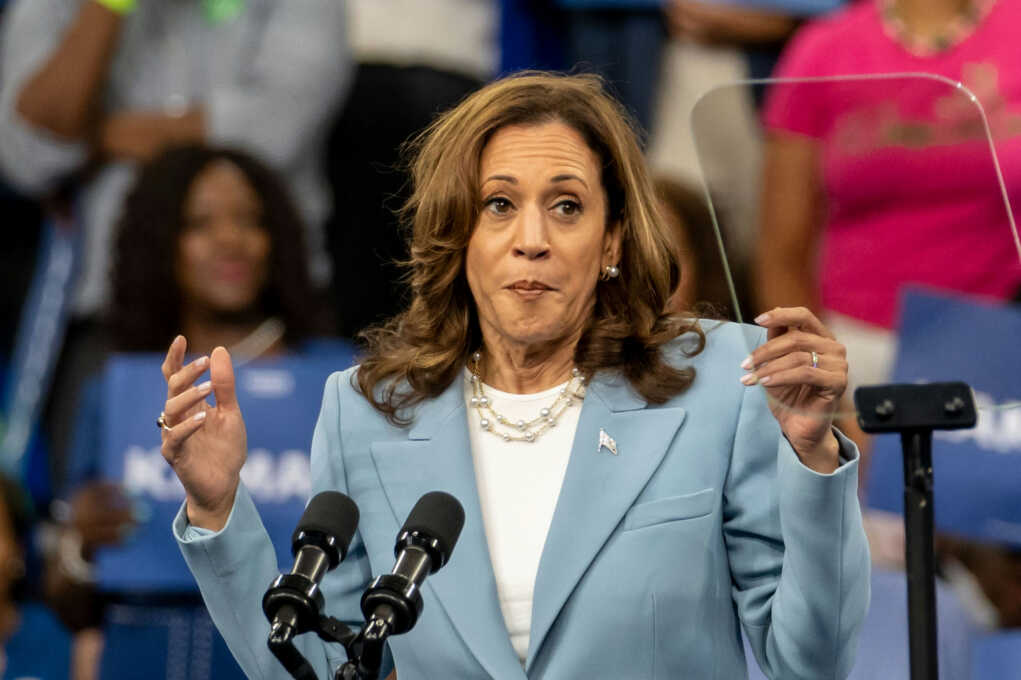
Kamala Harris is betting that voters will believe President Trump didn’t choose the Iran war—she claims Israel’s prime minister “pulled” him into it.
Quick Take
- Harris told a Michigan Democratic fundraiser that Israeli Prime Minister Benjamin Netanyahu “pulled” Trump into a war with Iran.
- Harris tied the conflict to risks for U.S. service members and to higher fuel costs, citing specific price claims not independently verified.
- The comments land amid fresh 2028 speculation around Harris and signal a Democratic push to frame Trump’s foreign policy as driven by outside influence.
- Available sources document Harris’s quotes but provide limited background on the war’s origins, decision timeline, or any Trump administration response.
Harris’s Detroit remarks put “foreign influence” at the center of her attack
Kamala Harris delivered her most pointed line at a Democratic luncheon fundraiser in Detroit, Michigan, where she argued President Donald Trump “entered a war” with Iran and “got pulled into it by Bibi Netanyahu.” Harris framed the conflict as something “the American people do not want,” emphasizing the danger to U.S. service members. The available coverage primarily establishes what she said and where she said it, not the underlying evidence for her claim.
Harris’s argument is politically potent because it compresses a complicated national-security question into a simple charge: that American sovereignty and decision-making were subordinated to an ally’s priorities. For conservative voters, that kind of allegation typically triggers scrutiny of who is shaping policy and why. For liberal voters, it offers a way to criticize war and tie it to broader concerns about influence, power, and accountability—without having to defend the administration’s specific military rationale.
Fuel-price talking points resonate, but the numbers aren’t verified
Harris also connected the Iran war to household costs, saying Americans are paying “at least $15 more to fill up their tank” and that diesel costs are “50% more” because of the conflict. Those figures appear as Harris’s claims rather than as independently confirmed data. That distinction matters: price spikes can be real, but attributing them to a single cause requires evidence the current reporting excerpt does not supply.
Still, the political logic is clear. Energy costs remain a high-salience issue after years of inflation pressure and widespread frustration about policies seen as restricting domestic production. When a major conflict is linked—fairly or not—to pain at the pump, it becomes an easy “kitchen table” hook for opposition messaging. Without additional sourcing, readers should treat the exact numbers as campaign rhetoric until confirmed by neutral economic reporting.
The bigger political play: 2028 positioning and a familiar Democratic narrative
Multiple reports describe Harris’s speech as part of a string of moves that suggest she is positioning herself for another presidential run in 2028. The “Netanyahu pulled him in” line also fits a broader Democratic pattern: criticize Trump not only on outcomes, but on alleged motivations and influences behind decisions. That approach aims to weaken the public’s trust in the president’s judgment, even when details about the conflict’s origins and escalation remain absent from the immediate coverage.
What’s missing: war timeline, decision chain, and any official rebuttal
That gap is significant for Americans across the political spectrum who already suspect Washington runs on narratives rather than transparency. Conservatives who prioritize limited government and constitutional accountability tend to demand a clear chain of responsibility when American troops and taxpayer dollars are involved. Liberals concerned about elite influence want similar clarity. Until more documentation emerges, Harris’s comments function mainly as a campaign argument—one that may stick precisely because the public lacks accessible, verified detail.
Former VP Harris says Israeli PM Netanyahu "pulled" President Trump into the war with Iran.
“He entered a war — got pulled into it by Bibi Netanyahu, let us be clear about that — entered a war that the American people do not want, putting at risk American service members.” pic.twitter.com/8AkIXhz0hk
— Fox News (@FoxNews) April 18, 2026
In the near term, the story to watch is not just Harris’s rhetoric but the follow-up: whether reporters, Congress, or the administration release concrete information that either substantiates or undercuts her claim about Netanyahu’s role. If Americans are expected to accept higher risks abroad and higher costs at home, the burden of proof should not rest on partisan soundbites. It should rest on verifiable facts, clearly communicated, from leaders accountable to the public.
Sources:
Harris slams war in Iran at Michigan Democrat luncheon amid 2028 speculation
Harris vs Trump: War and crisis in the Middle East