

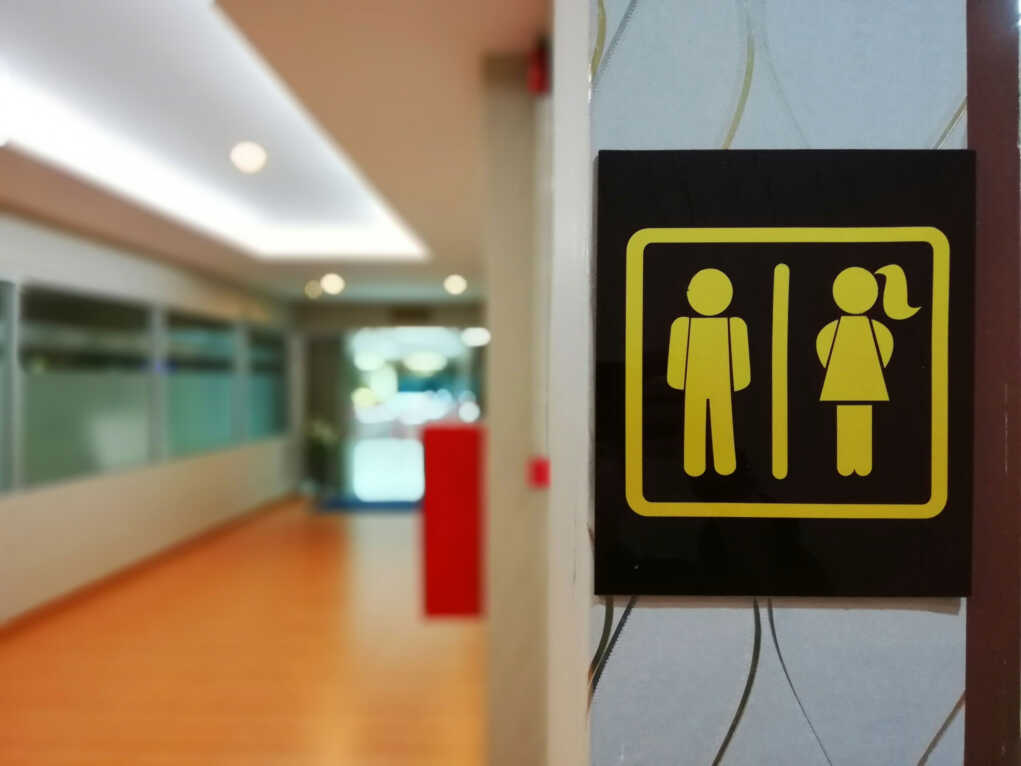
Britain’s top equality watchdog has finally said what common sense always knew: bathrooms and changing rooms must be based on biological sex, and the Left is furious.
Story Snapshot
- New official guidance in the United Kingdom confirms “sex” in equality law means biological sex, not self-declared gender.[5]
- The draft Code explains when single‑sex toilets, changing rooms, refuges and wards can lawfully exclude trans‑identified males.[2]
- Organisations are promised “clear, workable guidance” but must still assess proportionality case by case.[1][2]
- Trans‑activist groups admit exclusion is lawful in some cases, while attacking the guidance as discriminatory.[3][4]
Supreme Court Clarifies: Sex Means Biological Sex
The chain of events began in April 2025 when the United Kingdom Supreme Court ruled that, for the Equality Act 2010, “sex” must be interpreted as biological sex only.[5] According to the Equality and Human Rights Commission (EHRC), that means a person’s legal sex for Equality Act purposes is the sex recorded at birth, and even a Gender Recognition Certificate does not change that for this law.[5] This undercuts years of activist pressure to replace biological reality with subjective gender identity in law.
Following this ruling, the Equality and Human Rights Commission started revising its statutory Code of Practice for services, public functions and associations to reflect the court’s decision.[5] The United Kingdom government says the updated draft Code was specifically rewritten after the Supreme Court clarified that sex means biological sex and that trans‑identified people remain protected under the separate characteristic of gender reassignment.[1] In other words, the law now draws a firm line between biological sex and claimed gender identity while keeping both categories in view.
Government Backs Single-Sex Spaces With “Pragmatic” Guidance
The United Kingdom government describes the new draft Code as “clear, accessible guidance” designed to help organisations implement equality law in real‑world settings.[1] Officials say it will let service providers take a “pragmatic approach” that protects everyone’s needs, not just the loudest activist groups.[1] The government’s accompanying equality impact assessment explains that the Code gives detailed explanations of when separate and single‑sex services are lawful and even necessary, applying the Equality Act’s proportionality test.[2]
The equality impact assessment stresses that the changes were drafted to “accurately reflect the law as it has now been clarified” after the For Women Scotland case.[2] It says the revised sections are meant to help providers decide whether single‑sex provision meets the legal proportionality standard in their specific context.[2] That means public bodies, hospitals, leisure centres and charities now have a firmer legal footing when they set aside spaces for women and men based on sex, particularly where privacy, dignity and safety are at stake.
Bathrooms, Changing Rooms, Refuges: When Exclusion Is Lawful
The government’s equality impact assessment is explicit about what the guidance does on the most controversial question: access to intimate facilities.[2] The updated Chapter 13 explains when it is lawful to exclude trans‑identified people from services aligned with their acquired gender—such as domestic‑violence refuges, hospital wards, and changing rooms—and instead rely on biological sex.[2] That is a clear recognition that female‑only spaces can be protected in law, even when someone identifies as a woman but is biologically male.
UK transgender bathroom ban is the latest setback for the LGBT lobby
Single-sex toilets and change rooms in England, Wales and Scotland must exclude transgender men and women, due to a new code of practice of the Equality and Human Rights Commission.https://t.co/vlA12XMBCk— Brian Bonham (@Brian_Bonham_) May 22, 2026
At the same time, the assessment emphasises that providers should look for reasonable mitigations and alternatives so that people with the protected characteristic of gender reassignment are not simply shut out.[2] It notes that leaving a trans‑identified person with no service at all is “unlikely to be proportionate,” signalling that separate arrangements—such as single‑occupancy or mixed‑sex facilities—should be considered where practicable.[2] That balances women’s privacy concerns with the principle that everyone should have some form of access to essential services.
Trans Activists Attack Guidance While Admitting Limits
Trans‑advocacy organisation TransActual has reacted angrily to the direction of travel, condemning Equality and Human Rights Commission guidance on single‑sex spaces as exclusionary and harmful.[4] Yet in its own “Know Your Rights” material, TransActual concedes that single‑sex spaces can lawfully exclude trans‑identified people if the provider can show exclusion is proportionate and the least restrictive way to achieve a justified aim.[3] Its guidance also accepts that single‑sex services themselves are lawful where legal conditions are met.[3]
TransActual stresses that service providers are “not obliged to exclude trans people” and can choose inclusion without breaking the law, underscoring that the framework still relies on context and judgement rather than a mechanical ban.[3] The organisation worries that, in practice, deciding who is trans will often rest on perception, which could invite unfair treatment.[3] Those concerns highlight that while the law has moved back toward clear sex‑based definitions, the political fight over how far to apply them—in toilets, changing rooms and beyond—will continue in the courts and public debate.[2][3][4]
What This UK Fight Signals For American Conservatives
The United Kingdom’s experience offers a warning and a lesson for Americans watching similar battles over bathrooms, school policies and sports. British lawmakers and judges spent years letting activists blur the meaning of “sex,” only to face chaos when public services had to manage real‑world risks and privacy. Now the law is being dragged back toward biological reality, step by step, through litigation and regulatory rewrites.[1][2][5] The process has been slow, divisive and legally messy.
For conservatives in the United States, the key takeaway is that definitions matter up front. The Equality and Human Rights Commission’s new Code tries to restore ordinary people’s understanding—men’s and women’s spaces should be based on sex—while still applying a proportionality test to protect individual liberty.[1][2] Britain is discovering that once government embraces gender ideology, it takes years of effort to rebuild basic boundaries. That is a reminder to defend clear language and common‑sense protections before bureaucrats and activists erase them.
Sources:
[1] Web – Organisations receive clear, accessible guidance on how to …
[2] Web – Equality impact assessment – GOV.UK
[3] Web – Know Your Rights – TransActual
[4] Web – Bathroom guidance for trans people ‘the kind of policy you’d see in …
[5] Web – UK Supreme Court ruling on the meaning of sex in the Equality Act