

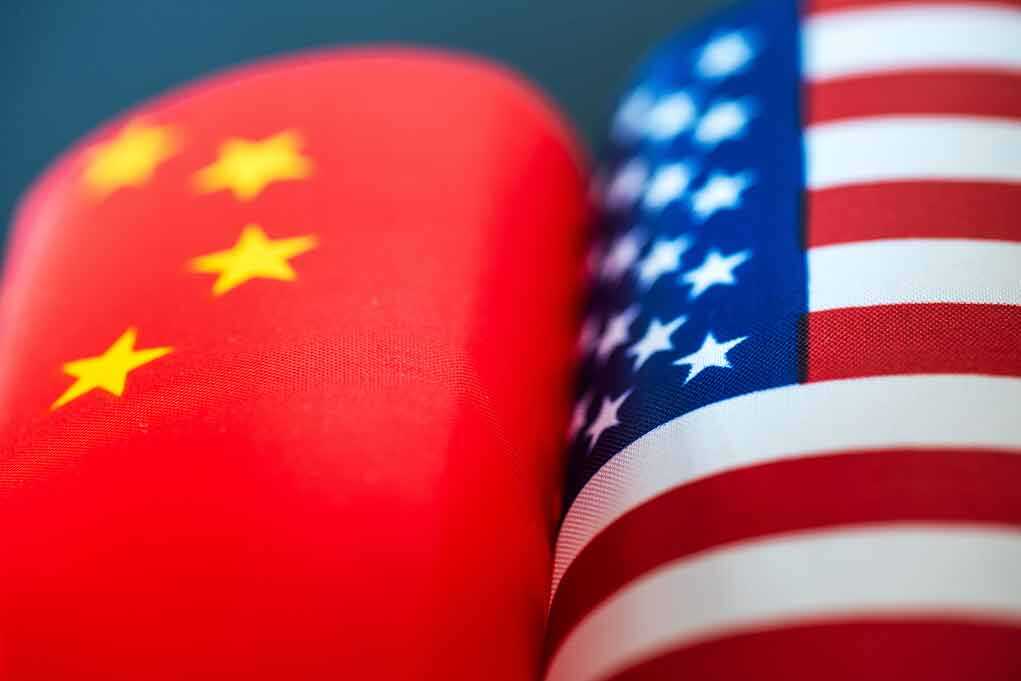
China is racing toward a fleet of nine aircraft carriers by 2035, while America’s aging 11‑carrier force struggles to build replacements fast enough to keep up.
Story Snapshot
- The Pentagon says China’s navy plans nine carriers by 2035, a historic Indo-Pacific buildup.
- China’s giant nuclear Type 004 supercarrier is already under construction and could rival U.S. Ford-class ships.
- The United States relies on one main carrier shipyard and faces decade-long build times and budget strain.
- China’s rapid shipbuilding outpaces its combat experience, giving America a window to act—but not much time.
China’s Carrier Surge and What the Pentagon Sees Coming
The United States Department of Defense’s 2025 report to Congress states that China’s navy plans to field a total of nine aircraft carriers by 2035. Today, China sails three carriers, including the new Type 003 Fujian, which was commissioned in late 2025. The report warns this would triple China’s current fleet and mark the largest carrier buildup in the Indo-Pacific since World War II. For American readers, that means China is not just catching up; it is planning to challenge U.S. naval power in its own backyard.
Defense analysis outlets report that Beijing’s shipyards are already busy turning this plan into steel. The Pentagon assessment, echoed by reporters and analysts, says China intends to add six more carriers over the next decade. These ships are aimed at locking down the South China Sea, pressuring Taiwan, and pushing U.S. forces further from East Asia. While some experts argue China may fall short of nine fully ready carriers, the official U.S. position is clear: American planners are treating this buildup as real and looming.
Type 004: A Nuclear Supercarrier Built for a New Era
China’s fourth carrier, known as Type 004, is already under construction at the Dalian Shipyard in northeastern China. Open-source satellite imagery and defense reporting say the hull was about one-quarter complete by early 2026, with sea trials possible around 2028 or 2029 and full service around 2030. Analysts estimate a massive displacement of 110,000 to 120,000 tons, nuclear propulsion, four electromagnetic catapults, and an air wing of more than 100 aircraft—bigger than most U.S. carriers.
Reports also describe large internal compartments believed to house nuclear reactor systems, putting China in an elite club that now includes only the United States and France. Nuclear power would let Type 004 stay at sea for months, with far greater range than China’s earlier diesel-fueled ships. With advanced catapult systems, the ship could launch stealth fighters and radar aircraft at full weight, mirroring American Gerald R. Ford–class operations. For U.S. conservatives, this is a serious sign: China is no longer just copying old Soviet designs; it is building ships meant to stand toe-to-toe with our best.
America’s Carrier Fleet: Strong but Strained
Right now, the United States Navy operates 11 nuclear-powered supercarriers, the backbone of American power projection. But a key problem stands out: America depends on one primary shipyard, Newport News, to build and refuel these giants, and new carriers like the Ford class can take well over a decade from start to finish. Delays, cost overruns, and workforce limits mean the Navy cannot quickly replace aging ships or increase its total carrier count without huge new spending and time.
Defense commentators warn that while the U.S. still leads in experience and global reach, China’s faster construction could slowly narrow America’s advantage in the Indo-Pacific if Washington ignores industrial bottlenecks. That matters for Trump-supporting readers who care about strong defense and smart spending. If carrier build times stretch to 15 years or more, America risks holding the same number on paper while China gains newer hulls and fresher technology in its backyard waters. The question is whether Congress will fix shipyard capacity or just throw more money at the problem.
China’s Weak Spots: Experience, Logistics, and Corruption
Despite the impressive hardware, China’s carriers still have big weaknesses that American officials and analysts point out. China’s navy has little to no combat history with carrier aviation; no pilot has fired weapons in real combat from a carrier deck in recent decades. Reports say the Fujian carrier currently runs at only about 60 percent of the flight tempo of a U.S. Nimitz-class ship, partly because of design compromises during construction. That means more steel is not yet equal to U.S. combat power.
Further, China’s support fleet—tankers, supply ships, and fifth-generation fighters—is still catching up. Analysts also highlight corruption scandals in China’s state shipbuilding firms, raising questions about quality control and honest reporting on progress. For Americans, this offers a narrow but real window: the United States still holds the edge in training, doctrine, and battle-tested crews. But that edge lasts only if we keep investing in readiness and do not let our own shipyards and budgets fall behind.
What This Means for U.S. Policy and Conservative Priorities
China’s carrier surge lands at the same time Washington debates giant defense budgets and long-term commitments in the Indo-Pacific. Many media voices hype China’s hardware to justify bigger Pentagon funding, sometimes without talking about China’s real operational limits. Conservative readers should care about both sides of this story: we must stay ahead of a serious rival, but we also must demand that every dollar spent strengthens U.S. power, not just props up slow, legacy programs.
America still has the strongest navy on Earth, with unmatched carrier experience and a global network of allies. But the Pentagon’s own report says China aims to triple its carrier fleet by 2035, and that plan is already underway in Dalian and other shipyards. Under a Trump administration that values peace through strength, this is a call to fix U.S. shipbuilding, guard taxpayer money, and keep American carriers ready, modern, and able to deter Chinese aggression—especially around Taiwan and the wider Indo-Pacific.
Sources:
19fortyfive.com, clashreport.com, defensenews.com, facebook.com, economist.com, scmp.com, linkedin.com, x.com, nids.mod.go.jp