

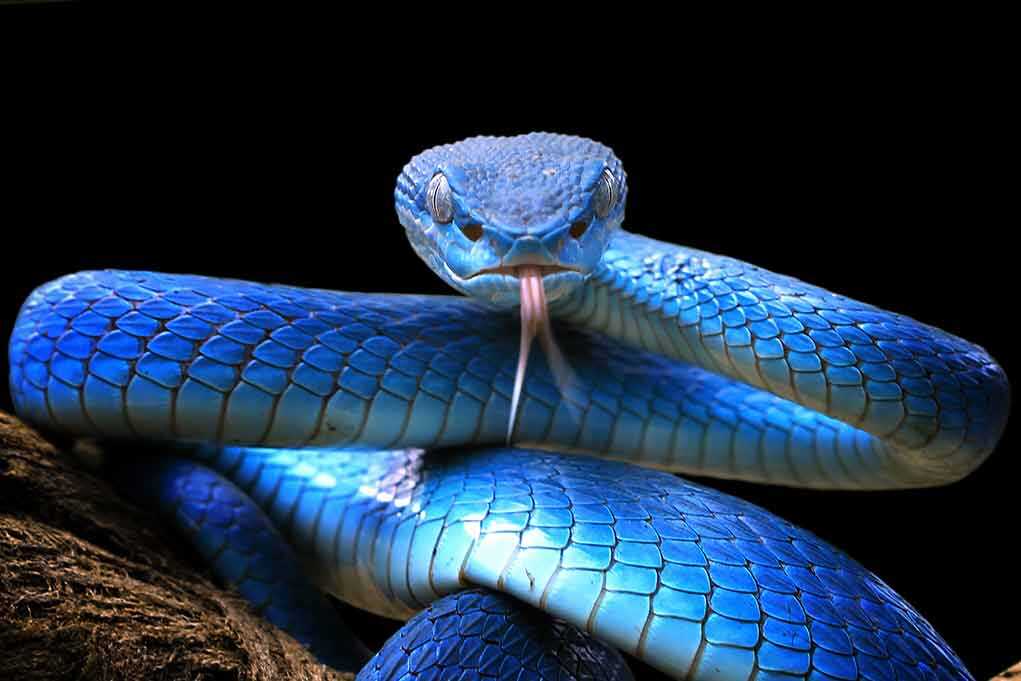
Rare wildlife stories are most useful when they teach the underlying system: a single yellow-bellied sea snake on a Southern California beach is not random spectacle, but a visible endpoint of warm-water intrusions, currents, and chance—an uncommon species arriving at the northern fringe of its range and briefly crossing paths with people.
At a Glance
- A yellow-bellied sea snake washed ashore at Crystal Cove State Beach on September 11—an uncommon visitor in California and highly venomous, though not aggressive on land.
- Experts and historical records indicate only a handful of confirmed California encounters since 1972, with many clustered during El Niño warm-water years.
- Warm anomalies and currents occasionally carry tropical species north; most never reach shore, which is why each verified record is newsworthy.
- For beachgoers, the practical rule is simple: do not handle strandings; alert lifeguards or park staff when possible.
What Happened at Crystal Cove—and Why It Matters
On a Friday evening in mid-September, a family encounter at Crystal Cove State Beach in Orange County produced one of California’s rarest wildlife sightings: a yellow-bellied sea snake on the sand, sluggish and out of its element. The beachgoer who recorded the encounter later identified the animal and relayed the experience to local media; a certified marine naturalist who reviewed the footage agreed with the identification and emphasized two truths at once—these snakes are among the world’s more potent elapids and, stranded on land, they are clumsy, not inclined to bite, and best left alone.
The significance is not a public-safety panic. It is the rarity and what it signals about ocean conditions along California’s southern coast. This species normally inhabits warmer waters well to the south; when it appears here, history suggests an assist from unusually warm seas and transport by currents—conditions that align with El Niño years. That pattern is why one vagrant animal receives outsized attention: it is a datapoint on the edge of a species’ range, not a harbinger of invasion.
The Species: Adapted for the Open Ocean, Awkward on Sand
The yellow-bellied sea snake (Hydrophis platurus, historically Pelamis platurus) is fully pelagic—built for life offshore rather than in coastal shallows. A laterally flattened tail functions as a paddle; valves and nostril placement suit surface breathing; skin and scale structure reduce drag. On land, those same adaptations are liabilities. Without purchase for its body or tail and without the muscular build of terrestrial snakes, it moves poorly on sand, which explains the lethargy evident in many strandings. Venom potency is not the same as risk; risk is the product of dose, delivery, and behavior. A highly venomous animal that is disinclined and ill-equipped to bite ashore presents far less hazard than the adjective suggests—so long as people do not touch it.
Because this snake hunts at sea—often fish or fish larvae at front edges and slicks—it is guided by drift lines and surface conditions. Individuals occasionally move with warm tongues of water along the Pacific, which can carry them far beyond their core distribution, then strand them when temperatures drop, surf builds, or exhaustion sets in. Strandings are therefore ecological postcards: a warm-water parcel passed by.
How Rare Is “Rare” in California?
Published accounts and museum-curated records place the number of confirmed California yellow-bellied sea snake occurrences in the low single digits over the past half-century. The Los Angeles Times, citing expert review, reports only a handful of confirmed sightings since 1972, including episodes clustered in prior warm-water years; independent natural history compendia track the same handful of verified records, beginning with a San Clemente specimen in 1972. The Crystal Cove appearance fits the pattern familiar to field biologists: long stretches of nothing punctuated by an isolated, well-documented find. That is why verification matters and why video that allows expert review is so valuable to the record.
The climatic backdrop strengthens the case. Warm anomalies and El Niño phases expand the thermal envelope northward and modify current patterns, increasing the probability that pelagic drifters—and occasionally tropical coastals—ride north. Media and anglers have logged warm-water species adrift or off Orange County in past El Niño years; the latest sighting arrives amid reports, forecasts, and official briefings anticipating another strong event and its biological echoes.
Mechanism: Warm-Water Transport, Range Margins, and Chance
El Niño weakens the Pacific trade winds and deepens the warm surface layer in the eastern tropical Pacific; the resulting sea-surface temperature anomalies propagate poleward along the coast via currents and eddies. Pelagic organisms that live at or just below the surface—jellyfish, larval fish, drifting invertebrates, and, rarely, sea snakes—float along these moving isotherms. Most remain offshore and out of sight. A tiny fraction intersect surf zones and beaches, which is where people notice them. Because the base probability of shore encounter is extremely low, the few that do reach land become the entire public narrative of a much broader, mostly invisible oceanic migration.
Experts often call such occurrences “vagrants” or “strays,” terms of art for individuals beyond a species’ normal range. Vagrancy does not, by itself, signal a durable range shift; it signals transport plus temporary habitat permissiveness. Only if repeated encounters coincide with successful overwintering, feeding, and reproduction would biologists infer a range expansion. California’s record to date shows no such establishment for yellow-bellied sea snakes; instead, it shows a sparse, El Niño-weighted series of strandings and nearshore observations stretching back five decades.
Public Risk and Practical Guidance
Yellow-bellied sea snakes possess potent neurotoxic venom; that is an argument for respectful distance, not alarm. The risk calculus is straightforward: do not handle, prod, or attempt rescue; alert lifeguards or park staff when available; keep pets and children away. Experts who reviewed the Crystal Cove footage underscored that these snakes are not aggressive out of water and are physically disadvantaged on sand—facts that lower practical risk when beachgoers refrain from contact.
For agencies and scientists, a verified sighting is a request for data. Clear photographs, short video, time and place, and, when feasible for trained personnel, a specimen or tissue sample, help place a single observation into a 50-year dataset. That evidence allows curators and herpetologists to differentiate between a misidentification in the glare of dusk and the kind of record that endures in museum collections and climatological analyses.
What to Watch Next: Signals, Not Sensation
Two threads merit attention. First, the ocean signal: if the forecasted warm phase is robust, California will likely see more warm-water vagrants—fish, invertebrates, and, very occasionally, sea snakes—through the season. Most will pass unnoticed offshore; a precious few will reach public view. Second, the record itself: when experts can corroborate identity and timing, these rare occurrences magnify our view of how climate variability pulses through the food web and along migration corridors.
Sources:
people.com, timesofindia.indiatimes.com, latimes.com, surfer.com, economictimes.indiatimes.com, cbsnews.com