

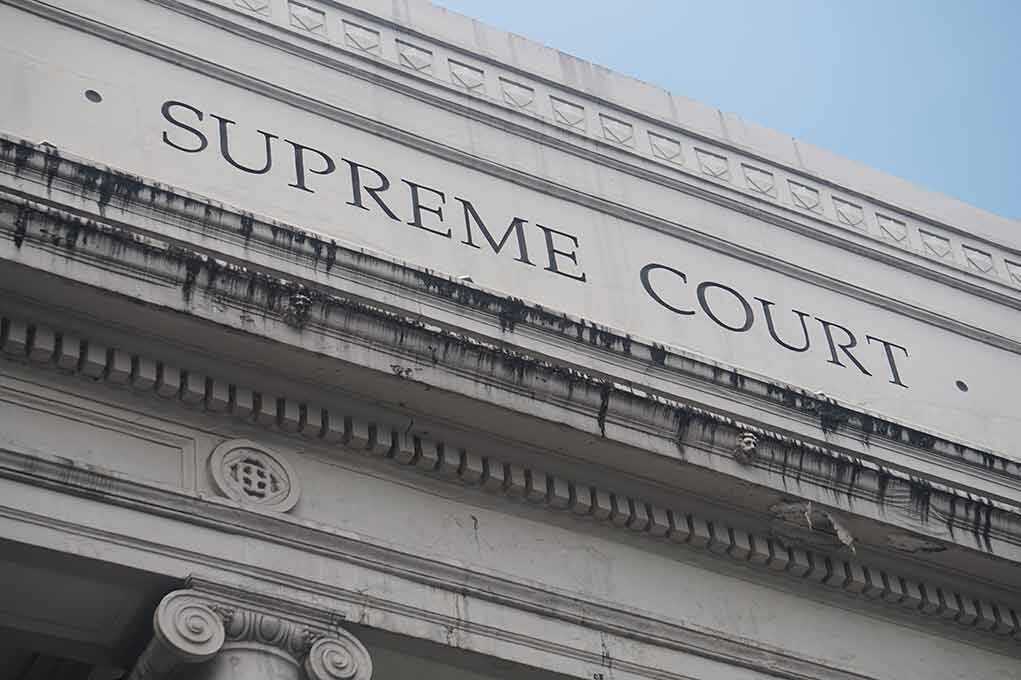
The Supreme Court left the death penalty on the table for the alleged 9/11 mastermind by declining to revive withdrawn plea deals.
Story Highlights
- The Supreme Court refused to hear Khalid Sheikh Mohammed’s appeal, leaving death sentences possible.
- A federal appeals court ruled the defense secretary could cancel the 2024 plea agreements.
- The 2024 deals promised guilty pleas in exchange for no death penalty before they were withdrawn.
- The case now returns toward capital trial after more than two decades of delay.
What The Supreme Court Did And What It Means
The Supreme Court declined to review Khalid Sheikh Mohammed’s bid to restore plea deals that would have removed the death penalty. The order leaves in place a lower court ruling against the defendants. The decision means prosecutors can continue to seek capital punishment in the long-running Guantanamo case. Reports describe the justices’ action as a refusal to revive the 2024 plea arrangement, not a ruling on guilt or innocence. The path now points back toward a capital trial.
The denial followed a key 2025 ruling by the United States Court of Appeals for the District of Columbia Circuit. That court held that the Secretary of Defense had legal authority to withdraw the plea agreements. The court also found the defendants had not begun performance under the deals when they were pulled. The judges vacated the military judge’s order that had enforced the agreements and blocked any plea hearings based on them.
How The 2024 Plea Deals Collapsed
Military prosecutors reached written pretrial agreements in July 2024 with the defendants. The deals exchanged guilty pleas for a government promise not to seek death sentences. A Pentagon official approved the agreements shortly before they were withdrawn. Two days later, Defense Secretary Lloyd Austin canceled them. A military judge later said Austin’s action was unlawful because the defendants had begun performance. The appeals court disagreed, and the Supreme Court let that ruling stand.
The appeals court’s reasoning centered on contract and military commission rules. The judges concluded that the defendants’ actions did not qualify as beginning performance under the text of the agreements. Because performance had not started, the court said the secretary retained the power to withdraw. That outcome erased the military judge’s order and the plan to enter guilty pleas under the deals. The Supreme Court’s refusal to intervene keeps that legal framework in place.
Accountability, Closure, And The Cost Of Delay
Families of the victims and the nation have waited for final justice for roughly a quarter century. The 2024 deals would have ended the case with life sentences and guilty pleas. Supporters saw that path as certain closure without more delay. Opponents warned it would remove the death penalty in a case tied to the deadliest attack on American soil. With the Supreme Court’s action, the government’s capital option survives, and a trial remains the route to final judgment.
The government’s position stressed that such a major decision affects the whole country. Officials argued that a politically accountable defense secretary should decide whether to spare the death penalty. Reporting also shows that Secretary Austin said the call should rest with him, not a lower Pentagon official. The appeals court embraced the legal authority piece, not policy claims. The bottom line is authority and timing, and the government won on both grounds.
Why This Matters To Readers Focused On Justice And Security
Conservatives have long demanded firm justice for those behind 9/11. The Supreme Court’s action removes a major roadblock to seeking the ultimate penalty. The case has dragged through commissions, rulings, and reversals for years, draining trust and resources. Today’s posture signals a turn away from deal-making that would have taken death off the table. It also pressures the system to move faster and deliver a verdict that matches the scale of the crime.
The ruling also reinforces clear lines of command in national security cases. When stakes are national, accountable leaders must own the decisions. The court’s framework favors order over confusion inside the Pentagon’s process. That approach aligns with the rule of law and with strong executive responsibility. For families who want answers and for a nation that remembers, the next step is simple: finish the job in court and deliver justice without more drift.
What Comes Next In The Guantanamo Case
The commissions can resume toward a capital trial. Prosecutors may pursue evidence and pretrial rulings with the death penalty available. Defense teams may raise new motions, but the path back to the withdrawn deals is shut for now. The Supreme Court gave no reasons, as is common with denials. The case remains active, and the government’s capital posture stands unless there is a new, valid agreement or a different court order later.
Officials will face pressure to keep the process moving. The country expects firm justice without cutting corners. Any new delay will invite fresh scrutiny from Congress and the public. The legal ground is now set by the appeals court: no performance meant the secretary could withdraw. With that settled, the focus should shift to speed, fairness, and security. The victims and the nation deserve a clear and final answer in court.
Sources:
cbsnews.com, axios.com, internazionale.it, tucson.com, krdo.com