

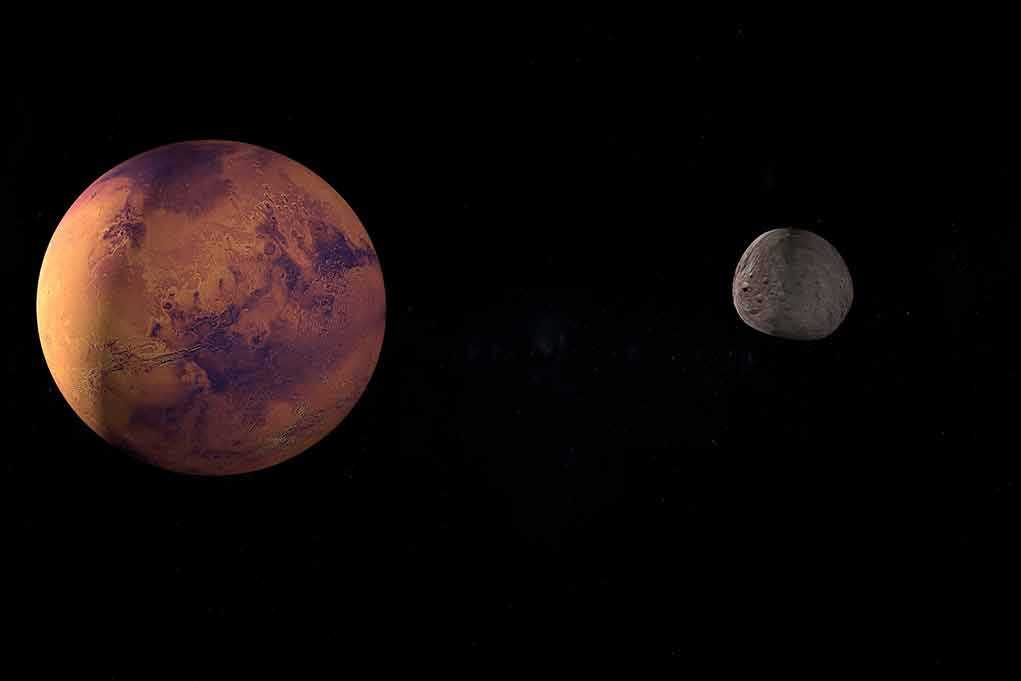
Japan’s space agency launched a mission to land on Mars’s moon Phobos, grab a sample, and fly it back to Earth.
Story Snapshot
- Japan’s MMX spacecraft launched on schedule and entered its planned trajectory.
- MMX aims to collect at least 10 grams from Phobos through two soft landings.
- The mission plans to study both Martian moons before returning samples to Earth.
- International partners confirm the launch and first-of-its-kind sample goal.
Launch Confirmed And On Target
Japan’s Aerospace Exploration Agency confirmed the Martian Moons eXploration spacecraft lifted off at 04:41:03 Japan time on October 20, 2026. The agency reported separation from the H3 rocket about 71 minutes after liftoff and injection into the planned orbit. The launch from Tanegashima Space Center marked the start of a years-long effort to bring material from Mars’s moon Phobos back to Earth. European space officials and research groups also reported the successful launch.
Mission planners describe MMX as a sample-return effort focused on Phobos. The spacecraft will cruise to the Mars system, observe both Phobos and Deimos, and then move into a special orbit near Phobos. From there, the team will guide two soft landings to collect surface material. The agency set a minimum goal of 10 grams of sample, with a plan to seal and return it to Earth in the early 2030s if operations go as planned.
What The Spacecraft Will Do At Mars
Japan’s mission design includes close studies of both Martian moons before any landing. The spacecraft will enter a quasi-satellite orbit around Phobos to map the surface and scout landing sites. Sensors will measure texture, composition, and local gravity to help guide the landings. After collecting the samples, MMX will depart the Mars system and head home. The official target for Earth return is 2031, pending mission performance and schedule.
The mission aims to answer basic questions about the origin of Phobos and Deimos. Scientists want to learn if the moons formed from debris around Mars or if they are captured objects. A clean, sealed sample can help separate those ideas by looking at minerals and isotopes once back in labs on Earth. The result could sharpen models of how rocky worlds and moons formed in our solar system.
Why This Matters For America And Allies
Japan’s move adds strength to a free-world space partnership that values open science and shared standards. The European Space Agency described MMX as the first mission intended to bring home samples from a Mars moon, highlighting the global significance of the launch. This kind of focused, goals-driven mission shows how partners can set clear targets, control costs, and deliver results. Conservative readers should welcome allied success that advances discovery without wasteful sprawl or mission creep.
The long timeline means patience. The launch is a major win, but the landings, sample collection, and Earth return still lie ahead. Japan’s agency set the goals plainly and published the plan. The return date and sample mass are targets, not guarantees, until the capsule arrives and labs confirm what is inside. Still, today’s milestone is real: the spacecraft is on its way, the objectives are defined, and allies have the same goal of bringing new knowledge home, safely and securely.
Sources:
youtube.com, global.jaxa.jp, observatoiredeparis.psl.eu