
President Trump just picked a public fight with his most reliable European ally—and the fallout could reshape how NATO shares the burden in the Iran war.
Quick Take
- President Trump told Italy’s Corriere della Sera he was “shocked” by Prime Minister Giorgia Meloni’s refusal to involve Italy in the Iran war.
- Trump argued Italy’s energy exposure to the Middle East makes neutrality risky, while Meloni emphasized Italy’s interests and constitutional limits.
- The dispute widened after Meloni called Trump’s criticism of Pope Leo XIV “unacceptable,” underscoring the domestic political stakes in Rome.
- The rift lands as the Strait of Hormuz remains disrupted, keeping pressure on oil markets and on U.S. allies to contribute more.
Trump’s warning to Meloni highlights a widening alliance gap
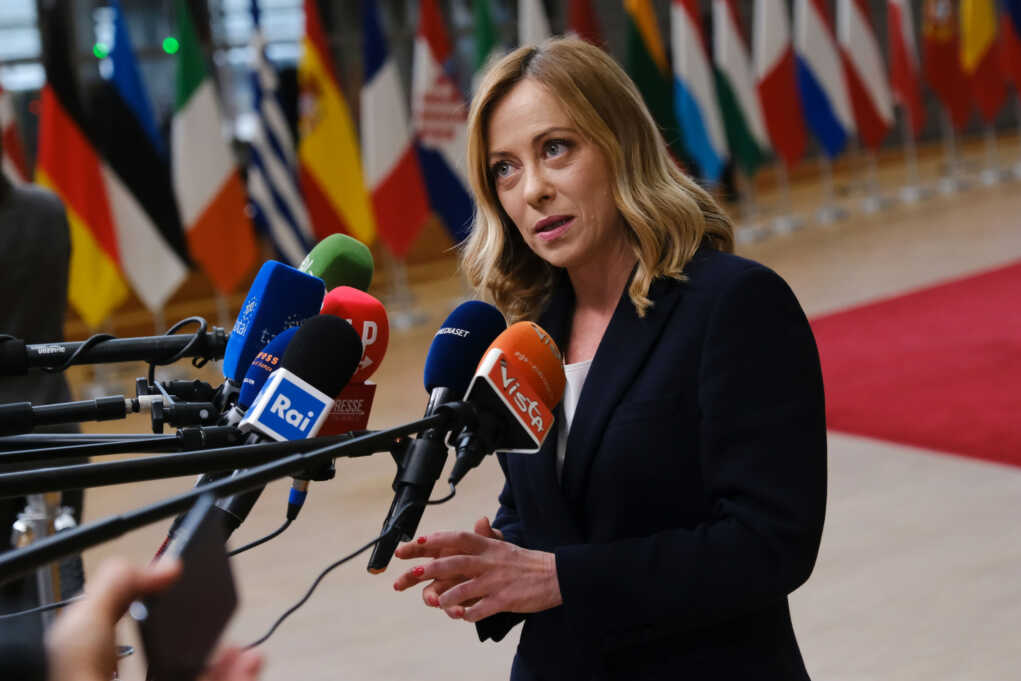
President Donald Trump used an interview with Italy’s Corriere della Sera to criticize Prime Minister Giorgia Meloni for declining to involve Italy in the ongoing Iran war. Trump said he was “shocked” by her stance and suggested she lacked “courage,” a striking reversal after earlier praise in a prior interview. Trump framed the disagreement around alliance obligations, arguing Meloni expects the United States to carry the load alone.
Trump’s comments also tied Italy’s position to security fears about Iran’s nuclear ambitions, according to reporting that relayed his remarks. In that framing, Meloni’s reluctance is not just a tactical dispute but a question of whether European partners treat the Iranian threat as immediate and shared. The same reporting described Trump’s broader pattern of publicly pressuring NATO leaders when he believes they are free-riding on American power.
Meloni’s response stresses sovereignty, the Pope dispute, and Italy’s interests
Prime Minister Meloni responded by reaffirming that Italy will prioritize its own national interests and by condemning Trump’s prior remarks about Pope Leo XIV as “unacceptable”. The Pope had urged an end to the Middle East conflict, and Meloni’s defense placed religion and domestic legitimacy into a dispute that otherwise might have stayed narrowly military and diplomatic. Italy’s opposition also cited constitutional anti-war principles.
The politics in Rome matter because Meloni has been positioned as a bridge between Washington and parts of Europe that are skeptical of deeper involvement. It also emphasized that Italy’s constitution repudiates war, a constraint that gives Meloni a domestic argument for caution even while her government remains aligned with the West. The immediate reality is that she is trying to keep Italy out of direct participation while managing the practical consequences of the conflict.
Energy chokepoints are turning foreign policy into a household issue
The Iran war has intensified focus on the Strait of Hormuz, where a U.S. naval blockade and disruption to shipping have raised the stakes for countries dependent on Middle East energy. Several reports highlighted Italy’s reliance on oil flows connected to that region, which makes prolonged instability more than a distant geopolitical event. When energy routes are threatened, the costs show up quickly in prices, supply planning, and industrial competitiveness.
The broader conservative takeaway is straightforward: energy security remains national security, and prolonged conflict around key maritime chokepoints exposes the fragility created by years of policy that left Western economies vulnerable. At the same time, it does not specify the full operational details of the blockade or provide a clear start date for the war, limiting what can be concluded beyond the confirmed political clash and the acknowledged disruption.
What this rift could mean for NATO unity and U.S. leverage
Trump’s break with Meloni is notable precisely because she has been described as his closest European ally and a frequent point of alignment with “America First” instincts on sovereignty and borders. Publicly escalating against a friendly government signals that Washington’s patience with partial support may be thinning as the war drags on. Reports also place Meloni in a wider group of European leaders Trump has criticized for reluctance on major security commitments.
If the dispute hardens, NATO unity could be strained at the very moment coordination matters most for deterrence and logistics. For Americans skeptical of “forever” commitments, it also revives an old question: how long can the U.S. keep underwriting global security when partners hedge for domestic political reasons? The sources here show sharp rhetoric and a real diplomatic chill, but they do not document any formal change in Italy’s alliance status or treaty posture.
Sources:
Italy’s Meloni lacks ‘courage’ on Iran war – Trump
“Shocked At Her”: Trump says Italy’s Meloni lacks courage on Iran war
CGTN report on Trump-Meloni dispute over Iran war and Pope comments
Trump says Italy’s Meloni lacks ‘courage’ on Iran war
Trump criticises Italy’s Meloni, says she lacks courage over Iran war
US-Iran-Israel war live updates: Strait of Hormuz blockade and failed peace talks