

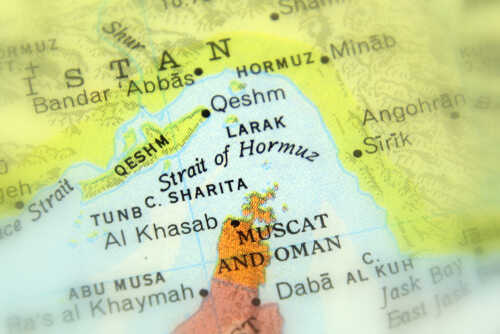
After weeks of war-driven chaos, Iran is suddenly saying the world’s most important oil chokepoint is “completely open”—but only on terms tied to a fragile Lebanon ceasefire.
Quick Take
- Iran’s foreign minister announced commercial passage through the Strait of Hormuz is “completely open” via a designated route for the remaining period of the Israel-Lebanon ceasefire.
- The move follows a 10-day Israel-Lebanon ceasefire that began April 16 at 5 p.m. ET, with Hezbollah signaling conditional compliance tied to a broader halt and Israeli withdrawal.
- President Trump welcomed the development but kept the U.S. blockade on Iranian ports in place pending a final U.S.-Iran peace deal.
- Markets reacted immediately, with reports of sharp oil-price moves—relief tempered by uncertainty over how “open” the route truly is under ongoing military pressure.
Iran Ties Hormuz Access to a Lebanon Truce
Iranian Foreign Minister Seyed Abbas Araghchi said on April 17 that passage for commercial vessels through the Strait of Hormuz is “completely open,” but his announcement came with a key condition: the opening applies through a designated, coordinated route and is linked directly to the Israel-Lebanon ceasefire now underway. That linkage matters because it effectively turns Gulf shipping into a bargaining chip connected to a separate front—Israel’s conflict with Hezbollah in Lebanon.
Israel and Lebanon began a 10-day ceasefire on April 16 at 5 p.m. ET. Hezbollah’s political wing indicated it would adhere only if the pause is “comprehensive” and serves as a prelude to Israeli withdrawal, while Iran’s parliament speaker publicly framed the truce as a “victory” for Hezbollah. That mix of conditions and propaganda signals why shipping firms and governments are treating the reopening as provisional, not a return to normal.
Trump Welcomes the Shift While Keeping Pressure on Tehran
President Donald Trump responded favorably to Iran’s announcement, portraying it as progress while maintaining the U.S. blockade on Iranian ports and vessels until a final U.S.-Iran peace agreement is reached. That posture reflects a familiar strategy: accept de-escalation steps that stabilize markets and protect consumers, while keeping leverage that can be traded for enforceable commitments. For Americans still angry about years of energy-price spikes, the leverage-versus-relief balance is the whole story.
The timeline also explains Washington’s caution. The U.S.-Iran two-week ceasefire is set to expire April 22, meaning the Hormuz move arrives in the shadow of an approaching deadline. In practical terms, Iran is signaling limited cooperation at the exact moment negotiators would be looking for proof of compliance. But with the blockade still active, and with the opening described as route-restricted, the announcement doesn’t automatically translate into unrestricted commerce or a durable security guarantee.
Why the Strait of Hormuz Still Shapes Everyday Costs at Home
The Strait of Hormuz carries roughly one-fifth of global oil and gas flows, making it one of the few foreign flashpoints that can hit U.S. households quickly through gasoline, shipping, and food prices. Reports around the reopening described sharp market reactions, including oil-price drops in some coverage, even as at least one account suggested the opposite direction during volatility. The takeaway is less about a single price print and more about how sensitive markets remain to geopolitical headlines.
The current closure traces back to the February 28 start of U.S.-Israel strikes on Iran and the ensuing cycle of missile and drone attacks, maritime threats, and pressure campaigns. That context also helps explain why voters across the spectrum increasingly distrust “experts” who promise easy stability while underwriting endless commitments abroad. Even when Washington tries to manage escalation, the economic consequences land at home—often without clear accountability from the bureaucracy that helped shape the earlier policy path.
Limited Opening, High Stakes: What to Watch Next
Three dates now matter more than rhetoric. First, the Israel-Lebanon ceasefire is scheduled to run about 10 days, ending around April 26, and Iran’s Hormuz opening is explicitly tied to that window. Second, the U.S.-Iran truce expires April 22, creating a separate risk point that could snap back into direct confrontation regardless of events in Lebanon. Third, the U.S. blockade remains in place, limiting how much Iran can claim as a real win.
Iran declares Hormuz open as Lebanon ceasefire beginshttps://t.co/dtmNs7DKYk
— The New Arab (@The_NewArab) April 17, 2026
For conservatives who prioritize limited government and predictable costs, the lesson is straightforward: energy security is national security, and temporary de-escalation announcements are not the same as enforceable agreements. For liberals worried about humanitarian fallout, the Lebanon pause could reduce immediate harm if it holds, but the conditional language from Hezbollah underscores how quickly violence can resume. The coming week will test whether diplomacy is producing durable outcomes—or just managing headlines until the next deadline.
Sources:
CBS News live updates: Iran war, Trump, Israel-Lebanon ceasefire, Hezbollah, Strait of Hormuz
The Telegraph: Iran war latest news, Trump, Israel-Lebanon ceasefire