

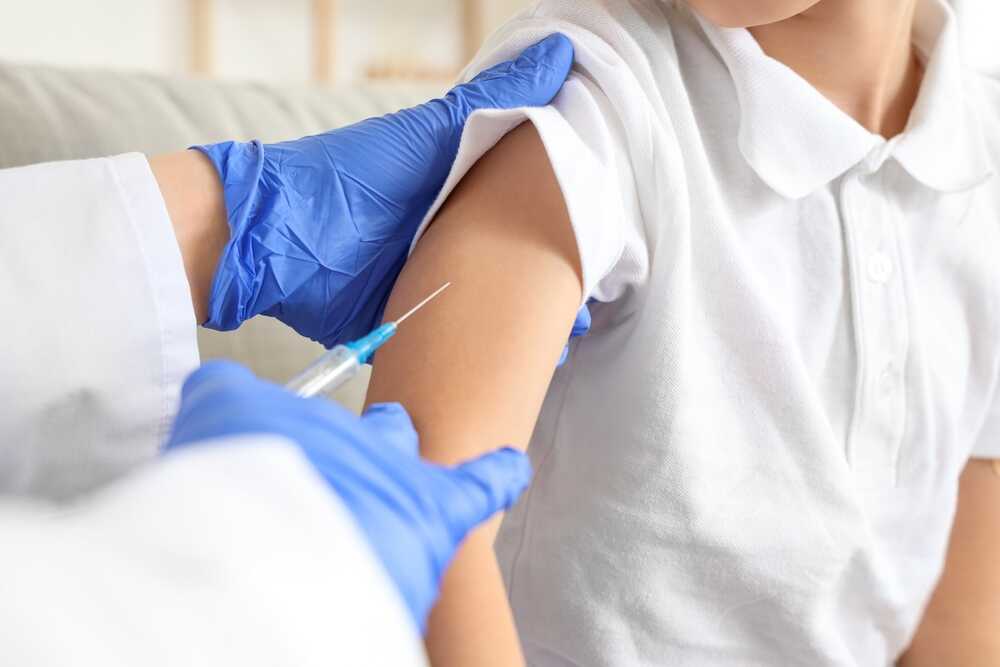
The United Kingdom’s measles comeback shows what happens when parents stop checking children’s vaccines, and now the National Health Service (NHS) is sounding the alarm.
Story Snapshot
- Childhood vaccine uptake in England has fallen to its lowest level in 15 years, leaving kids exposed to measles and other serious diseases.
- The World Health Organization (WHO) says 95% coverage is needed for herd immunity, but no main childhood vaccine in England hits that target.
- NHS and UK Health Security Agency (UKHSA) data show more than one in ten young children are not fully protected against measles.
- Officials blame misinformation, strained services, and social barriers, while urging parents to check and update children’s vaccine records.
NHS warns of falling child vaccination rates and rising disease risk
New data from the United Kingdom’s National Health Service (NHS) and the United Kingdom Health Security Agency (UKHSA) show childhood vaccination rates have dropped across almost all major vaccines, including measles, mumps and rubella. In 2024–2025, only about 83.7% of five-year-olds in England had received both doses of the measles, mumps and rubella (MMR) vaccine, the lowest uptake since 2009–2010 and far below the 95% level experts say is needed to stop spread. That means nearly one in five children starting primary school are not fully protected against several serious diseases.
The World Health Organization (WHO) recommends at least 95% of children receive both measles vaccine doses to achieve herd immunity, because measles spreads very easily. UKHSA reports confirm England is missing that mark for the two-dose measles, mumps and rubella schedule, with coverage in five-year-olds stuck in the mid‑80% range. Government statements warn that more than one in ten children under five are at risk of measles, and call this gap a direct threat to measles elimination status and to child health.
Why experts say uptake has “fallen off a cliff”
Health journalists and researchers describe the drop in childhood vaccination as the steepest in 15 years, creating openings for diseases long kept in check. They point to several overlapping causes. First, the COVID‑19 pandemic disrupted routine NHS services, including child vaccination visits, and uptake never fully recovered. Second, social media myths about vaccine safety spread quickly during and after the pandemic, feeding anti‑vaccine sentiment among some parents and making them delay or refuse shots. Third, experts highlight cuts in public health funding and pressure on general practitioners and health visitors, which make it harder to reach every family on time.
A major medical study of vaccination records between 2019 and 2023 found that uptake for five key childhood vaccines decreased, and gaps were widest between rich and poor areas. The authors report that coverage never reached the WHO’s 95% target in more deprived communities and that inequality grew over the study period. They flag the second measles, mumps and rubella dose as having the biggest inequality, with practices serving poorer neighborhoods showing much lower uptake than those in affluent areas. These patterns match official concern about urban regions like London and parts of the North, where low coverage has allowed outbreaks.
NHS campaigns urge parents to check and catch up
In response, the NHS has launched national and local “catch‑up” drives aimed at children who missed vaccines earlier. Campaign material urges parents to contact their doctor’s office to confirm whether their child has had all routine shots, especially the two measles, mumps and rubella doses, and stresses that making an appointment “could save their life.” UKHSA data show that between August 2023 and April 2024, more than 13% of previously unvaccinated children aged five or under received a first measles, mumps and rubella dose during focused outreach, suggesting some success when services actively seek out families.
Official guidance explains that two doses of the measles, mumps and rubella vaccine protect about 99% of people against measles and rubella and about 88% against mumps. The NHS also now uses a combined measles, mumps, rubella and chickenpox (MMRV) vaccine for young children as part of the routine schedule. At the same time, the service acknowledges that more serious side effects are rare and states clearly that research has found no link between the measles, mumps and rubella vaccine and autism, countering a key myth that has fueled hesitancy.
Safety, parental choice, and the push for better access
Government and health agencies frame the measles resurgence mainly as a failure to maintain high vaccination coverage, and their proposed solution is stronger campaigns and easier access. They stress that measles had been pushed down to very low levels after vaccines were introduced in the late 1960s, when cases in England and Wales dropped from hundreds of thousands a year to a few thousand. Global and national reviews warn that when immunization rates slip below about 95%, measles can quickly return, especially in crowded communities or where travel re‑introduces the virus.
Researchers and patient groups also call attention to practical barriers many families face. Studies and reports mention issues like limited clinic hours, language gaps, mistrust of institutions, and the strain on busy parents, especially in deprived areas. While NHS campaigns show that targeted outreach can raise uptake in these communities, experts argue that long‑term progress will require stable local services, clear and honest communication, and respect for parental concerns. The central message from the NHS is simple: know your child’s vaccine status, ask questions if you are unsure, and get up to date to protect them from preventable but still dangerous diseases.
Sources:
independent.co.uk, nuffieldtrust.org.uk, bbc.com, pmc.ncbi.nlm.nih.gov, ukhsa.blog.gov.uk, ukhsa-dashboard.data.gov.uk, facebook.com, sciencedirect.com, abpi.org.uk, gov.uk, vaccineknowledge.ox.ac.uk, historyofvaccines.org