
A federal judge has slapped down Florida’s “terrorist” label on a Muslim rights group, setting up a major clash between state security powers and the Constitution.
Story Snapshot
- Florida Governor Ron DeSantis labeled Muslim-rights group CAIR and the Muslim Brotherhood as “radical Islamic terrorist organizations” in a 2025 executive order.
- CAIR sued in federal court, saying DeSantis hijacked federal powers and punished them for protected speech and advocacy.
- A federal judge issued a preliminary injunction, ruling the First Amendment bars using the governor’s office to make political “terrorist” labels that burden constitutional rights.
- Florida later passed House Bill 1471 to give the state formal power to brand domestic organizations as terrorist groups, raising new First Amendment and due process alarms.
DeSantis Order Puts CAIR and Muslim Brotherhood in State Crosshairs
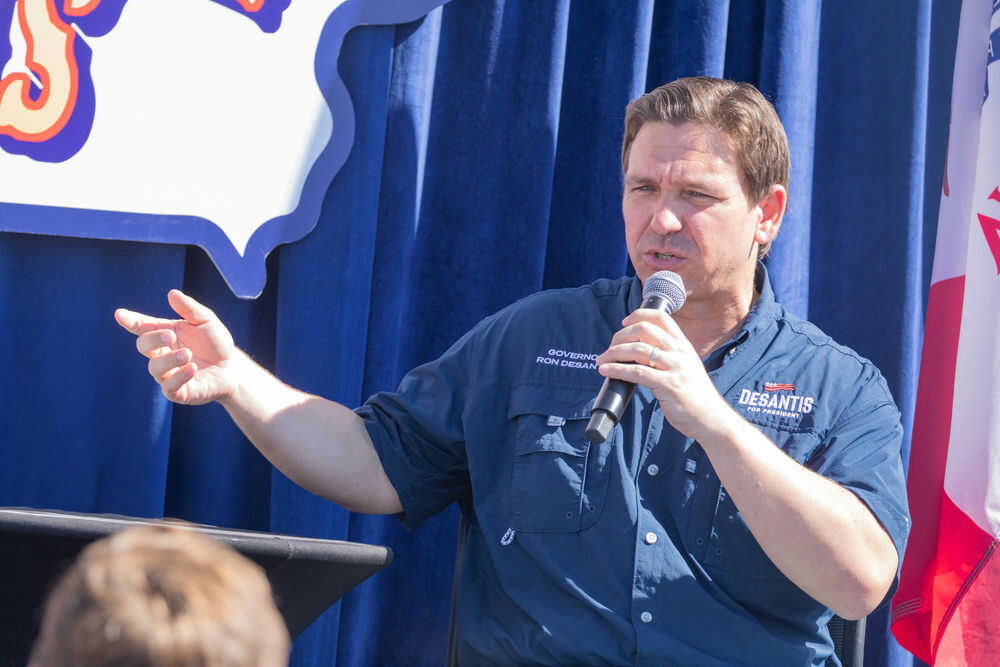
In December 2025, Florida Governor Ron DeSantis signed Executive Order 25-244, branding the Council on American-Islamic Relations (CAIR) and the Muslim Brotherhood as “radical Islamic terrorist organizations.” The order said the Muslim Brotherhood seeks a worldwide Islamic rule and cited past terror attacks as support. It directed Florida agencies to deny contracts, funding, and jobs to CAIR, the Muslim Brotherhood, and anyone giving them “material support,” which includes expert advice or help. That meant a domestic civil rights group suddenly faced blacklisting from its own state government.
National and local media described CAIR as a leading Muslim civil rights group with more than 20 chapters around the country, focused on legal work, advocacy, and education. CAIR’s lawsuit says DeSantis targeted them because they defended free speech for people punished for supporting Palestinian human rights. The order did not point to any criminal charges or federal terrorism designations against CAIR. Instead, it tied CAIR to broader claims about Islamic extremism and the Muslim Brotherhood, without showing specific acts of terrorism by CAIR itself.
CAIR Fights Back in Federal Court on Free Speech Grounds
CAIR-Foundation and CAIR-Florida filed suit in federal court in Tallahassee, asking a judge to declare the order illegal and stop it from being enforced. Their complaint argues DeSantis “usurped the exclusive authority of the federal government” to designate terrorist organizations by unilaterally calling CAIR a terrorist group. They say the order punishes a domestic civil rights group for its views and advocacy, violating the First Amendment and due process. CAIR also stresses that it has long condemned terrorism and that the governor’s label rests on politics, not proven wrongdoing.
On March 4, 2025, U.S. District Judge Mark E. Walker issued a preliminary injunction blocking enforcement of the order while the case continues. His ruling, as reported by First Amendment experts, found that the First Amendment bars the governor from using his office to make political statements that come at the expense of constitutional rights. The court noted that branding CAIR as “terrorist” chilled other people’s willingness to work with or support the group, which is a classic free speech and association concern. This was an early but important win for constitutional limits on state security branding.
New Florida Terror Law Raises Stakes for All Nonprofits
Florida lawmakers did not stop with one executive order. In 2026, the state enacted House Bill 1471, which lets the Governor, Cabinet, and the state’s domestic security chief formally designate domestic organizations as “terrorist” if they decide the group is engaged in terrorist activity and is an ongoing security threat. Legal analysts at the International Center for Not-for-Profit Law say this law marks a major shift from older state terrorism laws, which mainly criminalize individual acts. The new approach lets officials label entire U.S. organizations and impose wide civil and criminal consequences, often with few clear safeguards.
DeSantis announces plans to use new state law to target dozens of alleged terrorist groups
CAIR filed a lawsuit to challenge the Florida governor's 'baseless attacks'#BanCairhttps://t.co/MtCZKq9ld2 #FoxNews
— Elena (@helen44767171) July 2, 2026
According to that same analysis, Florida and Indiana are part of a broader trend where states move into a role long reserved for the federal government: deciding who counts as a terrorist organization. In Florida, DeSantis has already said he will ask the Cabinet to ratify CAIR and the Muslim Brotherhood as top targets under the new law. That would turn his earlier executive label into a more formal, statutory designation. For nonprofits, churches, and advocacy groups, this raises a serious question: how easily could a political dispute be turned into a “terrorist” tag with real financial and legal fallout?
Balancing Security, Federal Authority, and Constitutional Rights
Under long-standing federal law, it is the U.S. Secretary of State who designates foreign terrorist organizations, based on clear criteria and evidence of terrorist activity that threatens U.S. security. Those federal designations trigger strict sanctions and criminal penalties for material support. State-level labels like Florida’s do not follow the same process, yet still cause major harm by cutting off contracts, grants, and cooperation. CAIR’s case argues that when a governor steps into this space, he risks both trampling federal authority and punishing speech he dislikes.
For conservatives, the core tension is real. Voters want strong action against genuine radical threats. But they also want government power kept in check, especially when it touches speech, religion, or peaceful advocacy. A federal judge has already warned that using the governor’s office to make sweeping “terrorist” statements about a domestic rights group crosses that line. As Florida’s new law rolls out, the outcome of CAIR’s lawsuit will help decide where that line gets drawn for every group that dares to speak out.
Sources:
washingtontimes.com, politico.com, youtube.com, aflegal.org, flhealthsource.gov, mlfa.org, facebook.com, flgov.com, icnl.org, wilmerhale.com, charityandsecurity.org, repository.law.indiana.edu