

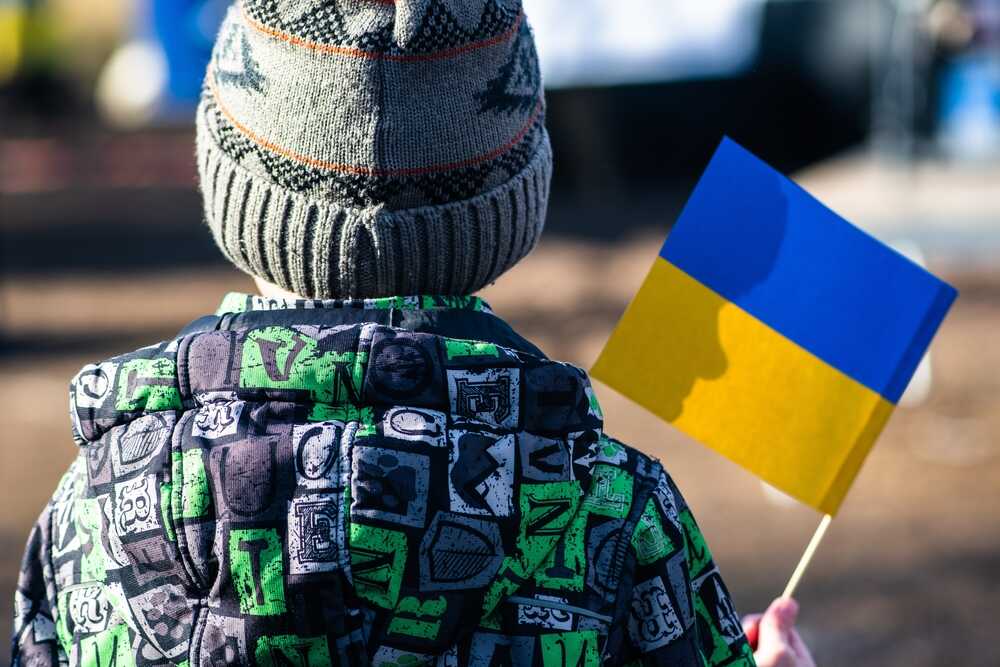
Russia stands accused of using Ukrainian children as tools of war and identity erasure, and the free world is finally putting the facts on paper.
Story Snapshot
- Forty-one countries triggered a special OSCE investigation into Russia’s treatment of Ukrainian children.
- Reports say deported kids are forced to speak Russian, sing the anthem, march, and handle guns.
- Experts are probing laws, school plans, and adoptions that may erase Ukrainian identity.
- Russia denies wrongdoing but offers no real evidence to counter detailed OSCE findings.
OSCE Sounds the Alarm on Russia’s Treatment of Children
On May 14, 2026, forty-one states in the Organization for Security and Co‑operation in Europe used a special tool called the Moscow Mechanism to focus on Russia’s treatment of Ukrainian children. These states, including key U.S. allies like the United Kingdom and Finland, said they were “profoundly alarmed” by reports that Russia is militarizing and indoctrinating children in occupied areas and inside Russia. The Trump administration now shares responsibility for how America responds to this attack on families and basic human rights.
The mission’s job is clear and tough. Experts must collect and study evidence of militarization, indoctrination, coercion, intimidation, repression, illegal adoptions, and other abuse of Ukrainian children. They are ordered to look closely at how Russian laws and school lessons work together to erase Ukrainian identity and train kids to serve the occupying power. That includes tracking how names, citizenship, and birth records may be changed to hide who these children really are.
Reports of Russification, Militarization, and Coerced Adoptions
A 2025 report for the OSCE Parliamentary Assembly by Swedish parliamentarian Carina Ödebrink lays out what many deported children face after being taken from Ukraine. According to her work, these kids are pushed through harsh “Russification” programs, forced to speak Russian, sing the Russian anthem, join military-style marches, and even handle firearms. A longer version of her report explains that Russia has built a legal path to move these children into Russian adoption systems and change their identity on paper.
The same report describes how Russian legal changes make it easier to alter a child’s name, place of birth, and other records, then naturalize them as Russian citizens before adoption. This can turn a Ukrainian child into a “Russian” child in official files, cutting ties to their real family and homeland. In 2023, an earlier Moscow Mechanism mission already found that Russia’s forcible transfer and deportation of Ukrainian children included violations of international humanitarian law that could be war crimes or even crimes against humanity.
Scale of the Problem and Ongoing Investigation
Official documents speak of “millions” of affected children, both those living under occupation and those deported to Russia, but they do not confirm the exact 1.6 million figure used in some media claims. The Yale School of Public Health’s Humanitarian Research Lab has mapped at least 210 facilities in Russia and occupied Ukraine where Ukrainian children are sent, noting clear patterns of “re‑education” and militarization. That kind of scale shows this is not a random set of abuses, but a wide system that targets the next generation.
The current OSCE mission is designed to build on those past findings and bring more detail and proof. Experts are tasked with checking how these practices affect basic rights such as life, health, family, education, and protection from violence, and then to suggest steps for protection and accountability. The Organization for Security and Co‑operation in Europe Support Program for Ukraine is already helping register missing children and support their recovery, while also documenting unlawful deportations that can be used in court later.
Russia’s Denials and the Battle Over Truth
Russian officials and state media call these reports Western propaganda, but so far they have not answered the specific claims made in the OSCE work. They have offered no public trail of documents, no detailed school plans, and no sworn testimonies to show that deported Ukrainian children are simply being “protected.” That silence on the details matters, because the OSCE reports do spell out laws, adoption steps, and behavior inside camps that point to a planned system, not isolated mistakes.
In June 2026, Ukraine continued efforts to return children deported or forcibly transferred by Russia, as well as those trapped in temporarily occupied territories, while strengthening international coordination, accountability, education access, and advocacy.
153 children were… pic.twitter.com/rmey3uHz9I
— UKR Consulate NY (@UKRinNewYork) July 9, 2026
For Americans who care about family, faith, and nation, this should hit hard. If an occupying power can rip children from their homes, rewrite their identity, and train them with guns and loyalty songs, it attacks the very idea that parents, not the state, raise kids. Today, this is happening to Ukrainian families, but it follows a long pattern seen under other regimes that tried to break a people by taking its children. Strong, clear U.S. policy is needed so that Russia pays a price and other would‑be tyrants think twice.
Sources:
insiderpaper.com, valtioneuvosto.fi, gov.uk, oscepa.org, odihr.osce.org, x.com, rchr.org.ua, ohchr.org, icsr.info