
Iran-backed militias didn’t just harass U.S. forces in Iraq this week—they allegedly ambushed American diplomats, forcing Washington to draw a hard red line.
Quick Take
- Drone attacks on April 8 targeted areas near U.S. diplomatic facilities in Baghdad, including near the embassy’s diplomatic support center and Baghdad International Airport.
- The U.S. embassy reported no casualties, but the State Department labeled the incident an “egregious terrorist attack.”
- On April 9, Deputy Secretary of State Christopher Landau summoned Iraq’s ambassador and demanded immediate steps to dismantle Iran-backed militias operating inside Iraq.
- This lands amid a wider surge of militia strikes tied to escalating U.S.-Iran proxy tensions and a Trump-announced two-week ceasefire window.
Diplomats Targeted in Baghdad, Not Just Bases
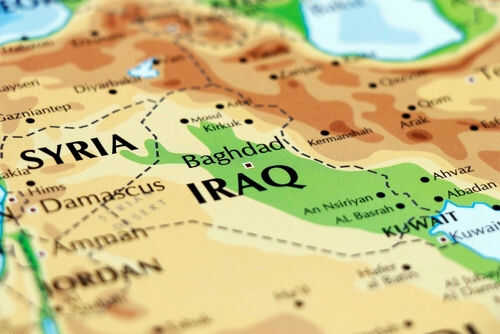
U.S. officials say Iran-aligned Iraqi militias carried out drone attacks on April 8 near American diplomatic sites in Baghdad, including the area around the U.S. embassy’s diplomatic support center and near Baghdad International Airport. The U.S. embassy reported no casualties. Even so, the State Department’s decision to call it an “egregious terrorist attack” signals Washington is treating this as more than routine harassment—because diplomats, not troops on a remote base, were the apparent target.
The immediate U.S. response came the next day. Deputy Secretary of State Christopher Landau summoned Iraqi Ambassador Nizar Khirullah on April 9 and warned that the United States “will not tolerate” attacks on U.S. interests. State Department spokesman Tommy Pigott said Iraq’s failure to rein in the militias is affecting the broader U.S.-Iraq relationship and called for “immediate measures to dismantle” the groups responsible. Publicly rebuking Baghdad this directly is diplomatic pressure with teeth.
Why the Militia Problem Keeps Surviving in “Sovereign” Iraq
The deeper issue is structural. Iran-backed Shia militias operate under the umbrella of Iraq’s Popular Mobilization Forces, which are nominally under the prime minister’s authority but frequently described as loyal in practice to Tehran-linked networks. Groups cited in the broader reporting and analysis include U.S.-designated terrorists such as Kata’ib Hezbollah and Asa’ib Ahl al-Haq. That setup allows Baghdad to claim formal oversight while armed factions maintain parallel power—undercutting basic sovereignty and rule-of-law governance.
The April 8 incident also fits a larger escalation pattern. Reporting and analysis describe more than 180 militia attacks on U.S. sites from March through April 9, following U.S./Israeli strikes on Iran on Feb. 28, 2026. President Donald Trump’s announcement of a two-week ceasefire window on April 9 created a narrow pause, but the accumulation of attacks suggests that militia capability—and willingness—has not been meaningfully degraded. Some details around the “ambush” remain unclear in the public record.
What Washington’s Demand to “Dismantle” Militias Really Implies
When the United States tells Iraq to dismantle armed groups embedded in the state’s security architecture, it is effectively demanding Baghdad choose between alliance benefits and internal coercion. Analysts at the Atlantic Council argue Iraq must confront these militias to restore sovereignty and end a cycle of drones and rockets that can continue indefinitely without real state action. The challenge is that dismantlement is not a press release; it means arrests, funding cuts, command restructuring, and the political will to resist retaliation.
Ceasefire Window Raises Stakes for Enforcement and Accountability
The Trump administration’s posture—public condemnation, an ambassador summons, and explicit consequences for the bilateral relationship—highlights a broader frustration many Americans share: officials often announce “partnerships” abroad while failing to enforce basic accountability when U.S. personnel are attacked. Conservatives tend to see this as a lesson in deterrence and national credibility; many liberals see it as another example of endless foreign entanglement without clear results. What both sides can recognize is the same reality: if Iraq cannot control armed factions, agreements on paper won’t protect Americans in practice.
Excuse Me, Our Diplomats Were Ambushed in Iraq by Iran-Backed Militias?
Apparently so!
Iran cannot be trusted to stick to any deal, much less a ceasefire.
We've watched them go back on their promises for years, and we can expect nothing different from them now. 😉
Continue… pic.twitter.com/WSOvsTmFXt
— NWRain-Judi (@RYboating) April 11, 2026
For now, the publicly available information supports three core facts: drones struck near U.S. diplomatic facilities in Baghdad on April 8; no casualties were reported by the embassy; and the State Department escalated diplomatically on April 9 with a summons and demands tied to dismantling Iran-backed militias. What remains limited is independent, detailed public confirmation of how the “ambush” was executed and which specific group conducted it. That uncertainty is precisely why Washington’s next steps—diplomatic, economic, or military—will be closely watched.
Sources:
State Dept summons Iraqi envoy after Iran-backed militias ‘ambush’ US diplomats
U.S. summons Iraqi ambassador after diplomats ambushed by Iran-linked fighters in Iraq (video)
Iran-backed militias are destroying Iraq—Baghdad must take them on