
The VA’s new plan to place some homeless veterans under public guardianship could decide—through court action—who gets to make a veteran’s most personal medical choices.
Quick Take
- The VA and DOJ signed a March 11, 2026 agreement to pursue public guardianship or conservatorship for certain veterans deemed medically incapacitated.
- The initiative targets homeless or at-risk veterans who lack family support or a legal decision-maker, moving cases into state courts.
- VA attorneys will serve as special assistant U.S. attorneys, expanding federal involvement in guardianship proceedings.
- Advocates say guardianship can help in limited cases, but warn it strips autonomy and requires strong due-process safeguards.
- Lawmakers and veterans groups say they were surprised by the rollout, raising oversight and transparency questions.
What the VA-DOJ Guardianship Agreement Does
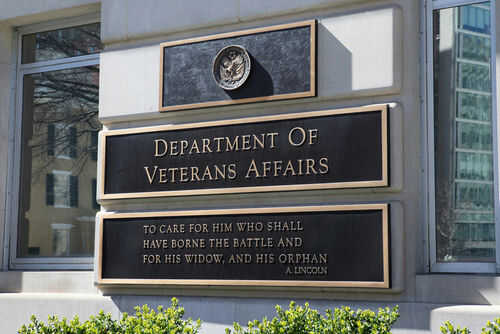
The Department of Veterans Affairs announced a memorandum of agreement with the Department of Justice on March 11, 2026, designed to initiate guardianship or conservatorship proceedings for certain vulnerable veterans. The target group is narrow on paper: veterans experiencing homelessness—or at risk of it—who are clinically determined to lack capacity to make medical decisions and who have no available family member or legal representative to act for them.
Under the agreement, VA attorneys are appointed as special assistant U.S. attorneys to help bring and participate in these cases in state courts. The stated rationale is continuity of care: when a veteran cannot consent to needed decisions, guardianship can authorize treatment plans and transitions out of prolonged hospitalization into community care or other settings that may be more appropriate. That goal matters, but it also raises immediate civil-liberty questions.
Why the Target Population Matters—and Why the Stakes Are So High
Federal data cited in reporting puts the number of homeless veterans at about 33,000 nationwide. A substantial share of homeless veterans face serious challenges, including mental illness and substance abuse, often rooted in trauma and difficult transitions to civilian life. Those realities are not political talking points—they are the context for why medical crises spiral and why decision-making disputes arise. The hard part is ensuring help does not become coercion.
Guardianship is not a routine case-management tool; it is a legal mechanism that can remove a person’s authority over major life decisions. That is why veterans advocates stress that any involuntary intervention must be used sparingly and with strong safeguards. When government lawyers step into state court to seek control over medical decisions, the process must be transparent, limited, and challengeable—especially for veterans who may already distrust institutions.
Due Process, Oversight, and the “Surprise Factor” on Capitol Hill
One of the clearest political signals from the rollout is that it reportedly surprised some lawmakers and major veterans advocacy organizations, prompting scrutiny of how the policy will be implemented. Sen. Richard Blumenthal, the top Democrat on the Senate Veterans’ Affairs Committee, said he is reviewing the memorandum and raised serious concerns about proceeding without prior congressional review. Disabled American Veterans also indicated it had just become aware of the initiative.
The research available so far leaves key operational details unclear, including the specific criteria for clinical incapacity determinations, the standard of proof, the right to independent counsel, and the practical appeal path for veterans who contest guardianship. That’s not a minor omission. The difference between “helping” and “overruling” often comes down to process: who evaluates capacity, what evidence is required, whether the veteran has representation, and how frequently the court reviews the order.
How This Fits with Existing Veteran Legal-Service Programs
The VA has already been investing heavily in legal support aimed at preventing homelessness and stabilizing veterans before crises reach a courtroom. In fiscal year 2026, the VA awarded $84 million in grants to 176 organizations to support legal services for veterans experiencing homelessness or at risk. Those services cover housing and income support issues, family law, discharge upgrades, and access to benefits—tools that can keep veterans housed and connected without stripping rights.
The legal-services expansion was authorized by a 2020 law signed in January 2021, and it reflects a prevention-first model: resolve the legal barriers that block treatment, benefits, and stable housing. The new guardianship push represents a different posture—intervention after a veteran is deemed unable to decide. Both approaches can exist side-by-side, but conservatives will rightly ask whether the VA is prioritizing the least restrictive option first, every time, with documented proof.
The Bottom Line for Veterans’ Rights and Limited Government
The VA and DOJ argue that guardianship can protect rights and prevent needless continued hospitalization by enabling appropriate transitions of care. The National Coalition for Homeless Veterans has also acknowledged that guardianship can help in some circumstances, while warning that it removes significant personal autonomy and can undermine trust if done without extreme care and transparency. Those points are not contradictory; they describe the narrow line policymakers must walk.
Veterans Affairs to pursue legal guardianship of homeless vets – The Wall Street Journal
Finally! https://t.co/VibsvtYgFo
— Jim Williams (@JimWilliamsUSA) March 12, 2026
For an America that claims to honor its veterans, the standard must be high: clear due process, independent representation, court oversight with regular review, and a requirement to exhaust less restrictive alternatives when possible. There is also scant public data on how many veterans are already under state-appointed guardianship, making it difficult to measure scope or detect mission creep. The next step should be congressional oversight that forces clarity before the policy scales.
Sources:
VA plans to seek public guardianship for some veterans deemed unable to care for themselves
VA awards $84M in grants to fight veteran homelessness
NCHV statement on VA-DOJ agreement affecting guardianship proceedings for veterans
Legal Services for Veterans (LSV) – VA Homeless Programs
DOJ, VA sign agreement to improve care for nation’s most vulnerable veterans
KLS Legal Assistance for Veterans