
Iran is testing America’s resolve at one of the world’s most critical oil chokepoints—and the consequences could hit U.S. families at the gas pump fast.
Quick Take
- Iran’s IRGC issued escalating warnings to U.S. Navy ships transiting the Strait of Hormuz, including a radio message described as “This is the last warning.”
- Two U.S. guided-missile destroyers reportedly completed a deliberate transit with identification systems switched on, signaling an overt freedom-of-navigation message.
- U.S. Central Command confirmed mine-clearing operations in the area, pointing to sustained efforts to keep the waterway open.
- Reports conflict on whether Iranian threats caused any U.S. ships to turn back, underscoring the fog-of-war problem in a tight, high-risk corridor.
U.S. Destroyers Run the Strait as Iran Issues “Last Warning”
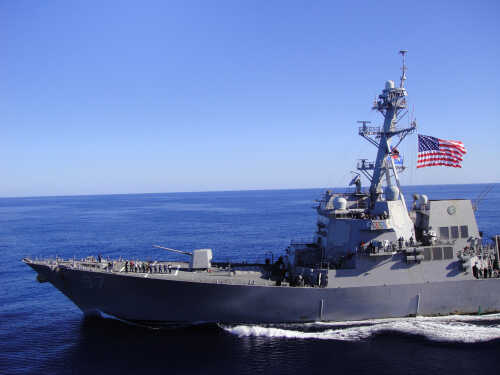
Two U.S. Navy guided-missile destroyers, the USS Michael Murphy and USS Frank E. Peterson, transited the Strait of Hormuz on Saturday in what was described as a high-profile operation. It indicates the ships kept their automatic identification systems activated, a move that effectively broadcasts position and identity in commercial lanes. Iranian Revolutionary Guard forces responded with sharp radio challenges, including a reported message: “This is the last warning.”
Iranian statements and state-linked coverage framed the transit as unacceptable for “military vessels,” while U.S. officials described the passage as routine freedom of navigation. That split matters because it shapes escalation risk: Tehran appears to be trying to impose its own “rules” over an international chokepoint, while Washington is signaling it won’t accept permission slips. The gulf between those positions leaves little room for miscalculation when ships are operating within minutes of potential contact.
Why the Strait of Hormuz Still Has the Power to Rattle the World Economy
The Strait of Hormuz carries roughly one-fifth of the world’s oil and liquid natural gas, making it a strategic pressure point that can quickly translate into higher energy prices and broader inflation. The geography is a problem all by itself: the strait is extremely narrow, limiting defensive reaction time and giving asymmetric advantages to a force willing to use mines, drones, and fast-attack tactics. U.S. naval officials have previously described the waterway as a kind of “kill box.”
Iran has historically leaned on that leverage during regional confrontation, and the latest round reflects the same playbook. It describes multiple threat systems available to Tehran’s forces, including anti-ship missiles, drones, fast boats, and mines. When that toolkit is paired with propaganda-driven messaging and ambiguous claims about “attack windows,” it complicates decision-making for commanders who must protect crews while avoiding accidental escalation that could widen conflict.
Mine-Clearing Operations Signal a Longer Campaign, Not a One-Off Transit
U.S. Central Command confirmed mine-clearing operations after the transit, including the use of underwater drones. That detail suggests the U.S. posture is not simply symbolic. Clearing mines is slow, technical work that indicates an intent to keep lanes open for commercial shipping and allied traffic. It also aligns with the larger regional buildup described, including additional U.S. forces expected later in April.
Energy analyst Bob McNally described the operational challenge as “whack-a-mole,” reflecting the reality that clearing one threat type does not remove the others. Still, the same analysis notes U.S. efforts may be reducing Iran’s ability to sustain interdiction at scale, potentially making it manageable enough for shipping to resume more normally. If that assessment proves accurate, it would reflect a classic U.S. objective: protect global commerce without conceding sovereign control of international waterways.
Conflicting Accounts Highlight the Propaganda Battle—and the Real Risk to Sailors
Iranian media reported a drone launch and suggested there was a narrow “window” for attacking U.S. vessels, while U.S. officials disputed key elements, including whether threats were received or whether ships altered course. Those contradictions are not a minor footnote; they are a feature of modern brinkmanship. Tehran benefits when insurers, shippers, and markets believe the strait is effectively under Iranian veto, even if actual capabilities are degraded by recent strikes.
What This Means for Americans Watching Washington’s Next Move
For U.S. voters already frustrated by years of economic pain tied to global instability, the Hormuz standoff is a reminder that energy security is national security. Republicans controlling Washington in 2026 gives the Trump administration more room to sustain operations and funding, but it does not eliminate the underlying dilemma: deterring Iran without stumbling into a wider war. Democrats can criticize tactics and costs, while many conservatives will prioritize protecting trade routes and projecting strength to prevent hostage-style leverage.
Key facts remain unresolved, including whether U.S. ships faced direct hostile action during the transit and how quickly mine-clearing can restore confidence for commercial traffic. What is clear is that the U.S. is signaling it will not accept Iranian limits on military passage, while Iran is trying to convert geography into political control. In a narrow strait where mistakes happen fast, the difference between “warning” and “incident” can be measured in minutes.
Sources:
Iran war: US warships transit Strait of Hormuz as IRGC issues warnings and ceasefire talks stall
Iran threatens US Navy ships in Strait of Hormuz amid rising tensions