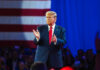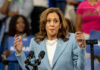


Monday night’s clash sees Trump claim he’s fired Fed governor Lisa Cook for alleged mortgage fraud, igniting a showdown over institutional independence.
At a Glance
- President Donald Trump posted on Truth Social that he has “removed” Federal Reserve Governor Lisa Cook for alleged mortgage fraud.
- Cook, appointed in 2022 and the first Black woman to serve on the Fed’s board, has refused to resign and plans to continue her duties.
- Cook’s dismissal is legally contested; Fed governors serve 14-year terms and can only be removed “for cause,” which usually entails misconduct in office.
- Legal experts warn the move could trigger a protracted court battle and unsettle financial markets due to concerns over politicizing the central bank.
- The Federal Reserve has yet to release an official statement regarding the legality of the dismissal.
Origins of the Conflict
On August 25, 2025, President Trump used his Truth Social platform to announce that he had “removed” Federal Reserve Governor Lisa Cook, citing allegations of mortgage fraud. Cook, who was nominated by President Biden in 2022 and confirmed by the Senate that May, immediately rejected the action, stating the president lacks authority to dismiss her and declaring, “I will not resign.”
Watch now: Trump moves to fire Federal Reserve Governor Lisa Cook effective immediately · YouTube
Cook is one of seven members on the Federal Reserve Board of Governors. Her role includes helping set national interest rates and banking regulations. The president’s claim rests on an assertion that she violated ethics or legal standards related to personal finances—specifically, a mortgage disclosure issue. No formal charges or independent investigations have yet been presented.
The Federal Reserve Act stipulates that board members serve 14-year terms and may only be removed “for cause,” a phrase interpreted narrowly by courts and legal scholars. Historically, such removal would require a documented case of misconduct, incompetence, or criminal action, usually backed by formal proceedings.
The Legal and Institutional Stakes
This confrontation opens a new front in debates over presidential authority and the independence of the Federal Reserve. Legal analysts widely believe the president cannot unilaterally fire a sitting Fed governor without a clear and demonstrable cause, a position backed by past interpretations of the Federal Reserve Act. The law does not define “cause” explicitly, leaving it to the courts to determine its limits.
If Cook challenges the dismissal in court, which remains likely, the outcome could clarify legal boundaries not tested since the Fed’s founding in 1913. The Supreme Court has never ruled directly on a case involving the forced removal of a sitting governor. The conflict is particularly sensitive because it risks undermining investor confidence in the central bank’s autonomy, especially during ongoing inflationary pressures.
The Federal Reserve is currently managing interest rates near historic highs, and its policy decisions directly impact global markets. Any hint of political manipulation—or even the perception of it—could disrupt monetary policy credibility and prompt volatility.
Cook’s Profile and Political Significance
Lisa DeNell Cook joined the Federal Reserve Board in 2022, becoming the first Black woman to hold such a position. Her confirmation passed by a narrow 51–50 Senate vote, reflecting partisan divisions around her academic background and public policy positions. A professor at Michigan State University and a former member of the White House Council of Economic Advisers, Cook holds a PhD in economics from the University of California, Berkeley.
Before joining the Fed, she published research on innovation, racial disparities in economics, and the macroeconomic effects of policy shocks. Critics of her appointment had questioned her experience in monetary economics, though her defenders pointed to her broad expertise in economic development and regulatory frameworks. Her presence on the board had been seen as a diversification of both demographic and academic perspectives within the Fed.
The outcome of this episode may set precedents not just for the legal limits of executive power, but also for the long-term credibility and independence of one of the most powerful central banks in the world.
Sources
The Guardian
Financial Times
AP News