

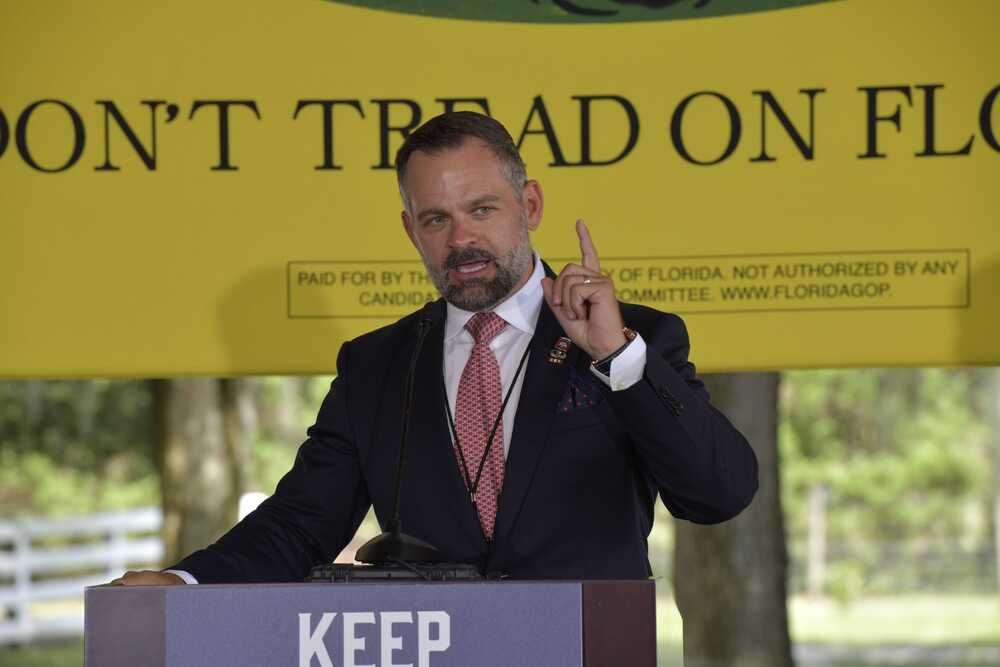
House Republicans are finding out—again—that “family values” rhetoric gets tested hardest when an ethics problem lands inside their own majority.
Quick Take
- Speaker Mike Johnson declined to condemn Rep. Cory Mills after a Florida judge issued a protective order tied to alleged threats involving explicit images of an ex-girlfriend.
- Johnson said he had not reviewed the details and pointed reporters to the House Ethics Committee and to Mills himself for answers.
- Mills has faced multiple lines of scrutiny since early 2025, including allegations involving stolen valor, domestic violence claims, and potential financial conflicts; he denies wrongdoing.
- Democrats are using the controversy to attack GOP credibility, while some Republicans argue for due process through Ethics rather than public punishment.
Johnson’s Press-Conference Dodge Puts “Protect Women” Messaging Under a Microscope
House Speaker Mike Johnson faced pointed questions after reports that a Florida judge granted a protective order against Rep. Cory Mills, a Republican from Florida. The order stemmed from claims by Mills’ ex-girlfriend, Lindsay Langston, that he threatened and harassed her, including alleged threats to release nude images or videos. Johnson did not condemn Mills, saying he had not looked into the details and that reporters should ask Mills directly.
Johnson’s response matters because he has publicly framed many cultural debates around protecting women and families, language that resonates strongly with older conservative voters. In this episode, he instead emphasized process—deferring to the House Ethics Committee—while still calling Mills a “faithful colleague” in public remarks reported by multiple outlets. That split between message discipline and procedural deflection is now the political center of the story, not just the allegations themselves.
What the Protective Order and Timeline Show—And What They Don’t
It describes alleged threats beginning in late February 2025, followed by escalating claims of harassment through multiple accounts. The protective order was issued in October 2025, and reports also said Langston alleged Mills had a staffer contact her after the filing—an allegation that, if substantiated, would raise additional questions about judgment and workplace boundaries. At the same time, Mills has not been criminally charged related to these allegations.
That “no criminal charges” point cuts in two directions. Conservatives who prioritize due process will view it as a reason to avoid trial-by-headline punishments, especially when partisan incentives are obvious. But voters also expect Congress to police itself faster than the court system does. A protective order is not a conviction, yet it is a formal legal action that signals a judge found enough basis for restrictions—exactly the kind of fact pattern that fuels public distrust in institutions.
A Broader Ethics Cloud: Stolen Valor Claims, Domestic Violence Allegations, and Conflict Questions
The Mills controversy is not occurring in isolation. Separate reporting and political statements have linked him to allegations involving stolen valor—claims that he misrepresented acts of rescue in conflict zones—along with earlier domestic violence accusations and questions about potential self-dealing connected to federal contracting. Mills has denied wrongdoing, and the House Ethics Committee has been described as reviewing aspects of his conduct. The committee’s confidentiality, however, can make accountability feel invisible to the public.
That opacity is a recurring problem in Washington. Congress often asks Americans to trust investigations they cannot see, with timelines that stretch for months while leaders keep members in good standing. Even when that restraint is grounded in fairness, it can look like elite protection—especially to citizens who already believe that powerful people get different rules. In an era when both left and right suspect “deep state” style self-preservation, slow-walking ethics issues fuels the worst assumptions.
Majority Math vs. Accountability: Why Leadership Hesitates
GOP leaders operate under constant pressure to protect a governing majority, particularly when the margins are tight and Democrats are eager to turn scandals into leverage. That political reality does not excuse inaction, but it helps explain why Johnson leaned on the Ethics Committee rather than drawing a clear public line. Republicans such as Rep. Nick LaLota have echoed the view that the proper move is to “gather facts” and let established procedures run.
Critics inside the party argue that process cannot substitute for standards. Rep. Nancy Mace, for example, has publicly attacked Mills in harsh terms while accusing him of retaliation and other misconduct. Democrats, meanwhile, have attempted censures and used party messaging to portray Johnson’s approach as a pattern of shielding colleagues. The end result is predictable: public focus shifts away from policy—border enforcement, energy costs, inflation—and back onto whether Congress can enforce basic conduct expectations.
Why This Story Resonates Beyond One Congressman
This episode taps into a shared frustration across the electorate: leaders talk about reform and accountability, but institutional incentives often reward silence and delay. Conservatives who want limited, competent government see ethics paralysis as proof that the system protects insiders first. Liberals who fear discrimination or abuse of power see the same paralysis as evidence that status shields wrongdoers. Until the Ethics Committee produces clear outcomes—or leadership sets clearer interim standards—both sides will keep reading the worst motives into every delay.
Mike Johnson unwilling to condemn Cory Mills despite citing daughters as reason ‘we have to protect women’
See video:https://t.co/rcZxjYENCe
— JayCee – Debunker of Lies (@FoolsBelieve) April 22, 2026
For Republicans controlling Washington in 2026, the practical question is straightforward: can the party govern while convincing voters it holds its own to a real standard? Johnson’s refusal to condemn Mills may prove prudent if allegations collapse under scrutiny. But if the ethics process drags on without transparent resolution, the cost will be paid in public trust—exactly what Americans across the spectrum say is already running out.
Sources:
https://www.axios.com/2025/10/15/mike-johnson-abuse-allegations-cory-mills
https://dccc.org/cory-mills-created-the-tony-gonzales-playbook-for-house-republicans/