

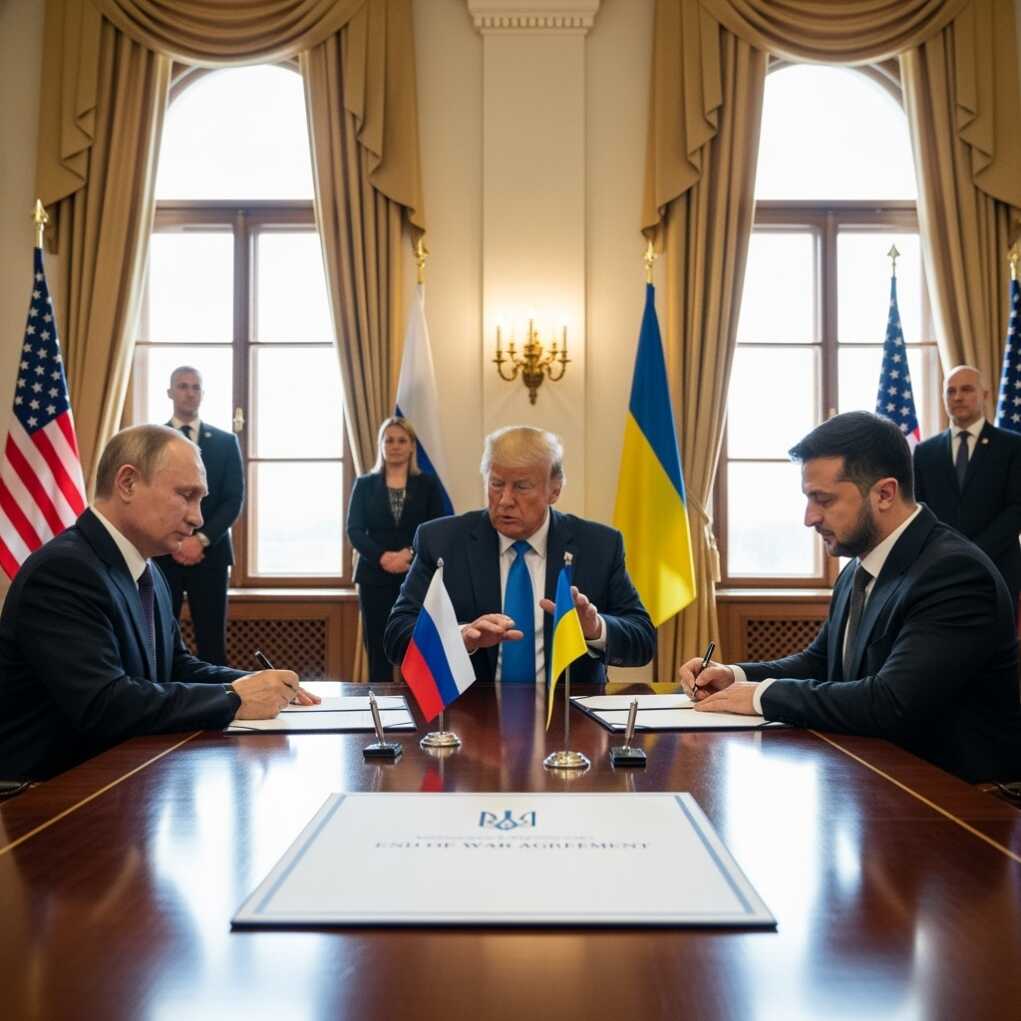
President Trump announced on October 16, 2025, that he will meet Russian President Vladimir Putin in Budapest within two weeks to discuss a resolution to the ongoing conflict in Ukraine. The decision follows a “very productive” phone conversation between the two leaders. This direct engagement approach by President Trump has been presented as a departure from previous multilateral strategies.
Story Highlights
- President Trump and President Putin have agreed to a summit in Budapest within two weeks.
- The meeting follows a phone call described as “very productive” by both leaders.
- Hungary’s Prime Minister Viktor Orbán has offered Budapest as a neutral host for the negotiations.
- Ukraine’s exclusion from the initial bilateral talks has raised concerns among observers.
- The summit is seen as an example of President Trump’s direct diplomatic approach, bypassing traditional EU and NATO channels.
Trump Announces Direct Summit with Putin on Ukraine
President Trump confirmed on October 16, 2025, that a meeting with Russian President Vladimir Putin is scheduled to take place in Budapest within the next two weeks. The purpose of the summit is to discuss potential avenues for ending the conflict in Ukraine. Both leaders characterized their recent two-hour phone conversation as “very productive,” leading to the decision for direct talks. This initiative marks a shift towards direct engagement in addressing the conflict.
Hungarian Prime Minister Viktor Orbán promptly offered Budapest as the host city for the summit, emphasizing Hungary’s role as a neutral venue for peace discussions. The selection of Budapest carries historical weight, recalling the 1994 Budapest Memorandum, which involved Ukraine’s relinquishment of nuclear weapons in exchange for security assurances.
https://twitter.com/nicksortor/status/1978873169835331726
Concerns Raised Over Ukraine’s Exclusion
The bilateral nature of the planned discussions has prompted questions regarding Ukraine’s direct participation in negotiations concerning its future. While Ukrainian President Zelenskyy is scheduled for a separate meeting with President Trump at the White House, Ukraine is not included in the Budapest talks. Critics suggest this approach could potentially marginalize Ukrainian sovereignty and influence in the peace process.
Secretary of State Marco Rubio and Russian Foreign Minister Lavrov are expected to conduct preparatory talks in advance of the summit. Analysts have indicated that any agreement not supported by Ukraine may face challenges in achieving long-term stability. The exclusion of Ukraine from peace negotiations directly impacting its territory has been noted as a significant development.
Strategic Implications for International Relations
President Trump’s decision to engage directly with President Putin is consistent with an “America First” foreign policy stance, prioritizing national interests. The administration aims to achieve a foreign policy outcome while potentially reducing American involvement in the protracted conflict.
The planned summit is expected to impact the roles of the European Union and NATO in the peace process, potentially reflecting existing transatlantic discussions on Ukraine policy. European allies have expressed concerns about the implications of direct US-Russia negotiations. This approach signifies a move towards bilateral problem-solving in international relations.
Watch the report: Trump Says He Will Meet Putin In Budapest Soon As Zelensky Visits US | Firstpost Live | N18G
Sources:
Budapest to Host Trump-Putin Peace Summit Within Two Weeks
Trump Plans Budapest Meeting with Putin to End Ukraine War
Trump and Putin to Meet in Budapest
Trump Putin Budapest Ukraine Peace Talks
Trump Putin Meet Budapest Talks End Ukraine War