
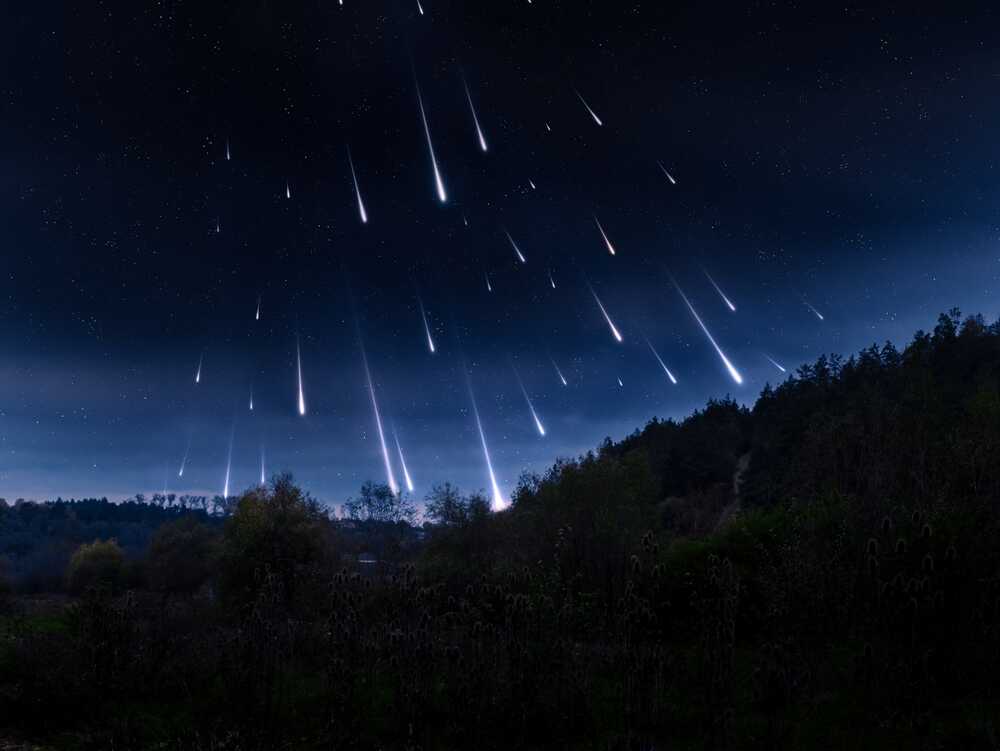
The 2025 Perseid meteor shower promises a stellar display — but an intrusive moon may steal the show’s brilliance.
At a Glance
- The Perseid meteor shower will peak on August 12–13, 2025.
- A bright waning gibbous moon will wash out dimmer meteors.
- The clearest views are expected between July 18–28, near the July 24 new moon.
- Northern Hemisphere observers, especially pre-dawn, will have the best vantage points.
Perseid Meteor Shower: A Celestial Favorite
Each summer, the Perseid meteor shower streaks across the night sky, captivating stargazers with fiery trails left by comet 109P/Swift-Tuttle. These meteors, named for their origin point in the constellation Perseus, have lit up human history for nearly two millennia, with documentation stretching back to ancient Chinese astronomers.
The shower is active from July 17 to August 24, peaking overnight on August 12–13. Normally, viewers can expect upwards of 90 meteors per hour under dark skies. But in 2025, an 84% illuminated waning gibbous moon will flood the night with light, masking many of the fainter meteors and cutting visibility down to an estimated 25 meteors per hour.
The Best Time to Watch
For a better chance at an unobstructed meteor experience, astronomers recommend observing earlier in the shower’s cycle, between July 18–28. The night of July 24, marked by a new moon, will offer the darkest skies and best conditions for viewing.
The optimal viewing window falls after midnight until just before dawn, when the Perseus constellation climbs highest. For the clearest view, seek out locations far from urban light pollution, and let your eyes adjust by minimizing exposure to screens or artificial lighting.
Watch a guide: How to Watch the Perseids in 2025.
Cultural Lore and Scientific Insight
Beyond its visual appeal, the Perseid meteor shower carries a rich cultural legacy. Dubbed the “Tears of St. Lawrence,” the shower’s peak aligns closely with the feast of the Christian martyr on August 10, adding symbolic depth to the celestial event.
Science, too, benefits from this annual display. Agencies like NASA and the International Meteor Organization invite the public to log fireball sightings, aiding research into meteor compositions and atmospheric interactions. Studying the Perseids provides insights into the behavior of cometary debris and Earth’s orbital journey through the remnants of Swift-Tuttle’s path.
Enduring Wonder Despite the Moonlight
While the moon’s glow will temper the spectacle at its peak, the 2025 Perseid meteor shower still offers moments of awe and wonder. This enduring astronomical event connects people across cultures and generations, reminding us of our shared curiosity about the cosmos.
Gather your gear, find a dark sky, and indulge in the cosmic dance overhead. Even under a moonlit sky, the Perseids remain a testament to the beauty and mystery of our universe.