

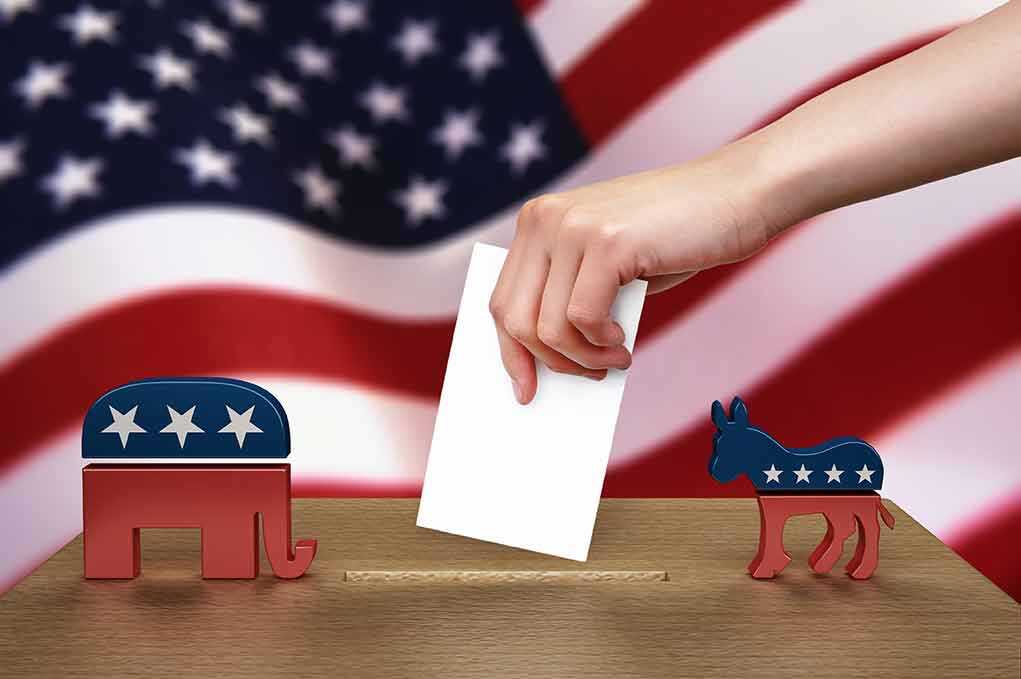
Election forecasters now give Democrats the edge for House control, putting the conservative agenda at risk if Republicans falter.
Story Snapshot
- Multiple polling averages show Democrats leading the national generic ballot by about eight to ten points.
- Independent models place Democrats as favorites to win the House, with some projecting more than 230 seats.
- Senate control is a closer call, but several forecasts still tilt toward Democrats.
- Republicans counter that polls may be undercounting their voters, and they hold a major cash and ad edge.
What The Latest Polls And Models Actually Show
Major polling averages report a sizable Democratic lead on the generic congressional ballot in mid October. RealClearPolling showed Democrats around 50 percent to Republicans near 42 percent, an eight to nine point gap. Other trackers posted similar spreads. These national sentiment measures line up with forecasts that now favor Democrats to capture the House. Decision Desk HQ placed Democratic odds near four in five and projected a seat count above the current GOP tally.
Several well known modelers have also raised the probability of a Democratic Senate. Some estimates give Democrats a modest edge, while others put the odds higher. The split reflects how many Senate races remain close. A small polling miss in a few states could swing control. Coverage still stresses that the House looks more favorable for Democrats than the Senate, where margins and maps are tighter this cycle.
Why A Big National Lead Does Not Guarantee A Wave
Analysts warn that a national generic ballot is not a seat map. District lines, incumbents, fundraising, and local issues decide who actually wins each race. An eight point national edge can translate into smaller seat gains if votes pile up in safe districts. That is why professionals pair national polls with district data and past results. The evidence shows this pattern every cycle and urges care with sweeping wave talk.
Forecasts also carry real uncertainty. A model that says 77 percent or even 93 percent is not a lock. Those numbers still allow defeat if late news moves voters or turnout shifts. Errors can be correlated across polls if the same kinds of voters are missed. That risk grows in the Senate, where a few one to four point races can flip control either way. Responsible readers should treat probabilities as risk ranges, not guarantees.
The GOP Case: Polling Blind Spots And A Money Advantage
Republicans argue that public polls may again miss right leaning voters who refuse surveys or answer late. A veteran GOP strategist said the 2016, 2020, and 2024 patterns could repeat, especially in close Senate races. House Speaker Mike Johnson has said he is confident Republicans will keep the majority, rejecting claims of an impending blue wave. His message centers on polling bias and ground strength in key districts.
Canada and the United States are formally accusing each other's governments of electoral interference in the 2026 midterm cycle. That's the headline. Here's why the headline undersells it.
The operative shift isn't the accusation itself. It's what the accusation normalizes.
For…
— Foreign Interference Research Center (@ForIntOrg) October 22, 2026
Financial data supports part of that case. Republican national committees entered September with roughly two hundred thirty three million dollars in cash, far more than Democrats. Outside groups added a large ad push. Reports show Republicans held an aired ad advantage in most top Senate battles and in many contested House seats. Money does not replace votes, but it can fund turnout, local outreach, and late messaging where margins are thin.
How Conservatives Should Read The Numbers Now
The current public data favors Democrats for the House. The Senate remains within reach for either party. That is the plain reading of the averages and models. At the same time, the map is close enough that turnout and message discipline can still decide control. Conservatives who care about border security, energy independence, parental rights, and guarding the Supreme Court should treat these weeks as decisive, not defeated.
Readers should focus on actions that move real votes. Support candidates who back limited government and the Constitution. Volunteer where races are close. Use trusted local networks, not only national headlines. Polls show the risk. Ground work closes the gap. If conservatives turn out and compete in every swing seat, models can be proven wrong the only way that matters: at the ballot box.
Sources:
dailymail.com, riotimesonline.com, theconversation.com, usatoday.com, nymag.com, rmb.reuters.com, thehill.com, yahoo.com, news.kalshi.com, pbs.org, cbsnews.com, cnbc.com, politico.com