
A late-night host vowed to report the sitting president to federal regulators over a rally joke about Iran striking U.S. cities.
Story Highlights
- Jimmy Kimmel condemned President Trump’s rally remark about Iran “taking out” Los Angeles and San Diego.
- Kimmel said he would report Trump to the Federal Communications Commission (FCC) over the comment.
- Reports captured Trump linking war costs to a “small price to pay,” drawing backlash and defense.
- FCC authority over political speech is narrow and centered on broadcast indecency rules.
Kimmel Targets Rally Remark and Threatens FCC Complaint
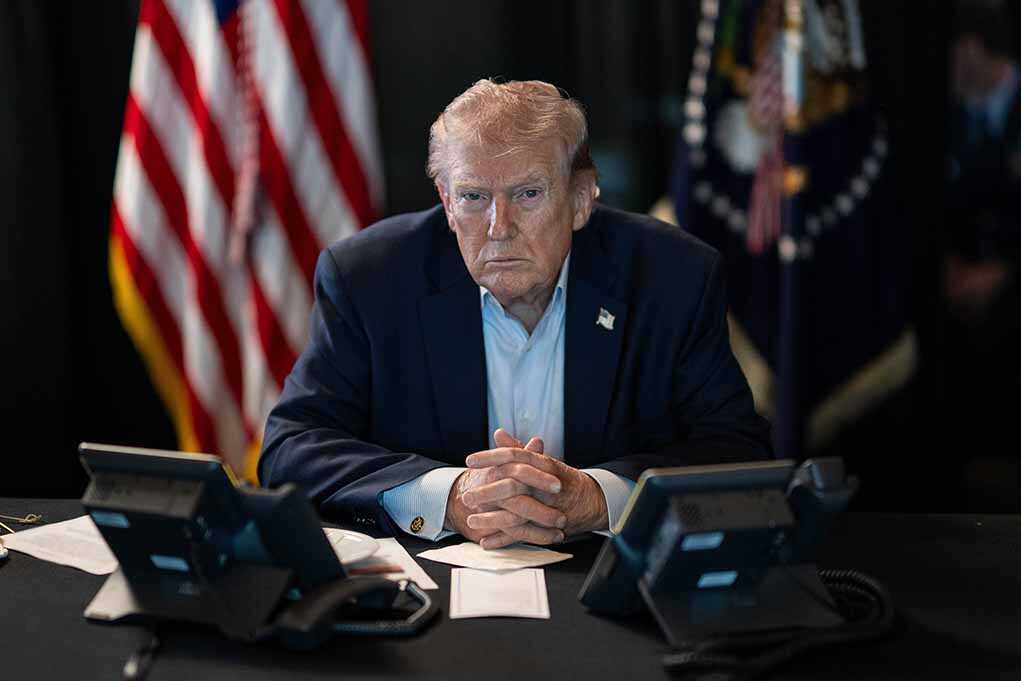
Jimmy Kimmel criticized President Trump after a Nebraska rally clip showed Trump saying Iran could “take out” Los Angeles and San Diego, calling the comment “appalling.” Kimmel told his audience he would report Trump to the Federal Communications Commission. Coverage described Trump’s point as tying war costs to national safety, while the specific “take out” line drove the outrage cycle and prompted quick responses across media and politics.
Forbes and other outlets echoed the exchange and noted cheers from the crowd when Trump mentioned the two California cities. Kimmel framed the remark as beyond normal political humor and pushed the idea of a formal complaint to federal regulators. Entertainment press also highlighted Kimmel’s charge of hypocrisy in how critics and supporters judge when a “joke” crosses a line, especially when the target is a city of millions.
What FCC Can and Cannot Police on Air
The Federal Communications Commission’s strongest powers concern indecent or obscene content on broadcast stations, not general political speech. Supreme Court rulings recognized limited FCC control over broadcast indecency due to its pervasiveness, establishing a narrow path for enforcement tied to content, timing, and audience exposure. Past commentary explains the commission generally avoids policing viewpoint or satire complaints that do not meet those indecency thresholds.
News coverage in recent years shows many calls to “report it to the FCC” arise during culture-war fights but rarely lead to sanctions. The commission often dismisses petitions that seek punishment for political satire or partisan commentary on air. When people file complaints over political remarks, they typically run into First Amendment protections and the agency’s limited mandate. That history sets a high bar for the kind of complaint Kimmel threatened on his show.
Why the Comment Touched a Nerve
Media accounts emphasized the shock value of a president riffing about an enemy “taking out” American cities while supporters cheered. The reaction was swift because Americans expect leaders to stress defense of our homeland, not imagine it under attack. Critics argued the remark undercut national unity during war. Supporters replied it was a joke meant to make a different point about tradeoffs and resolve. The clip fueled a fresh round of outrage and counter-outrage online.
Coverage also tied the moment to a familiar pattern around political speech: a charged line, a “just joking” defense, and demands for regulatory action. That cycle often ends with renewed talk about free speech, fairness, and media bias. In this case, Kimmel’s vow to go to federal regulators put the focus on government power over speech and the limits on using agencies to settle political scores. Prior decisions show those limits are real and tested.
Constitutional Stakes and Conservative Takeaways
Conservatives see two core issues here: national security and free speech. Americans want strong leadership against Iran and any threat to our cities. They also want the First Amendment to stand above partisan pressure. The Federal Communications Commission is not a speech police for political ideas. Calls to sic regulators on a president’s remarks risk normalizing government control of political debate. Courts have kept that door mostly closed for good reason.
Viewers should separate taste from law and policy. Many people may dislike the joke. But using the Federal Communications Commission to punish political speech would open a path to censorship. That path would almost surely be used against conservative hosts, pastors on local radio, and anyone who challenges elite narratives. The right answer is more speech, clearer arguments, and steady leadership that keeps America safe while guarding the First Amendment for everyone.
Sources:
mediaite.com, forbes.com, independent.co.uk