
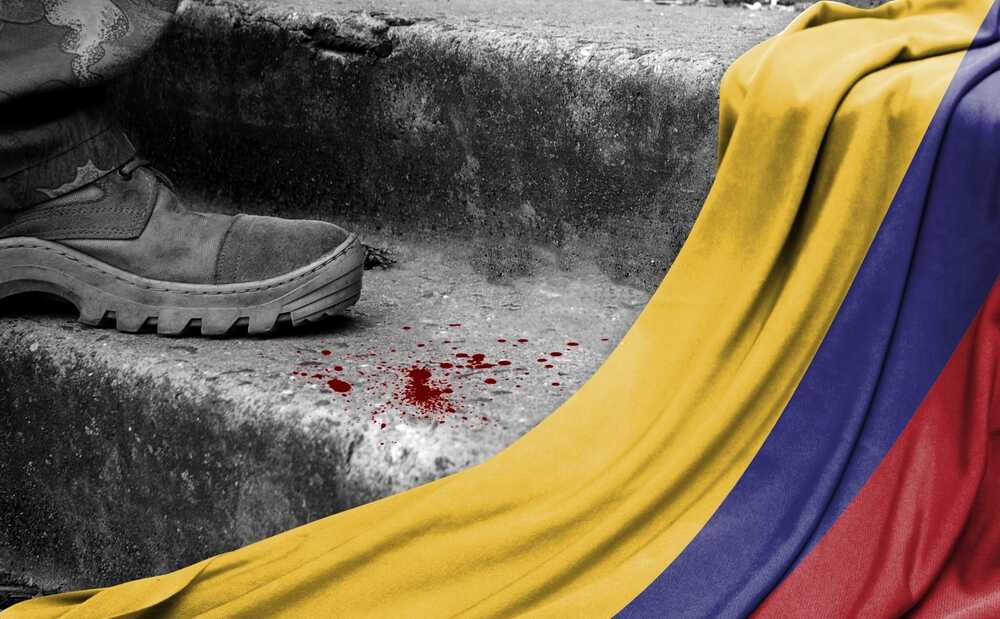
As Colombia’s election season turns deadly, the targeted killing of two right‑wing campaign workers is a grim reminder of what happens when a nation lets political violence fester instead of defending law, order, and free elections.
Story Highlights
- Two staffers for conservative presidential candidate Abelardo de la Espriella were gunned down while on campaign duty in rural Colombia.
- The murders occurred in a region contested by terrorist and guerrilla factions, raising fears of organized political intimidation.
- Authorities admit they do not know who ordered the attack, leaving a dangerous vacuum of information and accountability.
- The killings spotlight how fragile election security and basic civil liberties become when the state fails to control violent groups.
Right‑Wing Campaign Team Ambushed In Colombia’s Violent Heartland
Two campaign workers for right‑wing Colombian presidential candidate Abelardo de la Espriella were shot dead in a rural area of Cubarral, in Meta province, as the country moves toward national elections at the end of May.[1] Former mayor Rogers Mauricio Devia and staffer Eder, or Fabian, Cardona were traveling by motorcycle with campaign materials when four hooded gunmen on motorcycles intercepted them and opened fire, according to reporting based on police and campaign statements.[1][3] Both men died at the scene.
Reports identify Devia as a former mayor of Cubarral, who governed the city between 2020 and 2023, and who was now coordinating de la Espriella’s local campaign operation.[1] Cardona assisted with logistics, meaning both victims were directly engaged in election work when they were attacked.[1] Colombia’s Public Defender’s Office in Meta warned that the killings could damage “the exercise of political rights and democratic participation” ahead of the May 31 presidential vote, which will end the term of current leftist president Gustavo Petro.
Unanswered Questions About Who Ordered The Attack – And Why
Authorities have confirmed the double homicide but have not assigned responsibility to any armed group, leaving Colombians with more questions than answers.[1] Colombia’s Interior Minister Armando Benedetti publicly stated that investigators do not yet know why Devia was attacked, underscoring how motive and authorship remain officially unconfirmed. De la Espriella has blamed a dissident faction of the former Revolutionary Armed Forces of Colombia guerrillas for the murders, but he has not provided evidence, and Reuters notes that no proof has been released to support that attribution.[1]
Local reporting stresses that the region where the ambush took place is disputed by multiple armed factions, including two organizations the United States has officially designated as terrorist groups, as well as a splinter group of the Revolutionary Armed Forces of Colombia. That contested landscape means killings can serve many purposes—territorial control, intimidation, or political messaging—yet the available record contains no intercepted communications, claims of responsibility, or forensic analysis tying this attack to a specific faction.[1][3] Until investigators publish concrete findings, the shooters’ true chain of command remains unknown.
Election Violence, Conservative Targets, And Lessons For American Voters
The Cubarral ambush is part of a broader pattern of election‑season violence in Colombia, where armed groups and criminal networks have repeatedly tried to shape politics through fear.[1] De la Espriella recently claimed there was a separate sniper assassination plot against him involving government intelligence personnel, illustrating how threats and alleged plots now surround his right‑wing campaign.[1] The Public Defender’s Office emphasized that attacks like this one chill participation and deter citizens from openly backing candidates, especially those challenging entrenched leftist or corrupt interests.
For conservative Americans watching from a distance, this story is not just about Latin America; it is a warning about what happens when the rule of law erodes and political disagreements are settled with bullets instead of ballots. Colombia’s experience shows how quickly extremists, traffickers, or radical militants can exploit weak institutions to intimidate right‑leaning candidates and their supporters.[1] It also highlights why defending secure borders, fighting transnational crime, and standing firmly with real democracies against armed radicals remain vital to protecting freedom, at home and abroad.
Sources:
[1] Web – Two members of Colombian right-wing presidential candidate’s …
[3] Web – Two members of Colombian right-wing presidential candidate’s …