

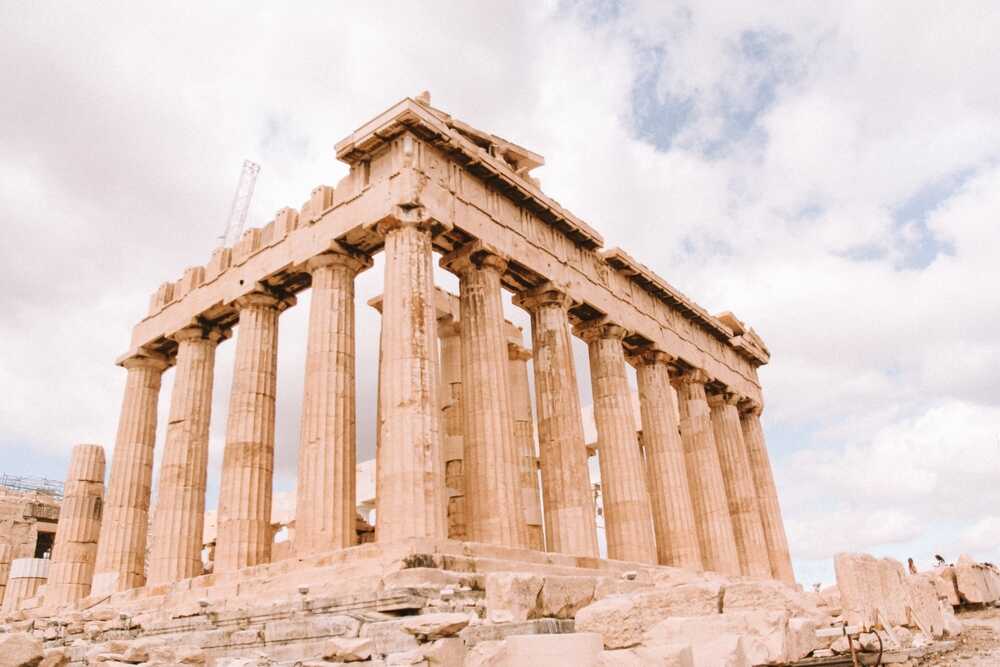
After two decades, the western façade of the Parthenon in Athens has been unveiled, marking a significant milestone in its ongoing restoration. This event allows the public to view the ancient structure without obstruction, coinciding with historical anniversaries and generating renewed interest from both local and international communities. Restoration efforts are set to continue, with new scaffolding planned for 2026 as part of a phased approach to preserve this UNESCO World Heritage Site.
Story Highlights
- The Parthenon’s western façade is now visible for the first time in over 20 years.
- Scaffolding removal coincides with historical anniversaries, enhancing cultural significance.
- Restoration work is scheduled to continue, with new scaffolding planned for installation in 2026.
- The event has generated increased interest in the monument from both local and international communities.
Athens, Greece – October 13, 2025 – The western façade of the Parthenon in Athens is now free of scaffolding, marking a significant development in the monument’s ongoing restoration efforts. This is the first time in over two decades that this section of the ancient structure has been visible without obstruction. The removal of the restoration structures provides an opportunity for residents and visitors to view the architectural details of the Parthenon.
For the first time in 20 years, Athenians see the Parthenon without scaffolding https://t.co/yHUVcD9m3j pic.twitter.com/6lOvcq9iwT
— Kathimerini English Edition (@ekathimerini) October 10, 2025
The Acropolis Monuments Conservation Service (YSMA) has overseen this phase of the project, which aims to preserve the structural and aesthetic integrity of the Parthenon. This restoration milestone coincides with the anniversary of the 1687 Venetian bombardment, adding historical context to the event. While the current phase allows for an unobstructed view, new, lighter scaffolding is scheduled for installation in early 2026, indicating a phased approach to the restoration.
The Parthenon, designated a UNESCO World Heritage Site, represents ancient Greek culture and has endured damage from various historical events and environmental factors. The current restoration is part of a comprehensive program initiated in the early 2000s, designed to balance public access with preservation. The Greek Ministry of Culture and organizations such as UNESCO provide support for these efforts.
Both local Athenians and the international community have expressed interest in this temporary unveiling. The event has also contributed to increased media attention and tourist visits.
Restoration work on the Parthenon is ongoing, with efforts continuing on the pediment corners and the tympanum’s outer orthostat. The phased restoration strategy ensures that each section of the monument receives careful preservation. The planned installation of lighter scaffolding in 2026 represents the next stage in this long-term project. These restoration efforts are anticipated to serve as a model for similar heritage projects worldwide.
The continued restoration underscores the commitment to preserving the Parthenon’s historical and cultural significance. The monument remains a testament to ancient Greek civilization.
Watch the report: Parthenon in Greece is free of scaffolding for first time in decades
Sources: