

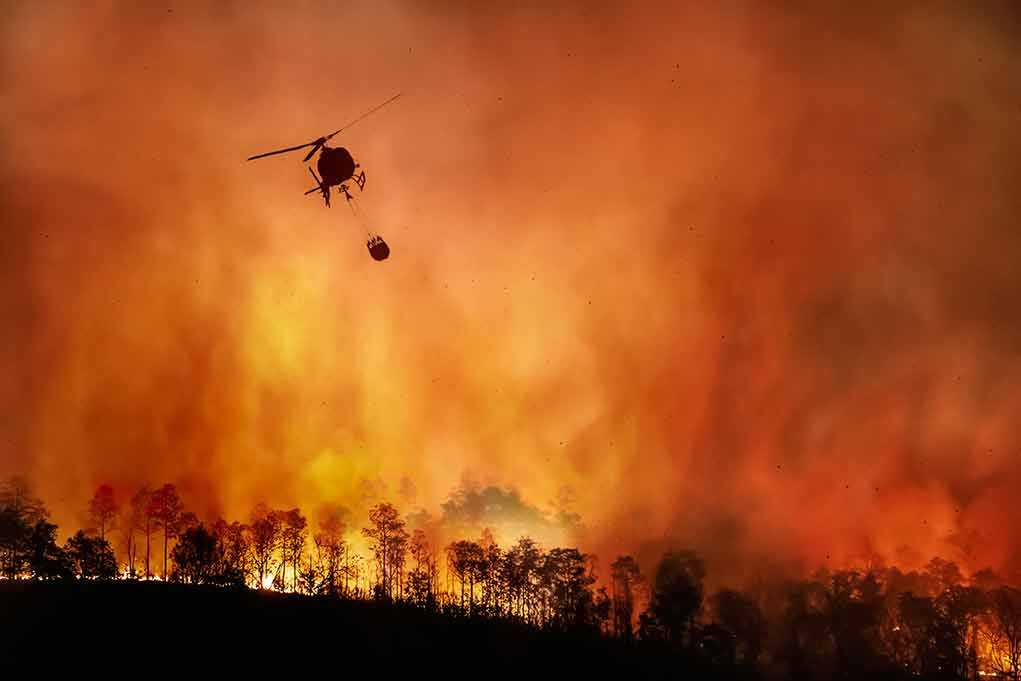
A fast-moving wildfire has forced Indonesia to close all access to Mount Bromo, one of East Java’s biggest tourist draws.
Quick Take
- Mount Bromo National Park was closed to all tourists as the fire spread.
- The park operator said the shutdown was needed for safety and firefighting.
- The blaze grew to about 176 hectares, up from about 60 hectares days earlier.
- Authorities deployed helicopters, drones, and large response teams to battle the fire.
Park Closure Ordered as Fire Grows
Indonesia shut Mount Bromo National Park to all tourist activity after a wildfire spread across the active volcano’s caldera area. Reuters reported that the closure took effect Saturday evening and would last for an undetermined period, while Antara said the park authority set the shutdown at 10 p.m. local time and kept it open-ended. The park operator said the move was meant to protect visitors, staff, and nearby residents.
The scale of the fire made the decision easier to understand on plain safety grounds. Reuters said the blaze had grown from about 60 hectares on Thursday to roughly 176 hectares by Sunday. Xinhua and the Associated Press reported the same widening fire and said no casualties had been reported. For park officials, a full closure was a direct way to keep people out while crews worked.
Firefighting Teams Face Rough Terrain
Officials also linked the closure to active firefighting work. Reuters said East Java’s disaster mitigation agency deployed water-bombing helicopters and water-spraying drones to help extinguish the flames. Antara reported that the park chief said all entrance gates were strictly closed to tourists so crews could work more effectively and maintain collective safety. That matters in a place like Mount Bromo, where access is limited and the terrain is steep and volcanic.
Other reporting shows that the response was already unfolding before the full shutdown. RRI said the park had first tightened access in early August by closing some entrances while still allowing limited access through others. Reuters also reported earlier that disaster authorities had sent a fire truck, a water tank, and a drone, while steep terrain and wind made the blaze harder to contain. The later total closure shows the situation had escalated beyond a narrow visitor advisory.
What the Record Shows, and What It Does Not
The public record strongly supports the emergency rationale, but it still leaves important questions unanswered. The available reports do not include a full risk memo, incident command log, or formal hazard study explaining why total closure was better than a partial restriction. They also do not identify the fire’s cause. For readers who want more than a press statement, that missing paperwork matters.
Still, the basic facts point in one direction. Mount Bromo is a major tourist destination, and authorities said they closed it to protect people while fire crews worked. Tickets could be rescheduled or refunded, which suggests the park treated this as a serious emergency, not a routine weather delay. With the fire still active and the cause unknown, the burden now shifts to officials to explain the decision in fuller detail.
The Mount Bromo tourist area has once again been completely closed following fires at several locations within Bromo Tengger Semeru National Park (TNBTS).
The closure was implemented as a safety measure to protect tourists and to allow park staff to carry out firefighting and… pic.twitter.com/ankMzTnQt2
— indoscopenews (@indoscopenews) August 9, 2026
Sources:
youtube.com, en.antaranews.com, english.news.cn, barrons.com, facebook.com, apnews.com