

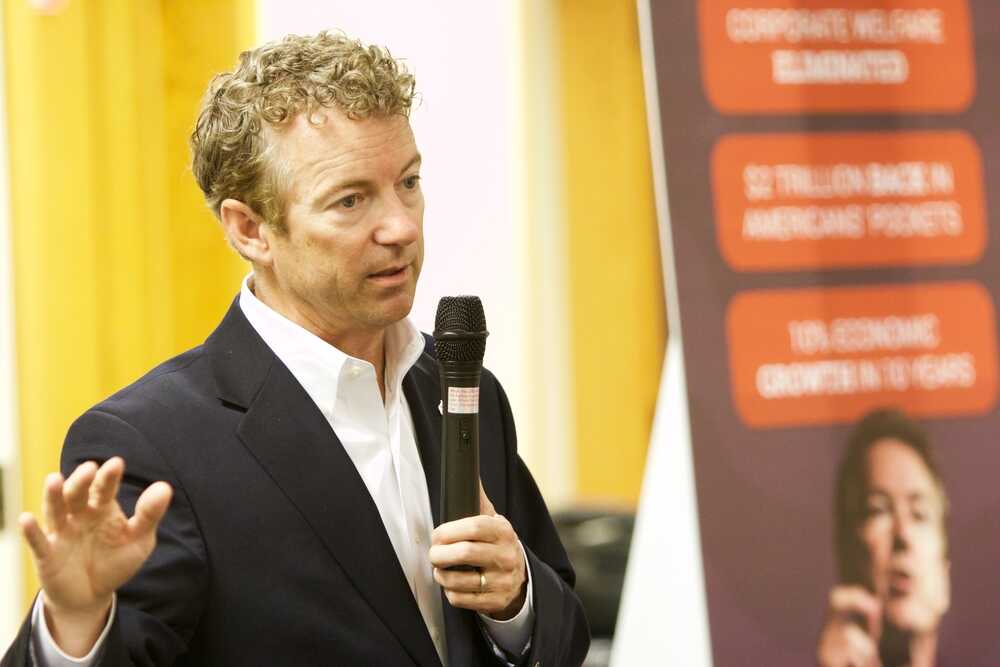
A Trump-era DHS shakeup ran straight into a Senate reality check when Rand Paul chaired Markwayne Mullin’s confirmation hearing after their very public feud.
Story Snapshot
- Sen. Rand Paul, as Homeland Security Committee chair, presided over the March 18 confirmation hearing for Trump’s DHS nominee Sen. Markwayne Mullin.
- The hearing followed weeks of headlines over personal tension after Mullin publicly insulted Paul and referenced Paul’s 2017 assault.
- President Trump nominated Mullin to replace DHS Secretary Kristi Noem after criticism of how immigration management was handled early in the term.
- With Republicans controlling the Senate, Mullin’s path to confirmation appeared likely, but the hearing highlighted how internal GOP friction can complicate oversight.
Why This Confirmation Hearing Drew Extra Scrutiny
Sen. Rand Paul chaired the Senate Homeland Security and Governmental Affairs Committee hearing on March 18 as Sen. Markwayne Mullin, President Donald Trump’s pick for DHS secretary, made his case to lawmakers. Confirmation hearings are typically predictable, but this one carried an added layer: the committee chair and the nominee had already traded public barbs. Even with a Republican Senate, the episode underscored that personalities can’t erase the Senate’s duty to vet executive power.
Reporting leading up to the hearing emphasized that Paul planned to move the process forward despite the friction, signaling that committee procedure would remain intact. That matters for conservatives who want DHS to execute the law, not improvise policy through bureaucratic “guidance.” When the department controls border enforcement, immigration detention, and key security functions, the leadership transition is not just a staffing note—it shapes how aggressively DHS will carry out the President’s agenda within statutory limits.
How Noem’s Exit Set the Stage for Trump’s Pick
President Trump’s decision to replace Kristi Noem came after a period of political pressure around immigration management. Accounts of the transition describe falling approval tied to immigration handling and the challenge of answering for controversies. Trump defended Noem’s tenure publicly, while Sen. Thom Tillis argued her experience did not scale to an agency the size of Homeland Security. The underlying issue for voters is straightforward: DHS is where campaign promises about border control meet operational reality.
For a conservative audience that watched years of lax enforcement and mixed messaging under prior administrations, the leadership swap is being treated as a signal that results are expected quickly. Even so, it offers limited detail on what operational changes Mullin pledged beyond broad “priorities” discussed at the hearing. That gap is important: without clear, measurable commitments, Washington often defaults to familiar patterns—slow implementation, internal resistance, and political blame-shifting when outcomes lag.
The Paul–Mullin Feud That Followed Them Into the Hearing Room
The tension was not abstract. In February, Mullin publicly insulted Paul during a breakfast event in Tulsa, calling him a “freaking snake” and venting about Paul’s role as the committee chair overseeing DHS. Mullin also referenced Paul’s 2017 assault by a neighbor, saying he understood why it happened, and criticized Paul for sending a fundraising letter afterward. Those remarks elevated the hearing from routine to personal, and they raised questions about discipline and judgment under pressure.
Mullin’s public history also includes a well-known 2023 episode during a Senate hearing in which he challenged Teamsters President Sean O’Brien to a physical fight, prompting intervention from then-chairman Bernie Sanders. That context matters because DHS is not a cable-news panel; it is a sprawling agency that demands steady management of law enforcement components and crisis response. The research does not provide detailed exchanges from the March 18 hearing itself, making it difficult to assess how Mullin addressed concerns about temperament or decision-making.
What the Senate Can—and Should—Demand From a DHS Secretary
Even in a unified-government moment, the Senate’s role is to test whether a nominee will execute the law faithfully and respect constitutional boundaries. DHS sits at the center of high-stakes questions: border enforcement, removal operations, screening, and coordination with state and local law enforcement. Conservatives frustrated by the last decade’s “rule-by-memo” style governance will be watching for whether the department returns to clearer statutory compliance and transparent enforcement priorities rather than politically convenient exceptions.
Rand Paul Makes Things Tense at Senate Confirmation Hearing for DHS Secretary Nominee Markwayne Mullin
https://t.co/YsiOD1gyJG— Townhall Updates (@TownhallUpdates) March 18, 2026
At this point, the best-sourced takeaway is that Mullin’s confirmation looked likely because Republicans controlled the chamber and he needed only a simple majority. What remains unclear is the specific content of senators’ questioning, Mullin’s detailed commitments, or a final vote timeline. Until those details are public, the story is less about legislative fireworks and more about a central tension in Washington: personalities make headlines, but durable border and security outcomes require competence, clarity, and follow-through.
Sources:
Rand Paul eyes next week for Mullin DHS confirmation hearing
‘ICE Barbie’s’ Replacement Markwayne Mullin Is in Bizarre Feud With Key Senator Rand Paul