

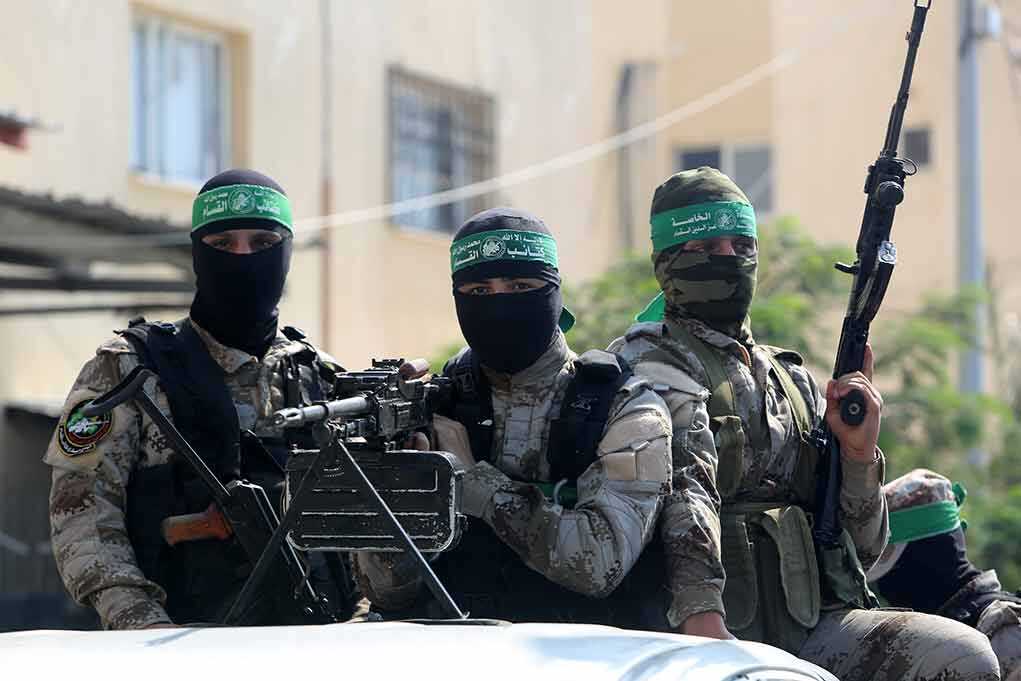
Hamas just elevated long-time power broker Khalil al-Hayya to lead its terror machine, signaling it plans to survive Israeli strikes and stay in the fight—not make peace.
Story Snapshot
- Hamas elected veteran operative Khalil al-Hayya as its new political bureau chief, replacing slain leader Yahya Sinwar.
- Al-Hayya won a razor-thin internal runoff, showing Hamas’s institutions remain active despite Israeli “decapitation” strikes.
- The move puts a hardened negotiator with deep Iranian ties at the center of Hamas strategy against Israel.
- Al-Hayya’s rise underscores why U.S. vigilance, strong borders, and firm support for Israel stay critical under President Trump.
Hamas installs new terror chief after Israeli kills top leaders
Hamas announced that it has elected Khalil al-Hayya as head of its political bureau, replacing Yahya Sinwar, who was killed by Israeli forces in Gaza in October 2024. Multiple outlets, from regional media to international wires, reported the same statement, quoting Hamas saying it “elected” al-Hayya to succeed the “martyred” Sinwar. The top post had been vacant as Israel targeted Hamas’s senior figures, including earlier strikes on political chiefs Ismail Haniyeh and Sinwar. Al-Hayya now becomes the group’s overall political leader in wartime.
Reports describe a secretive internal vote held by Hamas’s General Shura Council, the movement’s top decision-making body. According to several detailed accounts, council members needed two rounds of voting because no candidate first passed the required majority threshold. In the final runoff, al-Hayya defeated former political bureau chief Khaled Meshaal by a single vote, 35 to 34, highlighting an intense contest inside the terror organization. That narrow result shows Hamas’s leadership is divided yet still able to organize itself while fighting Israel.
Al-Hayya: veteran operator and “institutional survivor” for Hamas
Al-Hayya is widely described as one of Hamas’s most experienced negotiators, a long-time insider who has survived years of Israeli pressure and internal turmoil. He previously served as deputy chairman of the Hamas political bureau and was part of a five-man wartime ruling council that ran the movement after Sinwar’s death. International analysis calls him an “institutional survivor,” someone who knows how to keep Hamas’s system working through assassinations, war, and foreign travel limits. His track record includes leading indirect ceasefire talks and prisoner exchanges with Israel.
Many profiles stress that al-Hayya is closely linked to Iran and regional backers, deepening concerns about outside influence on Hamas strategy. They note that he has long worked as a bridge between Gaza-based leaders and those operating abroad in places like Qatar and Turkey. This background means al-Hayya is likely to coordinate more tightly with Tehran while trying to rebuild Hamas’s military and political strength. For Americans who worry about Iranian aggression, it is a reminder that terror networks adapt even when front-line commanders are killed.
Why Hamas’s leadership shift matters for Israel and the U.S.
Analysts explain that naming al-Hayya sends a clear message to Israel: Hamas’s institutions are still functioning, and the group will keep fighting even after high-profile assassinations. Hamas itself emphasized that electing a new chief during heavy Israeli strikes proves it is run by “institutions and regulations,” not only by single figures. This is classic behavior for a terror movement under pressure—it wants supporters to see resilience and wants enemies to feel that killing leaders will not end attacks. For Israel, that means the struggle continues.
Al Jazeera broke it simply: Khalil al-Hayya beat Khaled Meshaal in a Hamas leadership runoff. The deeper story is what that result likely means for negotiation leverage.
Meshaal has long been the archetype of the “external bureau” leader, operating from outside the war zone.… pic.twitter.com/rdXJhufxMO
— WAR Analyst (@War__Alerts) July 27, 2026
For Americans, the story highlights why strong national defense, secure borders, and tough counterterrorism policy remain vital. Hamas is designated as a terrorist organization by the United States and many allies, and it openly seeks Israel’s destruction and targets civilians. As President Trump pushes to clamp down on radical groups, stop Iranian expansion, and defend our closest allies, Hamas’s move shows the other side is still reorganizing. Conservatives who support Israel’s right to self-defense and oppose global terror networks will see al-Hayya’s rise as a warning, not a sign of peace.
Closed-door vote and opaque Hamas rules raise questions
Despite broad agreement that al-Hayya was chosen, public details of the internal election stay limited and murky. Reporting relies on Hamas statements and unnamed sources rather than formal bylaws or official tallies released to the public. Some outlets describe him as “appointed,” while others say “elected,” reflecting how secretive groups blur the line between internal votes and top-down decisions. Outside observers do not have access to Hamas’s full rulebook, so they cannot verify whether the process followed every internal regulation.
This lack of transparency fits a long-running pattern inside Hamas. Its leaders are usually chosen in quiet council sessions, spread across Gaza, the West Bank, and the diaspora, under wartime disruption and tight security. That opacity makes it hard for democracies to judge whether supposed “political” leaders have any real accountability to ordinary Palestinians. For Americans who value open elections, constitutional checks, and the rule of law, the contrast with Hamas’s shadow system is sharp. It underscores why equating such groups with normal political parties is misleading and dangerous.
Sources:
foxnews.com, aljazeera.com, jns.org, nytimes.com, middleeasteye.net, youtube.com, crisisgroup.org, bbc.com