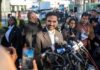


Australian Prime Minister Anthony Albanese announced a national Royal Commission into antisemitism and social cohesion, a major policy reversal prompted by the devastating Bondi terrorist attack. The commission, led by former High Court Justice Virginia Bell, is tasked with investigating the rise of antisemitism, its drivers, and providing comprehensive recommendations on law enforcement, extremism, and social cohesion. This pivotal decision has been met with both applause from the Jewish community and skepticism regarding the Prime Minister’s initial reluctance.
Story Highlights
- The Royal Commission is a response to the Bondi terrorist attack, described as the worst antisemitic incident in Australia.
- Initially, Albanese resisted a national inquiry, citing time concerns, before reversing under pressure.
- The commission will examine the rise of antisemitism, its drivers, and recommend policy changes.
- Virginia Bell, former High Court Justice, will lead the inquiry with a report due by December 2026.
Albanese’s Policy Reversal
On January 8, 2026, Australian Prime Minister Anthony Albanese announced a national Royal Commission into antisemitism and social cohesion. This decision marks a significant policy reversal. Initially, Albanese resisted calls for a broader inquiry beyond a state-level investigation in New South Wales. The Bondi Beach attack, deemed an ISIS-inspired antisemitic terrorist attack, prompted public outcry and political pressure, leading to this pivotal move.
The Royal Commission, led by former High Court Justice Virginia Bell, is tasked with investigating the drivers of antisemitism in Australia and the circumstances surrounding the Bondi attack. With full powers to summon witnesses and compel documents, the inquiry aims to provide comprehensive recommendations on law enforcement, extremism, gun laws, and social cohesion. The commission’s report is expected on December 14, 2026, exactly one year after the attack.
Anthony Albanese has caved to weeks of political pressure and called a federal royal commission into the Bondi terror attack and antisemitism.
Follow live: https://t.co/mmGdVIVMIe pic.twitter.com/8UGg1fHmym
— Financial Review (@FinancialReview) January 8, 2026
Community and Political Response
The announcement has been met with mixed reactions. The Executive Council of Australian Jewry welcomed the move, expressing hope for a thorough examination of government policies that have allowed antisemitism to rise. Many in the Jewish community, which numbers around 120,000, have long felt that the government has not done enough to protect them. The Royal Commission is seen as a step in the right direction, yet some view it with skepticism due to Albanese’s initial reluctance.
Political figures across party lines have supported the national inquiry, highlighting a growing consensus that antisemitism and extremism are national threats. Despite this, Albanese faces criticism for his perceived backflip under pressure, with opponents arguing that the decision reflects a reactive rather than proactive stance on the issue.
Implications for Policy and Society
The Royal Commission’s findings could have significant implications for Australian policy and society. Albanese has signaled intentions to tighten gun laws further and criminalize certain hate-preacher speech. These measures, along with increased resources for counter-terrorism and community protection, underline a robust response to antisemitic terrorism.
In the long term, the inquiry may lead to structural changes in policing and intelligence, new frameworks for monitoring antisemitism, and stronger protections for minority communities. The commission’s work could also set a precedent for addressing other forms of extremism and hate, potentially reshaping Australia’s approach to social cohesion and security.
As the commission begins its work, the political and social landscape in Australia is poised for a period of intense examination and potential reform. The outcomes will not only affect Australian Jews but could also redefine national approaches to extremism, free speech, and protest.
Watch the report: Anthony Albanese announces royal commission after Bondi beach terror attack
Sources:
- Australia to form royal commission into antisemitism after Bondi mass shooting
- Australia’s leader announces a royal commission into antisemitism after Bondi mass shooting – The Washington Post
- Anthony Albanese announces royal commission after Bondi beach terror attack