

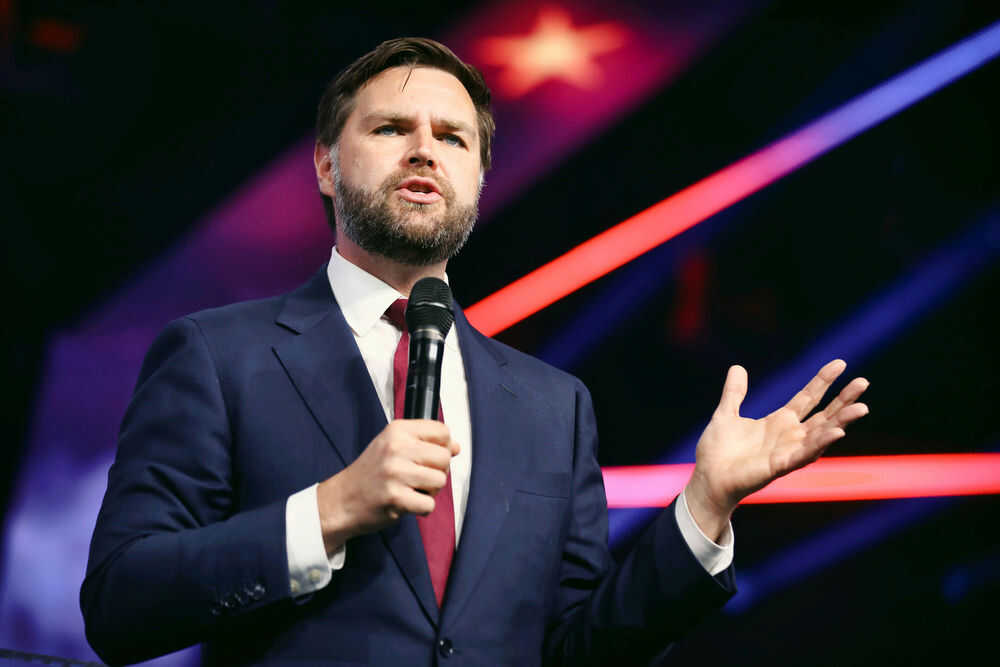
When Britain’s left-wing Prime Minister accuses America’s vice president of “interfering” for speaking about a murdered student and mass migration, it raises a bigger question: who is really afraid of open debate on borders and public safety?
Story Snapshot
- UK Prime Minister Keir Starmer’s office condemned U.S. Vice President JD Vance for linking a British student’s murder to mass migration.
- Vance blamed “civilisational decline” and a “mass invasion of migrants” for the killing of 18‑year‑old Henry Nowak and called for “righteous anger.”[2][3]
- Downing Street accused Vance and others of trying to “interfere in our democracy” and “stir up division on our streets.”[2][3]
- The clash has become a symbol of a wider fight over migration, sovereignty, and free speech across the Atlantic.[2]
Starmer Moves To Silence U.S. Criticism Over Migrant Crime
Reports from international outlets state that U.S. Vice President JD Vance publicly responded to the brutal stabbing of 18‑year‑old British student Henry Nowak by tying the case to what he called Europe’s “civilisational decline” and a migrant “invasion.”[2][3] Vance wrote that Nowak “should still be alive today,” arguing that previous generations of European leaders failed to stand firm against “the mass invasion of migrants, many of whom despise the West and the people who love it,” and urged “righteous anger” in response.[2][3] His comments directly challenged the political class that opened borders and then denied any connection between these policies and violent crime, a pattern American conservatives recognize from years of debate at home.
British Prime Minister Keir Starmer’s office quickly fired back, issuing a statement condemning Vance’s intervention and framing it as a threat to the United Kingdom’s democratic process.[2][3] Downing Street declared, “We have seen people trying to interfere in our democracy and seeking to stir up division on our streets,” clearly including Vance in that category.[2][3] Officials also stressed that Nowak’s grieving family did not want his death used to create “further division, hatred, or tension,” and insisted that British politics “should bring people together, even in the most terrible of circumstances.”[3] The government response focused on tone and sovereignty rather than offering any detailed rebuttal of Vance’s concerns about migration, community safety, or policing decisions.
Migration, Policing, And A Growing Transatlantic Culture Clash
Coverage of the case notes that Starmer himself has acknowledged serious questions about how British police handled the incident, including how accusations of racism may have influenced operational decisions.[4] At the same time, Vance and other American and British commentators have highlighted the killing as evidence of deeper problems: mass immigration, two‑tier policing, and an elite culture more worried about being called racist than about protecting citizens.[3] Vance’s broader argument, as summarized in both print and broadcast reports, is that Western leaders have embraced a politics of “self‑hatred” while allowing large‑scale migration from communities that do not share Western values.[2][3] That critique resonates strongly with many conservatives who see similar trends in American cities where progressive prosecutors, identity politics, and loose borders have eroded basic law and order.
Analysts following the dispute describe it as part of a familiar political pattern: a horrific crime becomes the focal point for a larger battle over immigration, identity, and national decline.[2] Media research has long found that such emotionally charged events are quickly reframed into symbolic conflicts, especially when full case files—police records, court proceedings, and evidence—are not yet in public view.[2] In this situation, the available reporting shows Vance making a sweeping cultural argument tied to migration, while Starmer replies with accusations of division and foreign interference rather than a point‑by‑point factual rebuttal.[2][3] That structure leaves voters on both sides of the Atlantic choosing between narratives—open debate on uncomfortable truths about migration, or government efforts to define which speech is acceptable in the name of “unity.”[1][3]
Free Speech, Sovereignty, And What Conservatives Should Watch
The record so far does not include full police or court documents that definitively prove how Britain’s migration policy contributed to Nowak’s murder, and reports acknowledge that limitation.[2][3] What the record does show clearly is that Starmer’s team chose to attack the manner of Vance’s intervention—calling it divisive and undemocratic—rather than provide evidence proving migration was irrelevant.[2][3] That approach worries many free‑speech advocates, who see an elected government labeling outside criticism of its policies as an attack on democracy itself.[1][3] For American conservatives, the episode looks uncomfortably close to the rhetoric used by domestic censors and bureaucrats who brand dissent as “disinformation” or “hate” to justify restrictions.
Commentators across television and online platforms note that this clash risks hardening into a transatlantic culture‑war signal, with Vance cast as the voice of border‑control hawks and Starmer as the defender of a progressive, migration‑friendly establishment.[2] Because social‑media platforms amplify short and emotionally charged statements, Vance’s call for “righteous anger” and Starmer’s charge of “interference” travel much faster than nuanced legal details about the case.[2][3] For conservatives, the key takeaway is not only what happened in one British city, but how quickly a government moved to delegitimize a foreign ally’s criticism while leaving core questions about migration, policing, and public safety unresolved. That pattern is exactly why many voters on both sides of the Atlantic continue to demand secure borders, honest debate, and leaders who value national sovereignty and Western civilization enough to defend them.[2][3]
Sources:
[1] Web – Keir Starmer accuses JD Vance of ‘stirring up division’ after blaming …
[2] Web – Starmer criticizes Vance over immigration comments
[3] Web – UK-US diplomatic clash over teenager Henry Nowak’s murder sparks …
[4] Web – British PM criticizes Vance over comments about UK teen’s stabbing …