
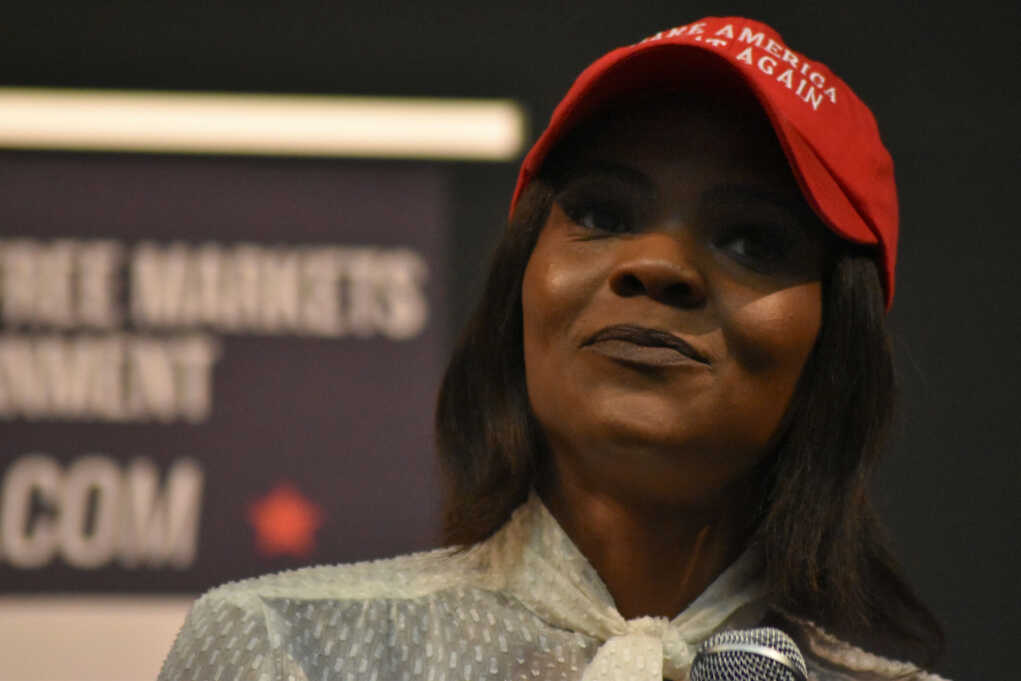
Candace Owens’ crusade over Charlie Kirk’s assassination has turned her from TPUSA ally into its loudest, most damaging opponent, even as hard evidence undercuts her claims.
Story Snapshot
- Strong DNA, video, and text evidence point to Tyler Robinson, not a hidden cabal, in Kirk’s murder.
- Candace Owens pushes alternative theories, but offers no clear, evidence-based story to replace the facts.
- Charlie Kirk’s family and leading conservative voices now condemn Owens’ claims as harmful and baseless.
- The fight over this case shows how conspiracy culture can fracture the Right and distract from real battles.
How the Evidence Collides with Owens’ Claims
Prosecutors in Utah laid out “devastating” evidence tying 23-year-old Tyler Robinson to Charlie Kirk’s assassination, including DNA on the rifle and a text-style confession. Security footage shows a man identified as Robinson climbing onto a campus rooftop, moving into position over the amphitheater, then fleeing after the shot. Robinson’s roommate and romantic partner, Lance Twiggs, told investigators that Robinson said he “wishes he hadn’t done it” the day after Kirk was killed, describing remorse that lines up with a planned attack. Robinson’s parents later recognized him from federal images and helped arrange his surrender, signaling they too accepted that the suspect on camera was their son.
Candace Owens has loudly rejected this chain of evidence, insisting Robinson is a “patsy” and claiming he was not even on campus that day, despite the footage and family identification that say otherwise. She has promoted slow-motion video clips and online chatter to question the official account, but has not produced a full alternative story backed by hard proof. Her claims focus on gaps and unknowns, like missing shell casings on the rooftop and an inconclusive bullet match, yet they stop short of naming who she believes actually pulled the trigger with verifiable evidence. That leaves many viewers with questions, but no solid rival explanation to compare against the detailed case laid out in court.
Ballistics, DNA Disputes, and What They Really Mean
One area Owens and defense lawyers highlight is ballistics: federal agents could not conclusively link the bullet fragment from Kirk’s body to the recovered rifle, and prosecutors themselves called that specific bullet evidence “inconclusive.” There were also no shell casings found on the rooftop where the shot likely came from, a detail former State Bureau of Investigation agent David Hull confirmed, which raises fair questions about scene processing. At the same time, investigators say Robinson’s DNA appears on key items, including a towel wrapped around the rifle and related materials near the shooting site. Defense attorneys counter that the analyst “can’t match Mr. Robinson to the questioned samples” with iron-clad certainty and push for outside review of testing methods.
For conservatives used to decades of government overreach and sloppy investigations, these mixed forensic details feel familiar and frustrating. We remember federal agencies botching cases, hiding documents, or weaponizing tools against political enemies. So it is natural to want every test, every chain-of-custody record, and every lab protocol double-checked by independent experts. But disagreement over how strong a DNA match is does not erase Twiggs’ interview, the surveillance clips, or the notes that show premeditation; it simply means the court must weigh how much weight each piece deserves. That is how due process should work in a serious case, not how a grand secret plot is proven.
Owens vs. TPUSA: From Ally to “Worst Enemy”
Candace Owens once shared stages and audiences with Charlie Kirk as part of the Turning Point USA orbit, building influence by speaking to young conservatives hungry for bold voices. That history now makes her assault on TPUSA and Kirk’s widow feel personal, not just political, to many in the movement. Major outlets report that she has suggested involvement by TPUSA insiders, foreign governments, and even Erica Kirk herself, without offering a coherent, evidence-backed theory that meets the standard conservatives demand from the Left. Her past exit from TPUSA after comments about Adolf Hitler adds to the sense that this fight is fueled by old grudges as much as by a search for truth.
In response, a wide range of conservative commentators — including Ben Shapiro, Glenn Beck, Megyn Kelly, and Douglas Murray — have gone on air and online to dismantle Owens’ claims point by point, calling them “evil,” “disgusting,” and “political character assassination.” They argue the facts in this case are bad enough on their own: a conservative leader shot while speaking, apparent premeditation, and a suspect whose own words and movements match the state’s timeline. From that view, dragging Kirk’s family, TPUSA, or random side figures into a sprawling theory with no solid proof only deepens the pain for grieving relatives and pulls energy away from crucial fights over border security, inflation, and attacks on free speech.
Conspiracy Culture and the Cost to the Right
The battle over Kirk’s assassination fits a broader pattern in American politics, where nearly half the country endorses at least one conspiracy idea and many see tragic events through that lens. After past shootings and assassination attempts, “false flag” and “patsy” claims have exploded online, driven by intense distrust of mainstream media and federal agencies. Research shows social ties and partisan media play a huge role; people are more likely to believe theories shared by personalities they already like or by friends in their online circles. That dynamic is now hitting the Right, as some viewers choose Owens’ narrative over the evidence-backed reporting and commentary coming from other conservative voices they long trusted.
For Trump supporters who have watched the federal government lie, spy, and spend this country into crisis, skepticism is healthy — and earned. But when skepticism drifts into following every dramatic theory that pops up on social media, the movement can end up attacking its own, wasting time, and giving the Left easy talking points about “dangerous extremism.” The Kirk case reminds us that we can demand full transparency, call out weak evidence, and insist on the presumption of innocence while still respecting real facts that have been tested in open court. Candace Owens’ break with TPUSA shows what happens when personal vendettas and online fame start to matter more than careful, constitutional truth-seeking.
Sources:
feedpress.me, youtube.com, imdb.com, nytimes.com, britannica.com, thefp.com, pbs.org, washingtonpost.com, facebook.com, newsfromthestates.com, pmc.ncbi.nlm.nih.gov, news.northeastern.edu, brookings.edu, aei.org, en.wikipedia.org