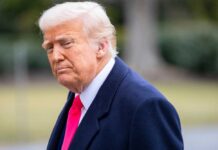


President Trump’s health fraud crackdown is moving money first and asking questions second, and that has set off a fight over how much is fraud and how much is precaution.
Quick Take
- The White House created a Task Force to Eliminate Fraud and tied it to Medicare and Medicaid enforcement.
- Federal officials deferred $259.5 million in Minnesota Medicaid funding after reviewing questionable claims.
- The Justice Department said its 2026 takedown charged 455 defendants in cases tied to more than $6.5 billion in alleged false claims.
- Officials say the new push is meant to stop fraud before payments go out, not just punish it later.
White House Task Force Drives the New Push
The Trump administration is not treating health care fraud as a side issue. The White House created a Task Force to Eliminate Fraud and said the federal government would use all available authority to fight fraud, close loopholes, enforce eligibility rules, and protect benefits. That puts President Trump’s second-term team on offense across Medicare and Medicaid, with Vice President JD Vance helping lead the broader effort.
The administration says the goal is simple: stop bad claims before taxpayer money leaves the Treasury. The Centers for Medicare and Medicaid Services and the Department of Health and Human Services framed the effort as a data-driven crackdown that includes tighter enrollment controls, stronger fraud checks, and a nationwide moratorium on new Medicare enrollment for certain durable medical equipment suppliers. That is a clear shift from waiting for losses to pile up.
State Medicaid Funding Became a Pressure Point
The most visible state action came in Minnesota, where federal officials deferred $259.5 million in quarterly Medicaid funding after a review raised concerns about questionable claims. The Centers for Medicare and Medicaid Services said the hold was meant to prevent payment while further investigation continues. Officials also said Minnesota had the chance to respond with more information and documentation, which matters because the federal government did not present the move as a final fraud finding.
California also drew federal scrutiny, with the Centers for Medicare and Medicaid Services holding back $867.5 million after reviewing in-home care claims and saying spending growth outpaced national trends. Federal officials described both actions as part of a program-integrity review, not a blanket accusation that every dollar was improper. Still, the size of the pauses shows how seriously the administration is treating state Medicaid systems that it believes may be vulnerable to abuse.
Justice Department Takedown Shows the Scale
The biggest public proof of the crackdown came from the Justice Department, which announced charges against 455 defendants in its 2026 National Health Care Fraud Takedown. Prosecutors said the cases involved more than $6.5 billion in alleged false claims and included 90 doctors and other licensed medical professionals. The department described the operation as one of the largest coordinated health fraud actions in U.S. history, and it said the cases spread across 45 states and territories.
The allegations were not vague. Federal officials described schemes involving billing for patients who were dead, predatory skin graft procedures, opioid-related abuse, and false Medicaid claims. That kind of detail gives the crackdown more weight than a generic press conference. It also helps explain why Trump officials are selling the campaign as a defense of taxpayers and patients, especially at a time when many conservatives see fraud as part of the same spending culture that drove inflation and waste.
The Trump administration is escalating its healthcare fraud crackdown after a task force identified an estimated $230 billion in fraudulent activity.
Federal prosecutors say 19 people in Pennsylvania have been charged with stealing more than $4 million from Medicaid through… pic.twitter.com/ujrqzhNzPu
— Lady Q (@LadyQNews) August 5, 2026
There is still an important limit here. The public record now shows charges, payment holds, and aggressive enforcement, but not final convictions for these new cases. The administration’s own releases use words like “alleged” and “questionable,” which means the enforcement picture is strong but not yet complete. Even so, the pattern is clear: Trump’s team is using prepayment controls, state payment deferrals, and criminal cases together to squeeze fraud before it spreads further.
Sources:
washingtontimes.com, justice.gov