
A new State Department report says a Cuba-linked activist network is gearing up protests at U.S. bases and immigration sites, raising hard questions about foreign influence on our own soil.
Story Snapshot
- A Cuba-tied coalition published a rapid-response plan for protests at U.S. bases, ICE facilities, and federal buildings.
- The State Department links this network to a sanctioned Cuban government arm that runs global revolutionary outreach.
- Key U.S. activist groups are named for deep ties to Cuban officials and far-left foreign funders.
- Federal investigators are probing whether nonprofits coordinated with Havana in a wider influence campaign.
Cuba-Linked Activist Network Targets US Bases and ICE Sites
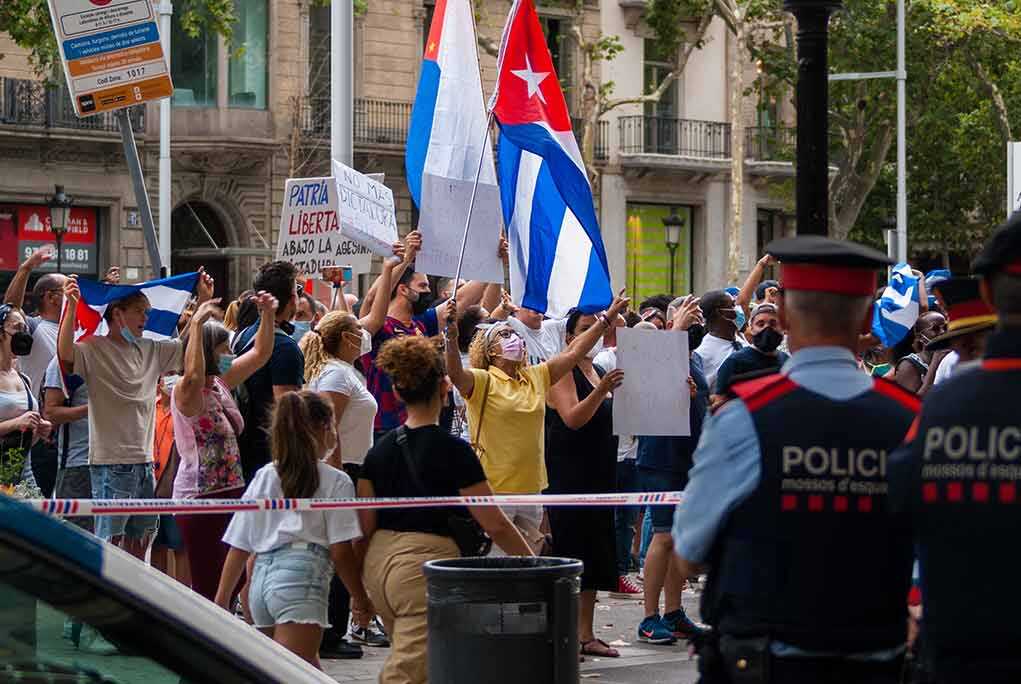
The new State Department report points to a “National Rapid Response Plan” released in June by the National Network on Cuba, a coalition of more than 60 U.S.-based organizations. That plan calls for coordinated nationwide protests within 24 hours if the United States threatens or uses military force against Cuba. Targets include U.S. military bases, Immigration and Customs Enforcement detention centers and field offices, and federal buildings across the country. Organizers describe the goal as making any U.S. war on Cuba “politically and materially costly” through mass mobilization.
The State Department highlights this plan as a fresh example of how it believes Havana can quickly turn on protests inside the United States. Officials say Cuba has spent decades cultivating American activist networks that can be activated against U.S. policy when needed. The report argues that the National Network on Cuba is not just a loose coalition but part of an organized influence system built by the Cuban regime. At the same time, the report admits it is unclear how deeply each individual organization joined in writing or executing the rapid-response plan.
Sanctioned Cuban Regime Arm at the Center of the Network
The State Department links the National Network on Cuba directly to the Cuban Institute of Friendship with the Peoples, a government entity better known by its Spanish initials. This institute was sanctioned in June 2026 under a Trump executive order for supporting Cuban intelligence and subversive anti-American activities. The department describes the institute as the central hub of Cuba’s international influence work, claiming it helps coordinate more than 2,000 “solidarity” organizations in over 150 countries. The institute’s head, Fernando González Llort, once belonged to the Wasp spy ring that infiltrated exile groups and gathered data on U.S. military sites in Florida during the 1990s.
According to the report, the National Network on Cuba “works closely” with this Cuban government arm and serves as a key gateway between Havana and left-wing organizations inside the United States. A leaked memo and outside coverage describe the American coalition as a pathway for foreign subversion to reach U.S. nonprofits. From Washington’s view, this is not normal diplomacy or debate; it is state-backed ideological warfare aimed at U.S. institutions. The Trump administration has formally declared the Cuban government an “unusual and extraordinary threat” to U.S. national security, setting a national emergency framework for sanctions and countermeasures.
US Nonprofits, Radical Groups, and Alleged Foreign Coordination
The report names several American groups as key players in this network, including Code Pink, the People’s Forum, the Communist Party USA, Democratic Socialists of America, and the National Lawyers Guild. It says about one-quarter of Code Pink’s funding since 2017 came from organizations linked to Neville Roy Singham, a figure tied to foreign regimes hostile to the United States. The report also notes that People’s Forum leader Manolo de los Santos has traveled to Cuba since at least 2009 and has often appeared in Cuban state media. In 2026, the National Lawyers Guild adopted a resolution promising to work with the National Network on Cuba and the broader Cuba solidarity movement.
Separate reporting says Justice Department and Treasury Department officials are investigating roughly 145 nonprofits and activists for allegedly coordinating messaging, lobbying, fundraising, and delegations with Cuban officials as part of a foreign influence campaign. These probes reportedly include groups tied to the National Network on Cuba, Code Pink, and the People’s Forum. For now, the coordination is described as “alleged,” and there have been no public charges. That means the legal case is still open, even as the State Department urges Americans to take the threat of far-left foreign-backed activism seriously.
Pushback From Activists and the Wider Foreign Influence Pattern
The National Network on Cuba has publicly condemned the State Department’s country report, calling its claims about Cuba supporting terrorism “untrue” and insisting the Cuban government rejects terrorism. Supporters frame the rapid-response plan as a domestic anti-war strategy, not a foreign-directed operation. They say the plan is open, posted online, and focused on protest, not violence. So far, however, they have not offered detailed financial records or travel explanations to answer the specific evidence laid out about their ties to the Cuban regime.
EXPLOSIVE NEW DETAILS ABOUT CUBA'S ESPIONAGE!!!
Secretary Marco Rubio @SecRubio said,
"For more than SIX DECADES, the Cuban regime has been the leading sponsor of radical leftism and Third Worldism in the United States. The State Department is exposing the full history of Cuban… pic.twitter.com/AVWUTRBE1i— Sherry Twamley (@sdogiii) July 21, 2026
This fight fits a broader pattern in which U.S. officials warn that hostile regimes use front groups and activist networks to widen divisions inside America. Intelligence and security agencies have already flagged similar influence operations tied to China, Russia, and Iran. Research shows that when the public learns about foreign meddling in protest movements, support for tougher government responses often grows. For conservative readers, the stakes are clear: if foreign-linked radicals can rapidly mobilize at our bases and immigration offices, they can pressure policy, weaken border enforcement, and stretch thin the very institutions that protect our families and our freedoms.
Sources:
redstate.com, foxnews.com, en.cibercuba.com, state.gov, raceandequality.org, washingtonpost.com, prokerala.com, reuters.com, adncuba.com, whitehouse.gov, cnn.com