A California jury just handed Sam Altman and OpenAI a legal victory over Elon Musk, but the real loser may be public accountability over how powerful artificial intelligence is controlled.
Story Snapshot
- A federal jury in Northern California rejected Elon Musk’s lawsuit against Sam Altman and OpenAI, ruling Musk waited too long to sue, and found no liability on all claims.[1][3]
- Musk had accused OpenAI of abandoning its nonprofit mission and prioritizing profit over artificial intelligence safety after shifting to a for‑profit structure.[1][3]
- The three‑week trial exposed a deep battle over who should control frontier artificial intelligence: mission‑driven nonprofits or profit‑seeking tech giants.[3]
- The verdict turns on a statute‑of‑limitations technicality, leaving unresolved concerns about concentrated artificial intelligence power, transparency, and public‑interest safeguards.[1][2][3]
Jury Sides With Altman After Three-Week Trial
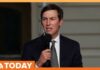
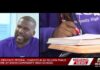
A nine-person federal jury in the United States District Court for the Northern District of California ruled on May 18, 2026 that Sam Altman, Greg Brockman, and OpenAI are not liable on any of Elon Musk’s claims, concluding that Musk filed his lawsuit too late under the statute of limitations.[1][3] Jurors reached the verdict quickly after receiving the case, indicating they accepted defense arguments that Musk knew of OpenAI’s mission and structural changes years earlier but delayed suing.[3] Because of that timing ruling, they never needed to decide whether OpenAI actually betrayed its founding promises.
The lawsuit, filed in 2024, alleged that OpenAI and its executives violated the organization’s founding agreement by turning a nonprofit aimed at safe artificial intelligence into a profit-driven enterprise.[1] Musk argued that he donated roughly forty-four million dollars between 2016 and 2020 based on assurances that OpenAI would remain a nonprofit focused on public benefit rather than commercial gain.[1] He sought massive damages and removal of Altman and Brockman from leadership, claiming the shift toward a for-profit structure fundamentally corrupted the mission.[3]
How OpenAI’s Mission Drift Became a Courtroom Fight
OpenAI was created in 2015 as a nonprofit with a public pledge to develop artificial intelligence safely and broadly share benefits, a model that reassured many who fear unaccountable tech monopolies.[1][3] Musk and Altman were co-founders, and reporting indicates that by 2017–2018 intense internal debates erupted over whether to pivot toward a for-profit model to attract bigger capital.[1][3] Musk pushed to take direct control, either via a majority stake in a for‑profit arm or by folding OpenAI into Tesla, proposals other founders rejected.[1] Musk left the board in 2018 after losing that control struggle.[1][3]
Coverage of the trial says jurors heard about emails and texts that documented years of tension over OpenAI’s evolution, including internal messages Musk cited as proof of a “bait and switch” once the for‑profit structure emerged.[3] A federal judge had already narrowed the case before trial, trimming claims like false advertising and breach of fiduciary duty but allowing fraud and unjust enrichment theories to proceed.[1] Those surviving claims went to the jury, yet the verdict turned entirely on timing: Musk, they concluded, knew enough to sue well before 2024 and therefore missed his legal window.[1][3]
Technical Victory Leaves Bigger Questions Unanswered
Because the jury relied on the statute of limitations, it did not decide whether OpenAI actually violated its founding agreement or misled donors and the public.[1][2][3] That procedural outcome gives Altman and OpenAI a clean legal win, but it does not settle the underlying ethical question conservatives care about: whether powerful artificial intelligence platforms can quietly switch from “public good” branding to concentrated, profit-maximizing control. Media framing has largely emphasized Musk’s defeat and the personalities involved, not the governance concerns this case spotlighted.[3]
Secondary reports highlight that OpenAI’s later partnership with a major Big Tech firm, involving many billions in investment and a sky-high valuation, depended on the very for‑profit structure Musk challenged.[3] Critics worry that when mission-driven nonprofits morph into quasi-corporate giants behind closed doors, ordinary citizens lose any voice over how frontier technology is deployed. The quick verdict risks signaling to the public that these concerns are meritless, even though the jury never ruled on whether OpenAI’s behavior aligned with its original promises.[3]
What This Means for Conservative Concerns About AI Power
For constitution-minded conservatives, this case is about far more than two billionaires feuding; it is about who checks unelected technocrats building tools that can track speech, police “misinformation,” and influence elections. A nonprofit charter aimed at public benefit looks one way; a tightly controlled, profit-maximizing platform integrated with Big Tech and potentially government censors looks very different. This verdict does nothing to guarantee that artificial intelligence giants will respect free speech, privacy, or viewpoint diversity going forward.[3]
Elon Musk has lost his lawsuit against Sam Altman and OpenAI because…
the lawsuit was filed too late?This can't be real.🤦♂️
So, after weeks of trial, that was the verdict?
California needs to be sued, badly.Appeal incoming.https://t.co/kzpyShVSBh
— Möbius (@SWAccelerated) May 18, 2026
The Trump administration now faces a landscape where a handful of companies wield enormous artificial intelligence power without clear, enforceable public-interest guardrails. Conservative voters should watch closely how Congress and regulators respond: Will they demand transparency about mission changes, ownership structures, and data use, or will they defer to the same corporate and globalist interests that pushed previous “woke” agendas? Regardless of one’s view of Musk, the unresolved questions his lawsuit raised will shape who controls tomorrow’s digital public square and how accountable they are to the American people.[3]
Sources:
[2] YouTube – What to know after jury tosses Elon Musk lawsuit against …
[3] YouTube – Sam Altman Prevails in Trial vs. Elon Musk Over the OpenAI Mission