

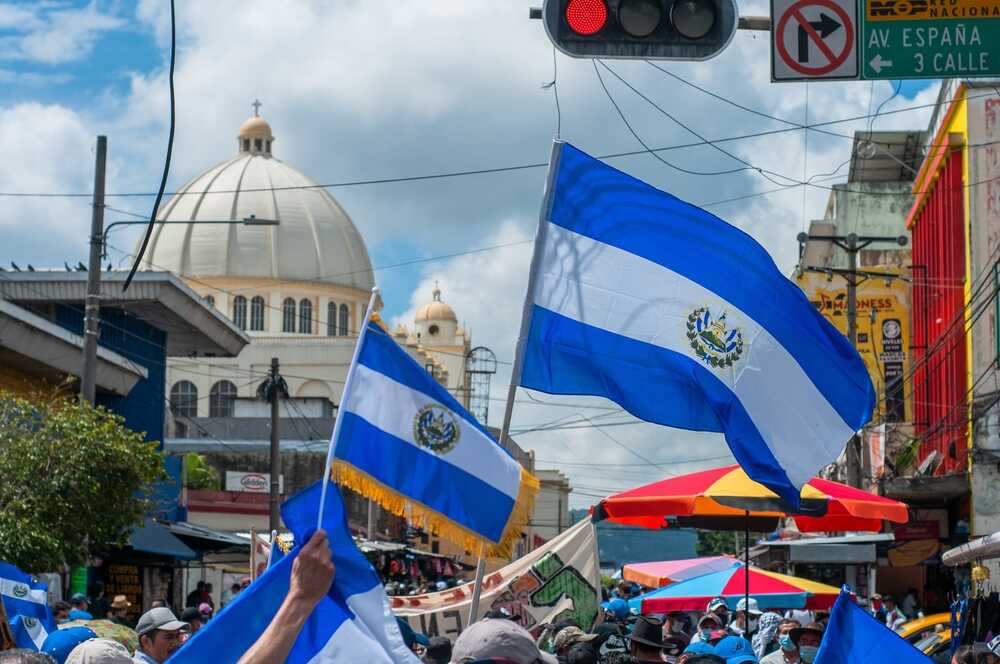
El Salvador’s largest mass trial against nearly 500 alleged MS-13 gang members accused of over 47,000 crimes—including 29,000 murders—signals President Nayib Bukele’s iron-fisted crackdown on gang violence, but critics warn the spectacle-driven proceedings risk trampling fundamental due process rights in the name of swift justice.
Story Snapshot
- 486 MS-13 gang members face trial for 47,000+ crimes spanning 2012-2022, including murders, extortion, and drug trafficking
- Defendants appeared shackled and shaved at CECOT mega-prison, with prosecutors seeking sentences up to 245 years
- Trial represents centerpiece of Bukele’s emergency crackdown that has arrested 91,000+ suspects since March 2022
- United Nations experts criticize mass trials for undermining defense rights and presumption of innocence
- Proceedings could set precedent for Latin American anti-gang strategies while raising concerns about government overreach
Historic Mass Trial Targets MS-13 Leadership
El Salvador launched its largest gang trial on April 21, 2026, prosecuting 486 alleged MS-13 members at the CECOT Terrorism Confinement Center in Tecoluca. The Attorney General’s Office charged defendants with over 47,000 crimes committed between 2012 and 2022, including approximately 29,000 murders, extortion operations, drug and arms trafficking, disappearances, and rebellion against the state. The accused include more than 20 gang leaders, lieutenants, program coordinators, and founders. Prosecutors described the proceedings as settling a “historic debt” against criminals who imposed a “parallel state” through systematic terror across Salvadoran communities.
The trial proceedings featured stark visuals designed to demonstrate state authority over gang power structures. Approximately 220 defendants appeared in person at CECOT on April 23-24, shackled and dressed in identical white T-shirts and shorts with shaved heads, while others participated remotely via video link. Anonymous judges presided over the hearings to protect their identities from potential gang retaliation. Witness testimony revealed horrific crimes, including detailed accounts of torture and murder. The Attorney General’s Office stated it possesses “ample evidence” to secure maximum sentences of up to 245 years for those convicted, signaling the government’s determination to permanently remove gang operatives from society.
Bukele’s Emergency Crackdown Reshapes Justice System
President Nayib Bukele declared a state of emergency in March 2022 after a weekend of violence that killed 87 people, launching a sweeping crackdown that has arrested more than 91,000 suspected gang members. The emergency measures, still in effect in 2026, suspended certain constitutional rights and enabled mass detentions without traditional due process protections. Bukele constructed CECOT as a maximum-security facility specifically designed to house gang members in isolation from society. Mass trials began in 2023 as a mechanism to process thousands of detainees efficiently, moving away from individual proceedings that would have taken decades to complete under conventional judicial systems.
MS-13 originated among Salvadoran immigrants in Los Angeles during the 1980s before expanding into a transnational criminal organization that dominated El Salvador through territorial control and violence. The gang operated extortion rackets, controlled drug trafficking routes, and maintained power through brutal enforcement that included murders and disappearances. The March 2022 violence spike represented the culmination of years of gang dominance that effectively created parallel governance structures in communities terrorized by MS-13 and rival organizations. Bukele’s administration positioned the emergency crackdown as restoring state authority over territories that had fallen under de facto gang control, framing the battle as existential for El Salvador’s sovereignty.
Competing Visions of Justice and Rights
The mass trial format has generated sharp criticism from international human rights observers who argue it sacrifices individual justice for political spectacle. United Nations experts condemned the proceedings for undermining defendants’ “right to defence and presumption of innocence,” warning that grouping hundreds of accused together makes meaningful legal representation practically impossible. Critics point to the one-size-fits-all approach where anonymous judges issue collective rulings, potentially convicting individuals based on gang association rather than proven personal culpability. Thousands of those arrested during the emergency crackdown were later released, raising concerns about arbitrary detention and the risk of convicting innocent people swept up in mass arrests.
Supporters counter that traditional judicial processes failed to address gang violence that claimed tens of thousands of lives and terrorized entire communities for decades. The Salvadoran public has overwhelmingly backed Bukele’s approach, which reduced homicides dramatically and dismantled extortion networks that strangled economic activity. The Attorney General’s Office emphasized that the charges against the 486 defendants rest on extensive evidence of specific crimes, not mere membership. Prosecutors argue that MS-13’s organizational structure—with leaders coordinating violence from prison and operatives executing orders—justifies collective prosecution of those who functioned as a unified criminal enterprise. The trial represents a fundamental choice between protecting individual procedural rights and delivering swift accountability for mass atrocities.
Precedent with Regional and Global Implications
El Salvador’s mass trial approach could reshape how Latin American nations confront organized crime, particularly in countries where gangs exercise territorial control similar to what MS-13 achieved before Bukele’s crackdown. The spectacle of shaved, shackled defendants at CECOT sends a powerful deterrent message while demonstrating state capacity to dismantle even entrenched criminal organizations. Countries facing similar gang violence may adopt elements of Bukele’s model, prioritizing security results over traditional due process concerns. However, the international criticism highlights tensions between effective crime fighting and maintaining legal standards that distinguish democratic governance from authoritarian rule.
The trial’s outcome will determine whether El Salvador can maintain reduced violence without perpetual emergency powers that suspend normal constitutional protections. If mass convictions hold up and violence remains low, Bukele’s approach gains legitimacy as a necessary response to extraordinary threats. If wrongful convictions emerge or violence resurges, the precedent weakens. For American observers frustrated with government ineffectiveness, El Salvador presents a case study in decisive action that prioritizes public safety over bureaucratic procedures—an approach that resonates with concerns about weak border enforcement and criminal justice systems perceived as favoring criminals over victims. Yet it also illustrates how emergency powers, once granted, rarely sunset on schedule, raising questions about whether temporary measures become permanent expansions of state authority that future leaders could abuse.
Sources:
Shackled and shaved: El Salvador holds mass trial for hundreds of gang members
Hundreds of MS-13 gang members in El Salvador mass trial accused of more than 47,000 crimes
Almost 500 alleged MS-13 gang members trial thousands murders El Salvador