

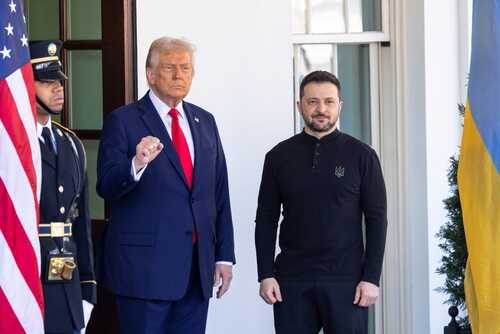
A surprise call between President Donald Trump and Volodymyr Zelensky signals a major U.S. shift on Ukraine’s air defenses amid intensifying Russian strikes.
At a Glance
- President Trump and Zelensky discussed air defense reinforcement.
- Russia escalates missile and drone attacks on Ukraine’s cities.
- Western aid faces logistical lags and political hurdles.
- Trump demands “maximum protection” for Ukrainian airspace.
- U.S. policy on Ukraine could tighten under Trump’s second term.
Trump Presses the Air Advantage
President Donald Trump’s direct call with Ukrainian President Volodymyr Zelensky marks a pivotal moment in U.S. policy engagement with the war-torn country. In the conversation, Trump emphasized “maximum protection” for Ukraine’s skies, pointing to his administration’s intent to expedite air defense assistance amid a deadly Russian air offensive. The communication underscores the urgency of Ukraine’s situation and the White House’s growing focus on hardening defenses against ongoing missile and drone barrages.
The war has entered a brutal aerial phase, with Moscow increasingly targeting energy infrastructure and civilian zones. Despite receiving advanced systems from NATO allies—including Patriots and NASAMS—Kyiv still faces delays in delivery and integration. Trump’s push for accelerated support reflects a more assertive posture compared to prior U.S. policy, aligning with his broader agenda of forceful deterrence against Russian advances.
Watch now: Trump-Zelensky Ukraine Call Revealed
Strategic Realignment Under Trump
The renewed Trump administration has reoriented U.S. foreign policy since January, with a heightened emphasis on direct engagement in active conflict zones. Zelensky’s outreach and Trump’s receptive stance suggest a recalibration in the Washington-Kyiv relationship. The conversation, while unofficially disclosed, signals stronger bilateral alignment on military priorities—especially air defense.
With Trump back in the White House and commanding a more hawkish Congress, legislative resistance to Ukraine aid is softening in key Republican circles. Trump’s advocacy contrasts with earlier isolationist sentiments during his first term and reflects an evolved strategic calculus. His administration now faces the challenge of converting rhetoric into rapid military delivery, a task complicated by production timelines, allied coordination, and field logistics.
Rising Stakes and Policy Fallout
Trump’s assertive posture could ripple across NATO’s strategic landscape. European allies are likely to reassess their own aid packages in response to Washington’s renewed commitment. Meanwhile, Russia may interpret the U.S. recommitment as an escalation, potentially triggering retaliatory moves or cyber campaigns. Trump’s critics warn of mission creep, while supporters argue that overwhelming defensive strength is the only deterrent Moscow respects.
The domestic implications are equally pronounced. Trump’s messaging on Ukraine has become a centerpiece of his foreign policy platform, aiming to contrast his leadership with prior administration delays. If followed by swift results, this move may redefine public and congressional sentiment toward deeper involvement in the war. For Ukraine, the signal is clear: Washington’s posture has hardened—and the air war just got a new commander-in-chief.