

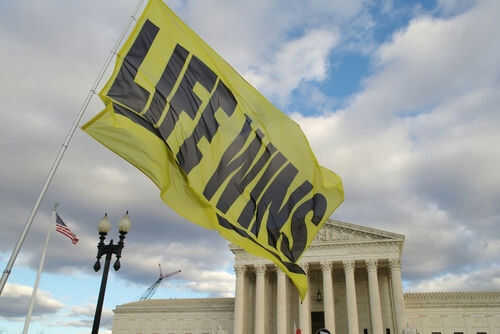
The Supreme Court unanimously struck down New Jersey’s invasive subpoena against Christian pro-life centers, shielding donor privacy from government harassment and affirming First Amendment protections.
Story Highlights
- 9-0 SCOTUS ruling reverses lower court, granting faith-based centers standing to challenge state overreach in federal court.
- Justice Gorsuch’s opinion protects donor lists from disclosure, citing chilling effect on associational rights.
- Victory stems from 2022 subpoena demanding names, addresses, and employment details from pro-life nonprofits.
- Broad precedent strengthens all advocacy groups against politically motivated investigations by blue state AGs.
Case Background and Timeline
In 2022, New Jersey Attorney General Matthew J. Platkin issued a subpoena to First Choice Women’s Resource Centers, a chain of five faith-based crisis pregnancy centers. The demand sought 28 categories of documents, including detailed donor identities such as names, addresses, phone numbers, and employment information. The centers, providing prenatal services and counseling, argued this violated First Amendment rights by deterring donations through fear of public exposure. A lower court dismissed their federal challenge for lack of standing, prompting Supreme Court review after oral arguments in December 2025.
Unanimous Supreme Court Decision
On April 29, 2026, the U.S. Supreme Court delivered a 9-0 decision in First Choice Women’s Resource Centers, Inc. v. Davenport, authored by Justice Neil Gorsuch. The Court reversed the lower ruling and remanded for trial on the subpoena’s merits. Drawing from the 1958 NAACP v. Alabama precedent, Gorsuch emphasized that compelled disclosure of private associations creates an inevitable chilling effect, constituting present injury without needing proof of enforcement. This cross-ideological consensus rejected New Jersey’s broad investigative powers.
Alliance Defending Freedom attorney Erin Hawley hailed it as a resounding victory, stating the Constitution protects pro-life donors from hostile state demands. Becket Fund counsel noted it keeps courthouse doors open for faith-based ministries nationwide. Liberty Counsel’s Mat Staver declared no attorney general can weaponize power against pro-lifers. These reactions underscore the ruling’s role in countering post-Dobbs scrutiny of pregnancy centers in Democratic-led states.
Stakeholders and Motivations
First Choice centers operate amid heightened state regulations following the 2022 Dobbs decision overturning Roe v. Wade. New Jersey probed claims of donor deception regarding abortion referrals, part of broader actions in states like California and New York. Pro-life allies including ADF and Becket defend religious liberty and associational freedoms. State officials pursue consumer protection, but the ruling limits their leverage, prioritizing constitutional safeguards over unchecked investigations.
The decision highlights tensions where government actions appear to target unpopular viewpoints, resonating with frustrations across political lines over elite overreach. Even as President Trump’s second term advances America First priorities, this SCOTUS win reinforces limited government and individual rights, protecting nonprofits from retaliation regardless of ideology.
A Surprisingly Unanimous SCOTUS Decision Renders a Blow to the Relentless Targeting of Pro-Life Groups https://t.co/FjklHPoWiQ
— William Junior (@William84323054) May 1, 2026
Broader Impacts and Precedent
Short-term, the ruling halts New Jersey’s subpoena, safeguarding donor confidentiality and enabling sustained operations for women seeking alternatives to abortion. Long-term, it sets a precedent curbing state demands for private data, benefiting all advocacy groups from pro-life ministries to civil rights organizations. Economically, it reduces fundraising deterrence; socially, it bolsters religious freedom for controversial causes. Politically, the unanimity signals judicial consensus against perceived harassment, checking blue state AGs while aligning with conservative values of liberty and privacy.
This outcome extends NAACP protections to modern contexts, affirming that federal courts remain accessible when credible threats to association arise. As Americans on both sides grow wary of deep state tactics prioritizing power over people, such victories remind us of founding principles: government serves citizens, not silences them through intimidation.
Sources:
Supreme Court Unanimously Upholds the Rights of a Christian Pro-Life Center
Supreme Court Rules for Pro-Life Centers: ‘The Gov’t Has No Business Harassing Pro-Life Ministries’
SCOTUS Unanimously Affirms Pro-Life Pregnancy Centers’ Claim Against New Jersey
A Unanimous Supreme Court First Amendment Victory for Crisis Pregnancy Centers
Supreme Court Unanimously Slaps Down Blue State Targeting Pro-Life Group