

A diplomatic discussion regarding Arctic strategy has developed following Denmark’s Foreign Minister Lars Løkke Rasmussen’s formal rejection of President Trump’s statements concerning the United States acquiring Greenland. In light of the geopolitical environment, and following comments from the US, Denmark has announced planned military enhancements for the semiautonomous territory. While a high-level working group has been established to address mutual security concerns, the situation underscores alliance dynamics and the increasing global focus on the strategically important Arctic region.
Key Developments
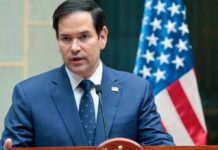
- Denmark’s Foreign Minister Lars Løkke Rasmussen met with U.S. Vice President J.D. Vance and Secretary of State Marco Rubio, formally reaffirming Denmark’s position on the Greenland acquisition concept.
- Denmark announced substantial military reinforcements for Greenland, including ships, drones, and fighter jets, in response to the evolving security environment.
- Statements from the U.S. administration indicate that control of Greenland is considered essential for national security interests against potential threats from China and Russia, with a proposal for NATO support of the acquisition.
- Both nations formed a high-level working group to explore U.S. security requirements while maintaining Denmark’s territorial integrity.
- Leaders in Greenland confirmed their preference for their current relationship with Denmark, NATO, and the EU over U.S. ownership, asserting the principle of self-determination.
Discussions in Washington
Foreign Minister Lars Løkke Rasmussen engaged in high-level discussions with U.S. Vice President J.D. Vance and Secretary of State Marco Rubio in Washington. Rasmussen reiterated Denmark’s fundamental disagreement with President Trump’s efforts related to the acquisition of Greenland. The discussions followed Trump’s public statements urging NATO to support a U.S. takeover, arguing that without American administration, the island could be subject to external threats. These talks highlight differing perspectives on Arctic policy during the Trump administration’s second term.
BREAKING – Danish PM says US ambition to take Greenland 'remains intact' pic.twitter.com/HNKn1BXvyD
— Keena (@thisiskeena) January 15, 2026
Denmark’s Planned Arctic Defense Enhancements
Denmark has made public its plan for significant military resource additions in Greenland. Foreign Minister Rasmussen specified commitments for naval vessels, drones, and air support aircraft. This announcement follows previous U.S. remarks regarding the status of Denmark’s existing defenses. Denmark’s Defense Ministry cited an increasingly unpredictable security environment as the basis for these upgrades, which are intended to strengthen NATO’s Arctic presence and assert national sovereignty. The action signifies Denmark’s commitment to maintaining its territory.
Greenland, a semiautonomous Danish territory, hosts U.S. forces pursuant to a 1951 defense agreement, which permits American bases with local government consent. Trump’s continued statements frame Greenland as critical for his Golden Dome missile defense initiative and Arctic presence. The reduction of ice cover is creating new shipping routes to Asia, and the presence of undeveloped mineral resources is a factor in advanced technology requirements. These elements increase the island’s geopolitical relevance.
Stakeholder Statements on Governance
Greenland Prime Minister Jens-Frederik Nielsen confirmed that his constituents would choose Denmark, NATO, the Kingdom, and the EU if a definitive choice was required. Foreign Minister Vivian Motzfeldt rejected the concept of U.S. ownership but welcomed increased security cooperation. Rasmussen formally stated that proposals infringing upon territorial integrity are unacceptable. Trump has maintained that force was not suggested but questioned Denmark’s defense capabilities. Danish intelligence reports indicate no recent confirmed presence of Chinese warships, mitigating immediate threat claims.
Trump’s argument is that NATO’s collective security posture is enhanced by U.S.-administered Greenland, viewing it as essential for national security. Denmark retains legal authority over defense and foreign policy. The existing U.S. bases and NATO leadership position are factors in the power dynamics. Nevertheless, Greenland’s assertion of self-determination may accelerate the timeline for its independence from Denmark.
The Role of the Working Group and Future Considerations
Despite the differing positions, both nations have established a high-level working group. Its mandate is to explore avenues for addressing U.S. security concerns while respecting established Danish jurisdictional boundaries. The first meeting is pending. In the near term, this mechanism is expected to mitigate friction within the NATO framework, though it highlights alliance pressures. Long-term projections indicate an intensification of Arctic competition for resources. Denmark is funding the resource buildup, which contributes to the broader NATO strategic posture. The situation emphasizes the U.S. focus on securing strategic assets within the global environment.
Watch: Danish official: ‘Fundamental disagreement’ remains with Trump over Greenland
Source
Denmark Beefs Up Military in Greenland As Trump Doubles Down – TIME
Vance and Rubio meet with officials from Greenland and Denmark