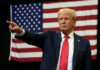

President Trump’s order to resume U.S. nuclear weapons testing has shattered decades of restraint, igniting fierce debate over national security and America’s global standing.
Story Snapshot
- President Trump directs the Pentagon to begin nuclear testing “on an equal basis” with Russia and China.
- This marks the first U.S. move to resume nuclear testing since 1992, breaking a longstanding moratorium.
- The directive comes amid heightened tensions with China and Russia and just before a major diplomatic summit.
- No confirmed evidence exists of recent Russian or Chinese nuclear detonations, raising questions about the policy’s justification.
Trump Orders Immediate Nuclear Testing to Counter Foreign Threats
On October 30, 2025, President Donald Trump announced via his social media platform that he had instructed the Pentagon to resume nuclear weapons testing to match the capabilities of Russia and China. The timing—on the eve of the Asia-Pacific Economic Cooperation summit in South Korea and against a backdrop of escalating tensions with America’s chief adversaries—signals a dramatic shift in U.S. defense policy. Trump’s decision is positioned as a direct response to perceived foreign advancements, highlighting a central concern for many conservatives: America must never fall behind in military strength or technological edge.
For over three decades, the United States has observed a de facto moratorium on nuclear testing, refraining from detonations since 1992. This policy, rooted in the Comprehensive Nuclear-Test-Ban Treaty (CTBT), has aimed to reinforce global nonproliferation and maintain international order. While the U.S., Russia, and China signed the CTBT, none ratified it, but all have avoided testing for decades. Trump’s directive now marks the first presidential order to end this restraint since the Cold War era, citing the need to “match” the nuclear posture of rival world powers.
President Trump directs the Pentagon to begin nuclear weapons testing immediately.
In a Truth Social post, the president said testing should resume “on an equal basis” with Russia and China.
Subscribe to OAN Live Here: https://t.co/Ci8c350hE1 pic.twitter.com/8syMFcSLwt
— One America News (@OANN) October 30, 2025
Russia and China: The Cited Justification and the Facts
President Trump’s announcement referenced Russia’s reported October 21, 2025, test of the Burevestnik nuclear-powered cruise missile and ongoing concerns about Chinese nuclear modernization. However, United Nations and Associated Press data confirm that neither Russia nor China has conducted a traditional nuclear detonation in recent years. The only nation to break the moratorium in the 21st century is North Korea, which carried out six tests between 2006 and 2017. Trump’s rationale draws on the need for vigilance, but the current evidence suggests the U.S. would be the first to resume detonations among major powers.
The administration’s move occurs as the U.S. government operates under a shutdown, limiting official responses and creating uncertainty about the Pentagon’s immediate plans. No details have been released on scheduling or preparations for tests, and it remains unclear how military and scientific agencies will interpret the directive. The lack of transparency has fueled both concern and debate, with many Americans demanding clear answers on national security and constitutional oversight in such consequential matters.
Potential Consequences for U.S. Security and International Relations
Resuming nuclear testing could have profound implications for U.S. security and its alliances. Allies committed to the CTBT may question America’s commitment to restraint, potentially straining crucial partnerships. In the long term, restarting tests risks undermining global nonproliferation norms, accelerating a new arms race, and exposing communities near test sites to environmental hazards. Increased defense spending and renewed debate over constitutional checks on executive power are likely as Congress and the public react to this sweeping shift in policy.
National security hawks argue that testing is necessary to ensure the reliability of America’s aging arsenal and to send a clear message of strength. The Associated Press and the United Nations both verify that claims of recent Russian or Chinese nuclear detonations are unfounded, highlighting a disconnect between the stated justification and available evidence. The coming months will reveal whether this directive signals a new era of deterrence or a dangerous departure from established norms.
Debate Over Constitutional and Conservative Values
For conservative Americans, the announcement stirs fundamental questions about sovereignty, national defense, and constitutional authority. Many view Trump’s move as a bold assertion of American strength, a refusal to cede any advantage to foreign adversaries. Yet concerns persist over potential government overreach and the need for robust congressional oversight when making decisions of such magnitude. As the Pentagon begins evaluating the order, the nation must weigh the imperatives of deterrence and freedom against the risks of eroding international trust and escalating global conflict.
Watch the report: Trump says he instructed Defense Department to restart nuclear weapons testing
Sources:
Trump Orders Pentagon to Match Other Nations’ Nuclear Testing
Trump directs Pentagon to test nuclear weapons for first time since 1992
Trump directs Pentagon to match Russia and China in nuclear weapons testing