
New York City spent $368 million on homelessness services in fiscal year 2025—triple what it spent just six years ago—yet state auditors reveal the city has no effective system to track where the money goes or whether it’s working, exposing a staggering accountability failure that should outrage every taxpayer.
Story Snapshot
- NYC spent $368 million on unsheltered homeless services in FY 2025, up from $102 million in FY 2019, despite only a 26 percent increase in the unsheltered population
- Per-person spending reached $81,228 in FY 2025—roughly equal to the city’s median household income—yet the homeless population continues growing
- New York State Comptroller report finds the Department of Homeless Services lacks transparent reporting to analyze unit costs, cost-effectiveness, or program impact
- A 2024 investigation uncovered hundreds of governance violations at nonprofit shelters, including self-dealing, nepotism, and conflicts of interest across the $4 billion shelter network
Spending Surge Without Accountability Systems
New York City’s spending on unsheltered homeless services exploded from $102 million in fiscal year 2019 to $368 million in FY 2025. This represents a 261 percent increase over six years, far outpacing the 26 percent growth in the unsheltered population from 3,588 to 4,504 individuals. The New York State Comptroller’s March 2026 report exposes a fundamental problem: despite this massive spending increase, the Department of Homeless Services currently does not publicly report details on expenses in a way that would allow for clear analysis of unit costs, cost effectiveness, or program impact. This represents government spending at its most irresponsible—money flowing out with no mechanism to verify results.
Staggering Per-Person Costs Raise Red Flags
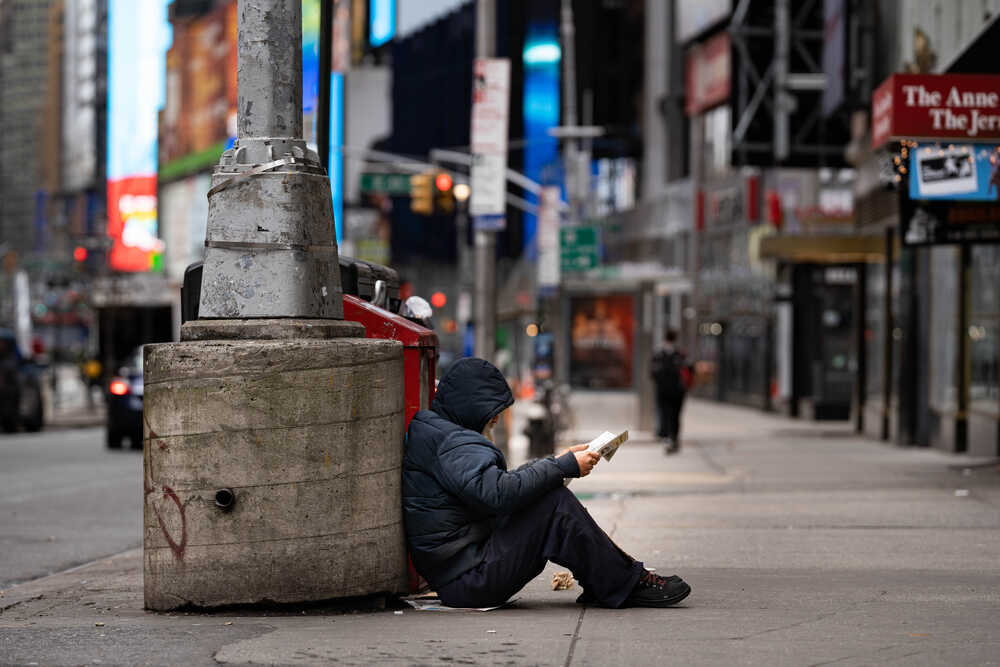
The per-person spending figures reveal the magnitude of fiscal mismanagement. In FY 2025, the city spent approximately $81,228 per unsheltered individual—an amount roughly equivalent to New York City’s median household income according to 2024 Census data. State Controller Thomas Denopoulos acknowledged the obvious disconnect: “We should have better outcomes when the city spends this amount of money.” The city is essentially spending enough to provide each homeless person with a full year’s median income, yet the street population isn’t shrinking. This suggests either catastrophic inefficiency or a complete failure to direct resources toward solutions that actually work, rather than perpetuating a costly bureaucratic system.
Nonprofit Contractor Network Shows Troubling Patterns
The accountability crisis extends beyond poor tracking systems to potential corruption and mismanagement. A 2024 NYC Department of Investigation report uncovered hundreds of governance and compliance concerns at nonprofit homeless shelters, revealing self-dealing, nepotism, and conflicts of interest at dozens of organizations running the city’s $4 billion shelter network. Nonprofit contractors operate over 600 shelter sites and manage 98 percent of the Department of Homeless Services budget through contracts. Without transparent reporting mechanisms showing which contractors receive funds, how much they’re paid, and what results they deliver, taxpayers have no way to identify waste, fraud, or abuse. This lack of oversight creates perfect conditions for the very problems the 2024 investigation documented.
Mayor Faces Test of Campaign Promises
Mayor Zohran Mamdani campaigned on identifying government waste and improving efficiency, pledging to investigate the Department of Education’s $41 billion budget. The State Comptroller’s findings now present an immediate test of those commitments. The Comptroller recommends that the Mayor’s Management Report include basic performance metrics, including the amount paid to contracted organizations each fiscal year, percentage and dollar amounts of such payments returned due to improper use or noncompliance with contract terms, and the number of contracts terminated due to non-compliance. These are common-sense accountability measures that should already exist. Implementing them would demonstrate whether the new administration is serious about protecting taxpayer dollars or will allow the bureaucratic status quo to continue unchecked.
NYC Spent Over $368 Million To Combat Homelessness This Past Fiscal Year. Now the State Can't Track the Money. https://t.co/dG2WQJSHZZ via @reason
— George Lominadze (@GeorgeLominadze) March 18, 2026
Spending projections show the problem intensifying, with approximately $456 million allocated for the current fiscal year before declining slightly to $442 million by 2029. The city continues expanding low-barrier bed capacity with an additional $106 million for 900 more safe haven beds, bringing total capacity to 4,900 beds. Yet without tracking mechanisms to determine what works, this represents throwing good money after bad. The broader Department of Homeless Services budget has surged from approximately $2.7 billion in FY 2022 to peaks near $4 billion in FY 2024-25, with another $500 million in related services budgeted for 2026 across multiple departments. This fragmented funding landscape makes comprehensive accountability virtually impossible, allowing waste to flourish while genuine solutions go unfunded.