

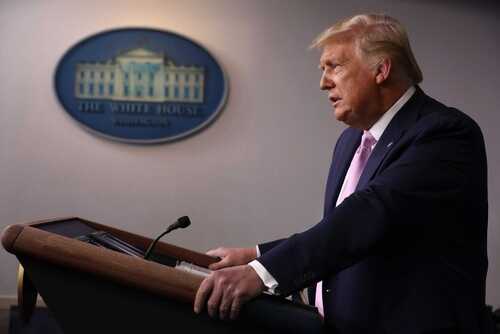
President Trump’s latest foreign policy initiative, the proposed Gaza Board of Peace, has ignited immediate tension among international allies by requiring a substantial $1 billion membership fee for permanent seats. This requirement is part of a broader, 20-point roadmap—the Comprehensive Plan to End the Gaza Conflict—aimed at stabilization and reconstruction. However, with Trump as the inaugural chairman holding centralized control over decisions and funds, critics fear the board will bypass the UN, imposing financial coercion and undermining multilateral consensus.
Story Snapshot
- The proposed Board of Peace requires a $1 billion contribution for permanent membership.
- Trump, as inaugural chairman, holds significant power over the board’s operations.
- This initiative aims to reconstruct Gaza but raises concerns about bypassing the UN.
- Critics argue the plan centralizes power and imposes financial coercion.
Trump’s $1 Billion Demand for Permanent Membership
The draft charter of President Trump’s proposed Board of Peace stipulates that countries must contribute over $1 billion in cash within the first year to receive permanent membership. This requirement is part of a broader initiative to promote peace and stability in conflict zones like Gaza. The move has sparked debate, with some viewing it as an innovative approach to fund reconstruction, while others see it as financially coercive and potentially bypassing existing international frameworks.
The Board of Peace, under Trump’s leadership, marks a shift from traditional UN-style bodies. Unlike the consensus-driven approach of the UN, this board centralizes power within the chairman’s hands. Trump, as the inaugural chairman, has the authority to select invitees, approve decisions, control the agenda, and designate his successor. This level of control has raised concerns among critics who fear it could undermine multilateral consensus and prioritize financial contributions over collaborative decision-making.
Trump’s ‘BOARD OF PEACE’ comes with an ENTRY FEE — Bloomberg
$1 BILLION to be permanent members — Trump controls the cash
3-year terms for member states
Netanyahu rejects terms, others fear US creating UN rival pic.twitter.com/hehTfhH3hp
— RT (@RT_com) January 17, 2026
Supporting Gaza’s Reconstruction Efforts
The Gaza Board of Peace is part of Trump’s Comprehensive Plan to End the Gaza Conflict, a 20-point roadmap aiming for stabilization, demilitarization, and governance in Gaza. The board, if ratified by three states, will oversee resource mobilization and accountability for Gaza’s rebuilding efforts. While the plan aligns with the UN Security Council Resolution 2803, the financial threshold for permanent membership may deter some countries from participating, potentially limiting the board’s effectiveness.
Despite these concerns, the initiative has gained initial support, with the White House announcing an executive panel including notable figures such as Marco Rubio, Steve Witkoff, Jared Kushner, and Tony Blair. These members are tasked with overseeing governance, reconstruction, and funding, providing strategic oversight to ensure the plan’s success. However, the draft’s control provisions and financial requirements continue to be a point of contention among international stakeholders.
Global Reactions and Implications
Global reactions to the Board of Peace have been mixed, with some countries pushing back against the financial prerequisite. The draft charter has been described by sources as “unacceptable” due to Trump’s control over funds and decision-making processes. This has led to criticisms of the board being a potential rival to the UN, challenging global norms and multilateral peacekeeping efforts. Despite these criticisms, the initiative aligns with Trump’s prior criticisms of the UN and reflects his intent to create alternative international frameworks.
In the short term, the board could mobilize significant resources for Gaza’s reconstruction and security if the charter is ratified. However, the long-term implications include potential shifts in global power dynamics, with donor states and the Trump administration gaining more influence over Gaza’s governance. The economic, social, and political impacts of this initiative are yet to be fully realized, but it undoubtedly shifts the focus towards US-centric models and affects international aid coordination.
Watch the report: Trump’s ‘Board of Peace’ plan: $1 billion for permanent membership?
Sources:
Trump demands $1 bln from countries for permanent seats on Gaza Peace Council
Trump wants nations to pay $1 billion to stay on his peace board
Statement on President Trump’s Comprehensive Plan to End the Gaza Conflict
Jerusalem Post article on Gaza peace initiatives