

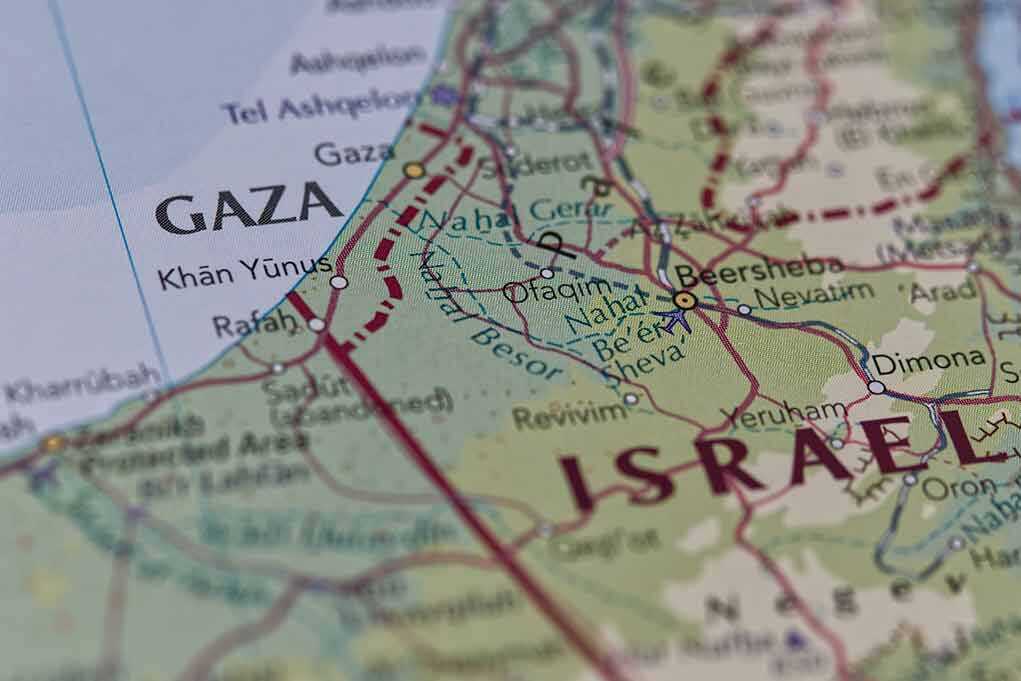
A deadly clash in the West Bank village of Tell has exposed how settler raids and sweeping lockdowns are reshaping Israel’s strategy and risking wider regional turmoil.
Story Snapshot
- Six people died in Tell after settlers entered the village and a gunfight broke out, triggering fears of wider unrest.
- Israel responded with closures and raids across Tell, Nablus, and other towns, deepening an already dense web of movement barriers.
- United Nations reports say more than 900 obstacles now restrict daily life for millions of Palestinians in the West Bank.
- Both sides claim self‑defense, while missing incident‑level evidence leaves key questions about who fired first and why.
Tell clash becomes a flashpoint in an already tense West Bank
On Friday in the northern West Bank village of Tell, a group of Israeli settlers entered the area and a confrontation quickly spiraled into a deadly gunfight that killed two Israelis and four Palestinians. Reports from Israeli media say a Palestinian grabbed a weapon from one of the settlers and opened fire, while other accounts from Palestinian officials and advocacy outlets frame villagers as defending their land from an armed settler raid. This single clash has now become a symbol in the broader fight over control, movement, and security across the territory.
Israeli military officials say that after the weapon was seized and shots were fired, an army response team and local defense units moved in, and more gunfire followed, adding to the casualty count and leaving several people wounded on both sides. Palestinian sources describe raids on homes and the use of a seized house in Tell as a field interrogation center, underscoring how quickly a local incident turned into a larger operation. While both sides point to self‑defense, no full public record yet clearly maps the exact sequence of shots and decisions in those critical minutes.
Lockdowns and mass arrests tighten an already harsh movement regime
Following the Tell clash, Israeli forces imposed closures on Tell, Nablus, and nearby villages, sealing roads and tightening checkpoints around a region already under heavy movement pressure. Palestinian and regional media report that more than 70 to 80 Palestinians were arrested in raids across the West Bank, with dozens taken from Tell alone, as troops searched homes and, in some cases, hospitals. Palestinian officials and rights advocates describe these sweeping actions as collective punishment, while Israeli authorities frame them as necessary steps to prevent more attacks and restore order.
These new restrictions came on top of a system that was already dense and far‑reaching. The United Nations Office for the Coordination of Humanitarian Affairs reported that as of December 2025 there were 925 documented movement obstacles restricting the daily movements of about 3.4 million Palestinians across the West Bank, including East Jerusalem. Earlier international and humanitarian reporting explains that since the second intifada, Israel has used checkpoints, roadblocks, trenches, gates, and legal orders to control access to key areas, repeatedly justifying these tools as temporary security measures. For Palestinians, these closures often mean delayed medical care, blocked access to jobs, and daily uncertainty about basic travel.
Competing stories about Tell reflect a wider pattern of conflict
Media and officials on each side offer different narratives about what Tell represents, even when they agree on the death toll. Israeli sources emphasize that settlers entered the village for an unauthorized “hike” and that the clash began only after a resident grabbed a gun and opened fire, painting the event as a tragic but reactive security incident. Palestinian leaders and advocacy outlets argue that repeated settler incursions, razed land, and the building of new outposts show a pattern of aggressive expansion, and they describe the villagers as resisting an armed attack on their community. What is missing from open sources is neutral, incident‑specific evidence—such as body camera footage or detailed forensic reports—that could settle who took the first shot and whether any party planned an attack in advance.
This gap in fine‑grained evidence is not unique to Tell. United Nations materials and rights reports have long noted that while the overall structure of movement and access restrictions in the West Bank is heavily documented, many local clashes unfold in information shadows. Checkpoint counts, permit revocations, and broad security orders are recorded, but micro‑level details—who issued specific commands, which routes were closed at which hour, and how a crowd moved in the seconds before gunfire—often remain unavailable to the public. In that environment, broader narratives about occupation, resistance, and terrorism tend to shape opinion faster than detailed investigation can catch up.
Escalation risks and what comes next for West Bank communities
Since the Gaza war, reports from humanitarian groups and foreign governments say movement restrictions and settler violence in the West Bank have reached levels not seen in years, with hundreds of new gates, roadblocks, and checkpoints added on top of older barriers. In this context, the Tell incident is more than a local tragedy; it is a spark in a dry forest, where one clash can quickly trigger raids in many towns, new land orders, and more armed settler activity. Palestinian communities brace for further restrictions and arrests, while Israeli citizens worry about more attacks on roads, settlements, and local defense squads.
🚨Ongoing Nablus Closure Paralyzes Emergency Medical Services – Women Forced to Give Birth in Ambulances, Dialysis Patients Stranded at Checkpoints
New information collected by PHRI points to a sharp deterioration in access to healthcare as the ongoing military closure of the… pic.twitter.com/xJZXI9tIQ0
— Physicians for Human Rights Israel (PHRI) (@PHRIsrael) July 26, 2026
For now, Tell sits at the center of this tension. Funerals there mark the loss of four men, while Israeli families mourn two dead soldiers, one tied to a local defense group. Villagers report bulldozed land and new structures placed on their hills, and troops remain deployed across the area to enforce closures and support further operations. Without a shared, trusted account of what happened in the first moments of the clash, each side continues to read Tell through its own lens—either as proof of dangerous resistance or as evidence of a desperate stand against expanding control—leaving the risk of future sparks in other villages uncomfortably high.
Sources:
english.wafa.ps, reliefweb.int, pchrgaza.org, palestine-studies.org, youtube.com, apnews.com, timesofisrael.com, un.org, ochaopt.org, state.gov