

The United States has dramatically escalated its pressure on the socialist Maduro regime in Venezuela with the confirmed seizure of a sanctioned oil tanker off the Venezuelan coast. This move is being heralded as a concrete demonstration that President Trump’s “America-First” energy policy—prioritizing U.S. energy independence and robust enforcement against hostile actors—is back in full force, putting anti-American dictatorships on notice.
Story Snapshot
- The U.S. seized an oil tanker near Venezuela, escalating pressure on the socialist Maduro regime.
- The action reinforces Trump’s broader strategy of energy dominance and toughness on anti-American dictators.
- Conservatives see a sharp contrast with years of weak, globalist appeasement and confused sanctions enforcement.
- The move underscores why secure borders, strong navies, and reliable domestic energy matter for American families.
Trump Confirms U.S. Seizure of Oil Tanker Near Venezuela
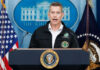
The United States has seized a sanctioned oil tanker, identified as the Skipper, off the coast of Venezuela in a major escalation of its pressure campaign against the government of President Nicolás Maduro. The action was announced by U.S. President Donald Trump and confirmed by Attorney General Pam Bondi, who released video of armed forces boarding the vessel
The seized vessel is a very large crude carrier (VLCC) named the Skipper (previously the Adisa). It was reportedly carrying about 1.8 million barrels of Venezuelan heavy crude bound for Cuba when intercepted. The U.S. government states the tanker was seized under a judicial warrant because it was part of an “illicit oil shipping network” that transported sanctioned oil from both Venezuela and Iran to support foreign terrorist organizations, specifically the Islamic Revolutionary Guards Corps’s Quds Force and Hezbollah.
Energy Dominance, Sanctions Enforcement, and American Leverage
The tanker seizure fits squarely into a broader America-First playbook that prioritizes energy independence, strong enforcement, and leverage over rogue regimes. By interrupting questionable oil shipments, the administration seeks to choke off revenue streams that fund authoritarian consolidation and regional mischief. Robust sanctions enforcement has always been effective only when backed by real-world interdictions at sea and in ports. Without actions like this, sanctions risk becoming symbolic gestures rather than concrete tools that defend U.S. interests and the global energy system.
Conservatives remember how previous globalist approaches left American consumers and workers exposed to hostile producers and cartel behavior. When Washington turns a blind eye to illicit oil movements, it undermines rule-of-law shippers and producers who play by the rules, including many American companies. By contrast, a clear signal that illegal or sanction-busting shipments can be intercepted helps stabilize legitimate markets while discouraging dictators from using energy as a geopolitical weapon. That dynamic matters directly for gasoline prices, inflation, and the strength of the dollar.
The U.S. seized a tanker off the coast of Venezuela, President Trump announced on Wednesday, amid escalating tensions between the administration and the South American nation.
What You Need to Know is streaming exclusively on @DisneyPlus. Stream now: https://t.co/WgAsVQXXHQ pic.twitter.com/6UWkgccjQp
— ABC News (@ABC) December 11, 2025
Venezuela’s Socialist Regime and Years of Failed Appeasement
Venezuela under Nicolás Maduro has become a textbook warning about socialist mismanagement, political repression, and economic collapse. Once a relatively prosperous energy producer, the country spiraled into hyperinflation, food shortages, and mass migration after its leadership embraced hard-left economic controls and entrenched one-party rule. For years, U.S. and Western policy wavered between half-hearted sanctions and quiet back-channel deals, creating confusion that often benefited the regime rather than the suffering Venezuelan people or regional stability.
By seizing a tanker linked to Venezuelan waters, the Trump administration is telegraphing that the era of waffling is over. The move echoes a broader 2025 pattern of exerting pressure on foreign adversaries while rebuilding American strength at home, from energy production to military readiness. Conservatives view this as a necessary break with an approach that mixed moral lectures with timid enforcement. In practice, those older strategies allowed socialist dictators to survive while ordinary citizens slipped deeper into poverty and fled across borders in desperation.
What the Tanker Seizure Means for Everyday American Families
For many American families, news from Venezuela can feel distant, but tanker seizures, trade flows, and energy markets eventually show up in household budgets. Aggressive enforcement against illegal or sanction-busting shipments can promote more transparent and competitive markets, supporting stable prices in the long run. Combined with a renewed push for domestic production and fewer regulatory roadblocks, it signals a shift away from depending on unstable or hostile regimes for essential energy supplies that power farms, trucking, and manufacturing.
At the same time, the action underscores why a strong Navy, secure maritime lanes, and clear rules of engagement matter. If America retreats from enforcing its own laws and defending its interests abroad, others will fill the vacuum—from cartels and smugglers to adversarial states. For conservatives, the tanker seizure is not an isolated stunt but part of a larger choice: either the U.S. leads with strength and principle, or it drifts back toward apologetic diplomacy that leaves both our allies and our families more vulnerable.
Watch the report: New video of U.S. seizing oil tanker off coast of Venezuela