

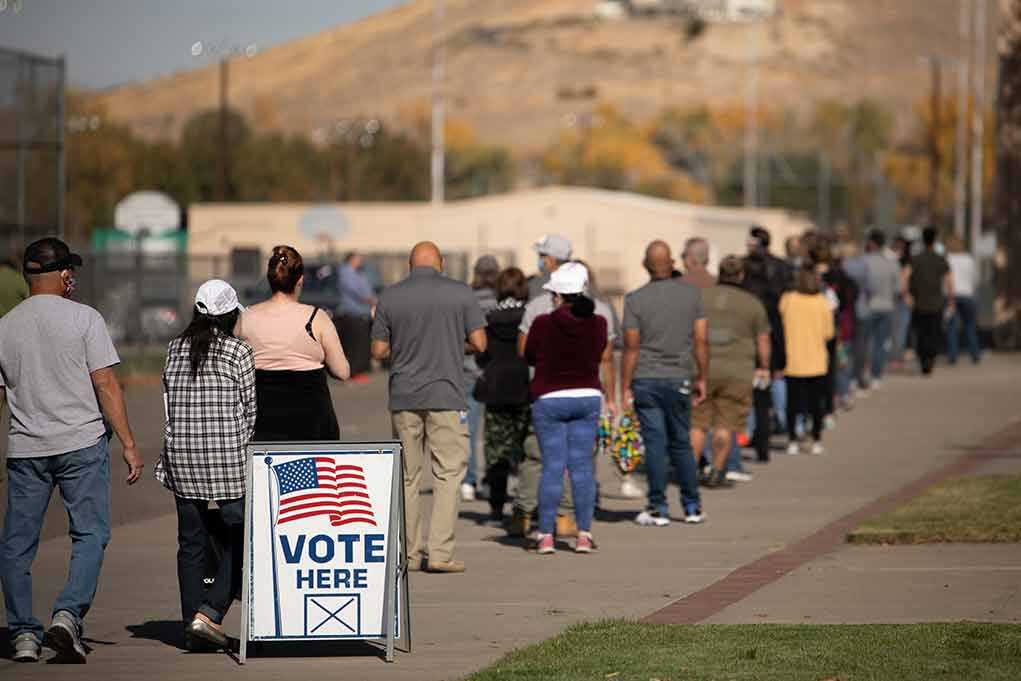
New national voter data show Democrats won roughly seven in ten voters under 30 in 2026, a sharp youth swing that Republicans must confront without panic.
Story Snapshot
- Democrats won about 70% of under-30 House votes in 2026, per the AP Voter Poll.
- Youth turnout was the second-highest midterm rate in 30 years, at about 27%.
- Analysts say the shift is real but may not be permanent; young voters remain “up for grabs”.
- Economic stress topped youth concerns, shaping 2026 choices toward Democrats.
What The Data Say About The 2026 Youth Surge
The Associated Press Voter Poll reported that about seven in ten voters under 30 backed Democratic candidates for the United States House in 2026. About three in ten chose Republicans. That margin is far larger than in 2024, when under-30 voters split more evenly in the presidential race. Young voters were only about one-tenth of the electorate. But the scale of the margin still mattered in close districts and media stories about momentum.
Independent youth researchers at Tufts University estimated that 27% of people ages 18 to 29 voted in 2026. That was the second-highest midterm youth turnout in about 30 years. Higher youth participation helped amplify the Democratic edge among young voters. The same researchers found Democratic House support among youth near two-thirds. That figure tracked close to the Associated Press results and bolstered the basic direction of the shift.
How 2026 Compared With 2024 And Why It Happened
In 2024, under-30 voters were roughly split between President Trump and Kamala Harris. In 2026, that same age group backed Democrats for the House by about 70% to 30%. That is a big change in only two years. Analysts noted that the economy topped the list of youth concerns in 2026. High prices, rent, and debt pressure shaped views. That issue mix lined up with the youth vote pattern in the House races that year.
Youth-focused experts also pointed to shifts among young men. Some young men moved toward Trump in 2024 but swung back toward Democrats in 2026 House races. The Tufts research arm reported that youth overall favored Democrats by about 66% to 31%. That estimate put the Democratic margin near 35 points. Those figures aligned with the broad Associated Press pattern and suggested a sizable movement across key youth subgroups.
Why Conservatives Should Not Overreact Or Give Up On Gen Z
Pollsters warn that a midterm snapshot does not prove a permanent realignment. Harvard’s John Della Volpe said the whiplash between 2024 and 2026 means young voters are “up for grabs.” That matches decades of research showing new voters try on party labels before settling. Turnout mix also matters. Who shows up can change the totals even if minds did not move as much as the headlines claim.
For Republicans, the lesson is tactical and practical. Compete on the economy where young people feel it daily. Show how conservative energy policy lowers bills. Explain how spending restraint fights inflation that eats every paycheck. Keep the focus on safe streets, free speech, and the right to worship and defend your home. Those are bedrock values that many young Americans share, even if they dislike Washington drama or media noise about personalities.
What The Trump Administration And GOP Can Do Next
House and state candidates can meet young voters where they live. Start with pocketbook needs: starter homes, affordable energy, and skills-to-jobs pipelines. Promote work-based learning, fast permits for housing, and fair chance hiring. Back campus free speech and viewpoint diversity so students hear more than one side. Defend constitutional rights, including the Second Amendment, while stressing safety and responsibility. Tie each step to a clear outcome young people can see within months, not years.
🚨 IS DEMOCRATIC SOCIALISM BECOMING THE FUTURE OF THE DEMOCRATIC PARTY?
Young voters overwhelmingly backed Democrats in the 2026 midterms, 66% to 31%, according to Tufts University.
But another number deserves attention: An August UMass Amherst poll found 68% of Democrats ages…
— MDBayNews (@MDBayNews) November 9, 2026
Data discipline also matters. Commission state voter-file analyses to separate persuasion from mobilization. Test whether the 2026 pattern holds in 2028. Track young men, non-college youth, and new voters over time. If the shift was mostly turnout composition, targeted outreach can rebalance it. If some young voters truly changed sides, direct contact on cost of living, border security, and freedom can win them back. The numbers say they are movable. Treat them like customers, not enemies.
Sources:
zerohedge.com, ap.org, apnews.com, washingtonpost.com, fortune.com