
Pakistan is offering to host U.S.–Iran peace talks as the war grinds on—raising fresh questions for America First voters about who sets the mission, how it ends, and what it will cost at home.
Quick Take
- Pakistan’s Prime Minister Shehbaz Sharif says Islamabad is “ready and honoured” to host talks between the U.S. and Iran to end the Middle East war.
- President Trump publicly amplified Sharif’s offer on social media, a signal that Washington may be open to Pakistan as a venue.
- Pakistani sources say a U.S. delegation could arrive within days, but Iran is described as “still not ready” due to mistrust.
- Reports suggest Vice President JD Vance could lead a U.S. delegation, though no final roster or venue has been officially confirmed.
Pakistan’s Offer Puts Diplomacy Back on the Table
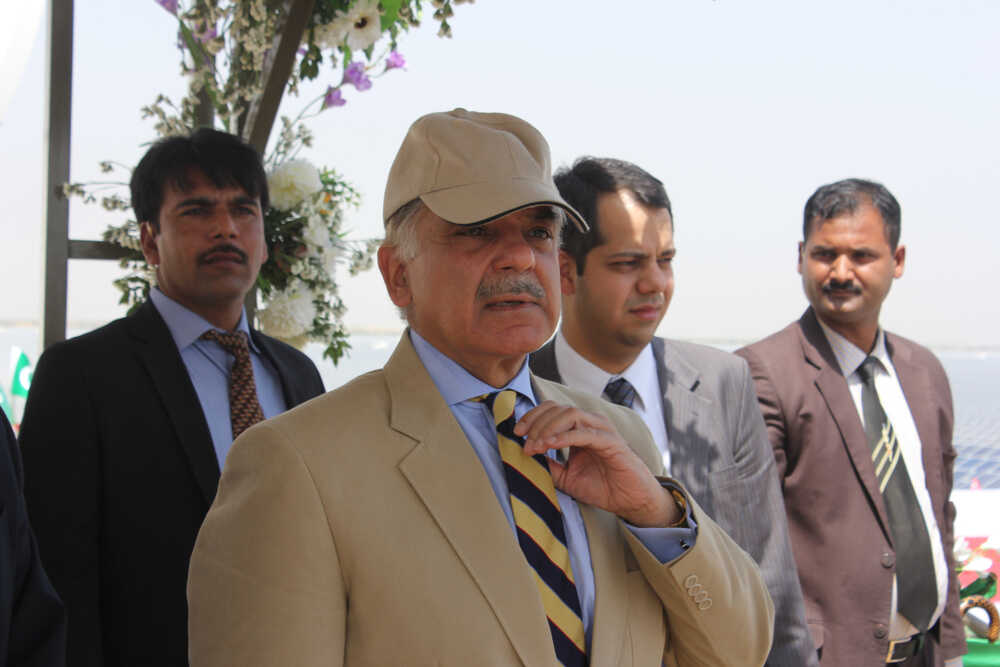
Pakistan Prime Minister Shehbaz Sharif announced on March 24, 2026, that Islamabad stands ready to host “meaningful and conclusive” talks between the United States and Iran to end the ongoing Middle East war. Pakistani officials framed the offer as consistent with a longstanding policy preference for resolving regional conflicts through diplomacy. The proposal also reflects Islamabad’s ties to both Washington and Tehran, positioning Pakistan as a possible bridge while open fighting continues.
Sharif’s offer follows recent backchannel activity described in reporting that mentions coordination with other regional players, including Egypt and Turkey. The timeline described in multiple accounts places a key conversation on March 23 between Pakistan’s Chief of Defence Forces, Field Marshal Asim Munir, and President Trump. In that same window, Trump announced a five-day pause on threatened strikes against Iranian power plants, saying conversations with Tehran had been “very good and productive.”
Trump’s Public Signal Meets a “Still Not Ready” Iran
President Trump’s decision to share a screengrab of Sharif’s offer on Truth Social has been widely interpreted as a tacit endorsement of Pakistan’s hosting idea, even as U.S. officials have not formally confirmed a venue. Public signaling matters because it shapes expectations in markets and among allies, but it does not equal a signed framework. Multiple reports describe the diplomatic picture as fluid, with key details—location, agenda, and delegation authority—still unsettled.
Pakistani Foreign Ministry sources have suggested a U.S. delegation could arrive “in a day or 2,” but the same reporting says Iran remains hesitant and mistrustful. That mismatch—Washington signaling momentum while Tehran is described as reluctant—helps explain why no official summit announcement has landed yet. Pakistani Deputy Prime Minister and Foreign Minister Ishaq Dar also reportedly spoke with Iran’s foreign minister to emphasize dialogue, underscoring that Islamabad is trying to keep channels open even without firm commitments.
What’s Known About Potential Delegations—and What Isn’t
Reports have floated the possibility that Vice President JD Vance could serve as a chief U.S. negotiator if talks move forward, with Iran potentially represented by senior political leadership as well. These names, however, remain unconfirmed in the absence of a formal U.S. or Iranian announcement. That uncertainty is not a small detail: a negotiation’s credibility depends on whether the people in the room are empowered to trade commitments on issues like strikes, sanctions, prisoners, and nuclear terms.
Pakistan’s role is described as facilitation rather than enforcement, which limits what Islamabad can guarantee. Still, the venue choice can influence outcomes by shaping security, media access, and the ability to sustain multi-day negotiations. For conservative Americans skeptical of “forever wars,” the practical question is whether a hosted process creates a verifiable offramp—one that reduces the risk of escalation in the Gulf and the Strait of Hormuz without drifting into an open-ended nation-building project.
Why the Diplomatic Push Matters to U.S. Voters at Home
The war’s fourth-week context has included global concern over energy security and regional stability, factors that historically filter straight into U.S. household costs. That reality lands hard on a conservative base already exhausted by years of inflation, high energy prices, and Washington spending that never seems to end. The basic political problem is easy to state: many voters backed Trump expecting fewer new foreign entanglements, yet the U.S. now faces another high-stakes conflict where mission creep is always a risk.
At the same time, it does not provide specific terms being discussed for a ceasefire, a nuclear arrangement, or any constitutional guardrails around war powers, funding, and duration. That lack of detail matters for accountability. Conservatives typically want clear objectives, a clear legal basis, and a defined end state—especially when American troops, U.S. infrastructure security, and domestic budgets are on the line. For now, Pakistan’s offer is a doorway to talks, not proof of a deal.
Limited by what’s been publicly confirmed, the most concrete takeaway is this: the White House is signaling interest in diplomacy while partners test venues and Tehran weighs trust and leverage. If talks materialize in Islamabad, the next critical public facts will be who negotiates, what gets put in writing, and what enforcement mechanisms exist to prevent the U.S. from sliding from targeted aims into another multi-year conflict with no measurable victory conditions.
Sources:
Pakistan to facilitate US-Iran talks: Sharif
Pakistan offers to mediate talks between Iran and US
Trump appears to have approved Pakistan PM Sharif’s offer to host US-Iran talks
JD Vance may lead US in potential Iran peace talks in Pakistan: Report
Shehbaz Sharif: Pakistan ready to host talks between the US and Iran
Pakistan’s deep concern over the ongoing developments in the Middle East