

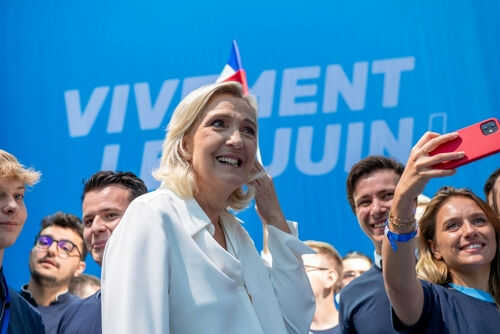
While Socialists cling to power in Paris, Marine Le Pen’s populist movement just shattered decades of establishment dominance by capturing a major French city for the first time, signaling a seismic shift in European politics that globalist elites can no longer ignore.
Story Snapshot
- Socialist Emmanuel Grégoire retained Paris for the left, continuing decades of progressive control in France’s capital city
- Marine Le Pen’s Rassemblement National achieved historic breakthrough by winning Nice, marking first major city victory for populist movement
- RN secured multiple municipalities including Perpignan with over 51% first-round victory, demonstrating expanding grassroots appeal
- Results preview 2027 presidential race dynamics, showing populist forces gaining ground in urban centers traditionally dominated by establishment parties
Establishment Holds Paris as Populists Storm the Gates
Emmanuel Grégoire secured Paris for the Socialist Party on March 22, 2026, succeeding outgoing mayor Anne Hidalgo after winning 36.5% in the first round against conservative challenger Rachida Dati’s 24.9%. Grégoire celebrated by cycling to City Hall, proclaiming victory for “a vibrant Paris, a progressive Paris.” The Socialist retention of Paris maintains continuity in governance that dates back to 2001, preserving the capital as a progressive stronghold. However, this victory masks a deeper story unfolding across France, where ordinary citizens are rejecting establishment politics in favor of populist alternatives that address their concerns about immigration, security, and national identity.
Historic Populist Breakthrough Reshapes French Politics
Marine Le Pen’s Rassemblement National achieved what establishment parties deemed impossible: winning Nice, a major Mediterranean city on the French Riviera. This landmark victory demonstrates the RN’s evolution from a fringe movement to a legitimate governing force capable of securing major urban centers. In Perpignan, RN incumbent Louis Aliot dominated with 51.4% in the first round, avoiding a runoff entirely. The party also led strongly in Toulon with 39.4% and competed neck-and-neck in Marseille, where RN candidate Franck Allisio matched left-wing incumbent Benoît Payan at 35.4%. These results validate what grassroots conservatives have understood for years: ordinary citizens are tired of globalist policies that prioritize ideology over common-sense governance and national sovereignty.
Fragmented Opposition Enables Populist Gains
The traditional left’s internal divisions contributed significantly to RN advances across France. In multiple cities, Socialist, Green, and radical-left candidates competed against each other, splitting the progressive vote and creating opportunities for populist challengers. Lyon exemplified this fragmentation, with Green Mayor Grégory Doucet tied at 37.5% against centrist Jean-Michel Aulas, while radical-left candidate Anaïs Belouassa-Cherifi captured 10.9%. Strasbourg saw similar dynamics with Socialist Catherine Trautmann leading at 25.1%, right-wing candidate Philippe Vetter at 23%, and incumbent Green Mayor Jeanne Barseghian trailing at 18.8%. This fragmentation reflects the left’s inability to present a unified vision, instead prioritizing ideological purity over electoral pragmatism—a pattern that benefits populist movements offering clear alternatives.
Presidential Race Preview Shows Populist Momentum
These municipal elections serve as crucial indicators for the 2027 presidential contest, demonstrating the RN’s capacity to compete in urban centers previously considered impenetrable to populist appeals. Marine Le Pen characterized the results as “a tremendous victory for our movement,” noting RN victories “in many towns, and not only in places where we were the incumbents.” The party’s success in capturing administrative positions at the local level provides governing experience and institutional credibility that strengthens its presidential prospects. For American conservatives watching European politics, this represents a familiar pattern: grassroots movements challenging entrenched establishments, prioritizing national sovereignty over globalist agendas, and demanding government accountability. The French electorate’s willingness to reject decades of establishment control mirrors the frustration American voters expressed when rejecting failed progressive policies.
Sources:
French municipal elections: follow live
Emmanuel Grégoire becomes new mayor of Paris, succeeding fellow Socialist Anne Hidalgo
Socialists win Paris mayoralty in blow to French right