
When a big-city mayor shows up at a billionaire’s front door to sell a “tax the rich” message, businesses hear a warning—and they start packing.
Quick Take
- NYC Mayor Zohran Mamdani filmed a “tax the rich” video outside Ken Griffin’s Manhattan penthouse while promoting a new pied-à-terre tax on luxury properties.
- Citadel CEO Ken Griffin responded by reaffirming plans to expand in Miami, calling the video “creepy and frightening” and criticizing New York’s posture toward success.
- Citadel’s potential New York expansion at 350 Park Avenue remains “under discussion,” with no formal cancellation announced in the reporting.
- The dispute highlights a broader trend: high-tax, high-regulation cities risking job and capital flight to lower-tax states like Florida.
Mamdani’s luxury-tax push turns into a highly personal message
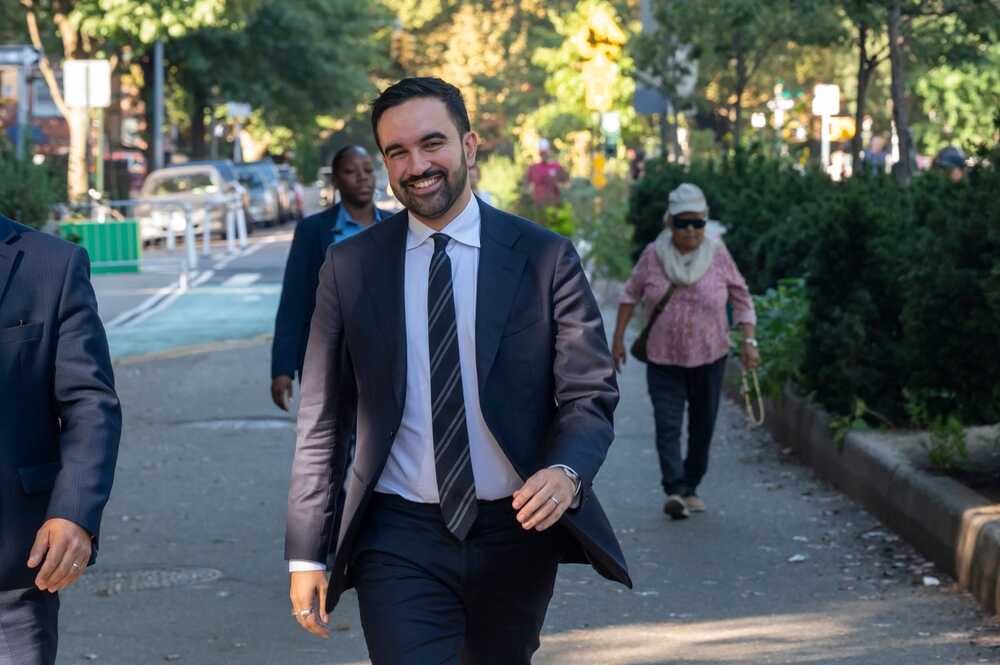
New York City Mayor Zohran Mamdani escalated his campaign for a revived pied-à-terre tax by recording a video outside Ken Griffin’s Manhattan residence on April 15, 2026. The proposal targets luxury properties over $5 million that are owned by people who are not full-time residents. Reporting described Griffin’s apartment as the $238 million penthouse he purchased in 2019, making the location itself part of the political argument.
Mamdani’s strategy speaks to a familiar progressive theme: large-budget gaps and housing stress require new revenue from those seen as most able to pay. The available reporting frames the mayor’s goal as raising significant money for social programs, but the precise final tax rate and revenue outcome remain uncertain because the proposal is still in the city’s legislative process. The City Council had not completed action at the time covered.
Griffin’s Milken remarks tie New York’s rhetoric to Miami’s gain
Ken Griffin addressed the controversy publicly at the Milken Conference on May 5, 2026. In that setting, Griffin said Mamdani’s video felt “creepy and frightening” and argued that New York’s leadership was sending a message that “does not welcome success.” Griffin also said the episode reaffirmed his decision to double down on Florida, including revising Citadel’s Miami headquarters tower plans to “make it bigger.”
That choice is more than culture-war symbolism; it is about where high-end finance decides to place long-term payrolls, tax receipts, and future growth. Reporting noted that Citadel already has a major Miami footprint with thousands of employees, and that a New York expansion was once expected to create a large number of jobs as well. When business leaders interpret public policy as hostile, expansion plans can shift quickly.
The 350 Park Avenue question: jobs, leverage, and political incentives
A key unresolved issue is Citadel’s contemplated project at 350 Park Avenue in New York City. After Mamdani’s video, Citadel’s COO indicated the project was being reconsidered, and later reporting still described it as “under discussion” rather than definitively canceled. That ambiguity matters for workers and city finances: once a firm pauses an expansion, the “maybe” itself becomes leverage—both for the company and for politicians seeking headlines.
Former Mayor Eric Adams criticized the tactic in blunt terms, accusing Mamdani of trading potential jobs for social media attention. Supporters of Mamdani’s approach see the tax as a targeted fee on vacant or part-time luxury ownership during fiscal strain. The core tension is structural: cities can vote for higher taxes, but capital and high-income employment can relocate across state lines with far less friction than most families can.
Why this fight resonates beyond one penthouse
The Mamdani-Griffin clash fits a larger pattern in American politics: fiscal stress and expensive urban governance colliding with mobile wealth and mobile firms. Reporting highlighted New York’s high-tax environment and Florida’s lack of a state income tax as a key contrast, alongside the rise of Miami as a finance hub. Supporters of limited government see the episode as a cautionary tale about punitive taxation and public shaming backfiring.
Following NYC Mayor Mamdani’s Pledge to Punish the Rich, Ken Griffin ‘Doubles Down’ on Miami Move
READ: https://t.co/bQDkwZMmhY pic.twitter.com/L2wGt6A7Ad
— The Gateway Pundit (@gatewaypundit) May 6, 2026
At the same time, it also reflects why many voters—left and right—say the system feels broken. One side sees elites insulated from the consequences of economic hardship; the other sees government using the language of fairness while risking private-sector jobs that fund city services. With the tax still pending and Citadel’s New York plans unresolved, the only clear near-term result is growing uncertainty for New York and a clearer runway for Miami.
Sources:
Following NYC Mayor Mamdani’s Pledge to Punish the Rich, Ken Griffin ‘Doubles Down’ on Miami Move
Billionaire says Mamdani’s ‘tax the rich’ video outside NYC apartment ‘creepy, frightening’