

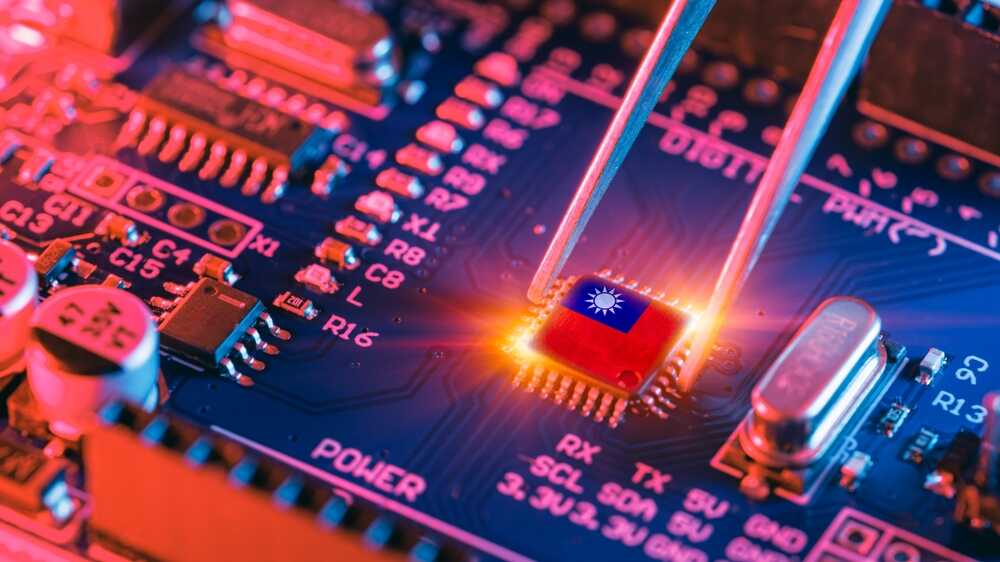
Taiwan sits at the center of a potential war with China — and the real battlefield may not be the beaches, but the global supply chains that keep the modern world running.
Story Snapshot
- Taiwan makes 90% of the world’s advanced computer chips — losing access would trigger a global economic collapse worse than 2008.
- The U.S. has already launched economic warfare against China through chip export controls, but those controls may be pushing China to build its own chip industry faster.
- China is firing back with its own weapons — cutting off rare minerals that American factories and defense systems depend on.
- Experts are split: some say economic pressure can deter China, others warn it could backfire and make war more likely.
Taiwan’s Chips Are the World’s Most Dangerous Asset
Taiwan produces 90% of the world’s advanced computer chips and 99% of the processors used to train artificial intelligence systems. [3] These chips power everything from smartphones to fighter jets. If Taiwan’s factories were destroyed or cut off in a conflict, analysts say the global economy could lose years of progress. The damage would hit every nation — friend and foe alike — making Taiwan a kind of economic nuclear weapon that no one wants to detonate.
About 50,000 ships pass through the Taiwan Strait every year. [2] That narrow 180-kilometer waterway is one of the busiest trade routes on earth. Control it, and you control a massive share of global commerce. This is why military planners and economists alike treat the strait as a chokepoint — a single pressure point where enormous leverage can be applied without firing a single shot.
America’s Economic Weapons — and Their Limits
Since October 2022, the United States has blocked China from buying advanced computer chips and the machines needed to make them. [5] The goal is to keep China from building the military technology it needs to challenge American power. Washington also passed the CHIPS and Science Act to grow chip manufacturing at home. These moves signal a clear strategy: starve China of the technology it needs, while building American strength from the inside out.
But there is a serious catch. Analysts warn that broad export controls are actually speeding up China’s drive to build its own chip industry. [4] Every time Washington tightens the screws, Beijing pours more money into becoming self-sufficient. China’s Huawei already developed its own 5G chip despite U.S. sanctions. If China breaks free from Western technology suppliers, the leverage America holds today disappears. That is the core risk — the strategy could undermine itself.
China Is Fighting Back With Its Own Chokepoints
China is not sitting still. Beijing controls much of the world’s supply of rare earth minerals — materials needed to make computer chips, electric vehicle batteries, and military hardware. China has already weaponized these exports, restricting access to gallium and germanium to pressure Western nations. [3] This gives China its own economic trigger to pull. Any conflict would quickly become a two-way economic war, with both sides inflicting serious damage on each other and on the global economy.
One estimate puts U.S. chip industry losses at up to $1 trillion if American companies were cut off from Chinese markets. [6] That is not a small number. Large U.S. semiconductor firms have enormous financial interests in keeping trade open with China. This creates pressure from inside American industry against the very policies designed to protect national security. Washington must balance corporate interests against strategic necessity — and those two things are often in direct conflict.
The Bigger Question: Deter War or Risk Starting One?
The Council on Foreign Relations and Brookings Institution both argue the realistic goal is preventing war — not winning one through economic pressure alone. [7] Their view is that China already understands attacking Taiwan would destroy the chip factories Beijing depends on. That self-deterrence may be more powerful than any U.S. export control. But this logic only holds as long as China cannot replace Taiwan’s chips with its own — which is exactly what Beijing is racing to do.
Here are 5 core reasons why China is urgently building a military island chain from the Spratly Islands to Taiwan to control and dominate the region:
1. Breaking the "First Island Chain" & Controlling Sea Lanes of Communication (SLOC)
These artificial islands act as "unsinkable… https://t.co/t2KH4kvC8M pic.twitter.com/FVYIrG1IuQ
— trungnghia (@hotrungnghia10) June 20, 2026
The Trump administration faces a hard choice. Economic chokepoints are real and powerful, but they are not a permanent advantage. China is working every day to escape them. The window to use supply chain leverage as a deterrent is open now — but it may not stay open forever. Building domestic chip capacity, tightening alliances with Japan and the Philippines, and arming Taiwan for its own defense are steps that strengthen America’s hand. Waiting and hoping the economic pressure holds is not a strategy — it is a gamble.
Sources:
[2] Web – A strategy for staying out: Recalibrating US support to Taiwan
[3] YouTube – How Taiwan Became the World’s Most Perilous Geopolitical …
[4] Web – Modern economic chokepoints in war and the impact on geopolitics
[5] Web – The Chain of Peace: Do Supply Chain Chokepoints Deter War?
[6] Web – Semiconductor chokepoints define U.S.-China rivalry
[7] Web – [PDF] CHIPS, CHINA AND CHOKE POINTS