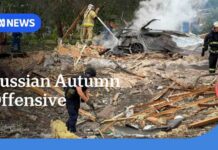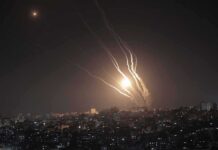

After years of hearing that Russia’s air force is “finished,” the hard truth is the war is dragging on because neither side has been able to dominate the skies.
Story Snapshot
- Claims that Russia’s air force “has no future” don’t match the mixed record shown, including Russian adaptation and Ukraine’s improving defenses.
- Russia still has not achieved air superiority over Ukraine, despite a large numerical advantage and years of sustained operations.
- Ukraine’s layered air defenses have become more effective, including high reported drone interception rates in early 2026.
- Russia has shifted tactics toward complex, combined missile-and-drone strike packages aimed heavily at energy infrastructure.
Why the “30,000 sorties” claim doesn’t settle the argument
The headline claim—tens of thousands of Russian sorties with “no win”—doesn’t appear as a single verified story in major outlets, and the sortie figure is described in the research as an inference from daily operational tempo rather than a consolidated official total. What is well documented is the strategic outcome: Russia entered the 2022 invasion with advantages, yet failed to secure air superiority, largely due to Ukraine’s ground-based air defenses and dispersal tactics.
Russia’s early campaign included heavy missile strikes and attempted airfield attacks starting February 24, 2022, but Ukrainian forces reportedly relocated aircraft and kept enough capability alive to contest the air domain. Reporting summarized in the research points to meaningful Russian aircraft losses by mid-2022—around 165 aircraft, roughly 10% of frontline strength at the time—helping explain why Russian aviation shifted toward standoff weapons rather than persistent close-in operations over the most defended areas.
Ukraine’s air defense “structural resilience” is shaping the battlefield
Ukraine’s air defense network has increasingly determined what Russia can and cannot do in the air. It describes Ukraine’s layered defenses as “structural,” tying air defense performance to economic stability and civilian morale because energy infrastructure protection matters as much as front-line maneuver. Ukrainian interception rates cited in the research include a reported 91.6% drone interception rate in February 2026, suggesting a significant improvement in sensor fusion and integration.
Russia has responded by trying to complicate the problem rather than solve it outright. It describes a shift from mass drone swarms in 2025—sometimes producing lower interception rates during overload events—toward more integrated strike packages by early 2026. One cited example is a February 3, 2026 attack package totaling 521 aerial assets, including 71 missiles and 450 drones, intended to stress defenses with mixed trajectories, speeds, and target sets.
Russia’s evolving playbook: standoff strikes, coordination, and pressure on energy
Russia’s air campaign has increasingly targeted Ukraine’s energy system, with the research citing February 2026 strikes hitting 16 sites, aiming to impose blackouts, raise repair costs, and strain public confidence. That approach also reduces the need to fly aircraft into the densest air defense zones. The research further notes Russia’s interest in conserving missile stocks while signaling production capacity, a reminder that industrial output and logistics can matter as much as tactical brilliance.
Another development highlighted in the research is improved Russian coordination of air defenses and sensors, including the use of aircraft such as the A-50U in coordination with surface-based systems to extend reach. A separate analytical warning in the research argues these lessons could make Russia’s integrated air defense a bigger long-term challenge for NATO than pre-war assumptions suggested. That point matters because wars don’t only produce winners; they also produce hardened capabilities.
What’s still unknown—and what it means for Americans watching another war unfold
It flags key uncertainties: sortie totals are not presented as a single audited number, and Russian loss figures are partly opaque. What is clear is the “no future” framing overreaches, because the same body of reporting shows Russia adapting while still failing to secure decisive control of airspace. That kind of stalemate dynamic is exactly what makes long conflicts grind on—an outcome many conservatives now distrust after years of costly foreign entanglements.
For a U.S. audience already divided about overseas commitments in 2026, the Russia-Ukraine air war offers a cautionary lesson: high-tech combat doesn’t guarantee quick victory, and industrial capacity plus defensive systems can lock opponents into years of attrition. The most responsible takeaway is to separate viral certainty from documented facts—Russia has not “won the sky,” Ukraine has not made air threats disappear, and both sides keep adjusting in ways that prolong the fight.
Sources:
https://ack3.eu/russia-shifts-air-war-strategy-over-ukraine-in-2026/
https://www.businessinsider.com/russias-air-defenses-learned-ukraine-now-bigger-threat-nato-2026-2
https://www.frstrategie.org/en/publications/notes/twenty-one-strategic-lessons-ukraine-war-2026
https://www.statista.com/statistics/1296573/russia-ukraine-military-comparison/