

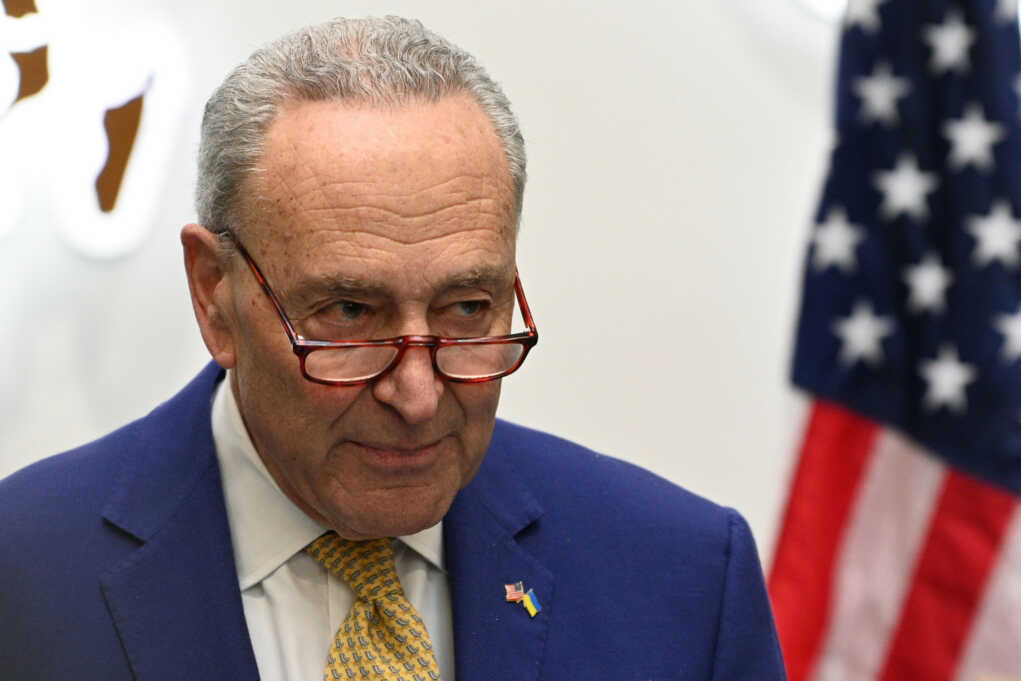
Chuck Schumer is now branding proof-of-citizenship voting rules as “Jim Crow 2.0,” even as Democrats once pushed voter ID measures—and he’s pairing the rhetoric with shutdown brinkmanship.
Story Snapshot
- Senate Minority Leader Chuck Schumer is attacking the SAVE Act as “Jim Crow 2.0” and “dead on arrival” in the Senate.
- The SAVE Act would require documentary proof of U.S. citizenship for federal voter registration, a major shift from many current online and mail-in processes.
- House Republicans are pressing to tie the bill to government funding, raising the risk of a shutdown fight.
- Schumer claims the bill could block more than 20 million legitimate voters, but the figure is repeated in coverage without a clearly cited source.
Schumer Escalates the Fight by Framing SAVE as “Jim Crow 2.0”
Chuck Schumer’s latest messaging centers on a historical comparison designed to maximize political pressure: he has labeled the Safeguard American Voter Eligibility (SAVE) Act “Jim Crow 2.0” and said it would bring back “Jim Crow-style voting.” His public line is straightforward—he argues the bill’s citizenship documentation requirement would disenfranchise lawful voters, especially poorer Americans and minorities, and he insists it will not pass the Senate.
Schumer’s posture also blends policy opposition with leverage politics. Reports describe him calling the bill a “poison pill” and warning that tying it to appropriations could drag out a shutdown. That approach matters because it turns an election-integrity debate into a must-pass funding confrontation, where the practical question becomes whether Washington can keep the lights on while both parties try to force the other side to accept their terms.
What the SAVE Act Would Change in Federal Registration
The SAVE Act’s core mechanism is narrower than the rhetoric swirling around it, but its impact could be broad. The proposal would require documentary proof of U.S. citizenship—such as a birth certificate or passport—to register to vote in federal elections. Because many states and localities rely on online and mail registration workflows, critics argue the bill could functionally restrict those methods unless new verification pathways are built.
Coverage also highlights practical hurdles that aren’t about ideology so much as paperwork realities. Americans without passports, citizens who changed their names through marriage, and voters who lack immediate access to original documents could face delays or extra steps. Supporters view those steps as common-sense guardrails for eligibility; opponents see them as an access barrier. It does not quantify how many non-citizens are attempting to register, which limits conclusions about the scale of the problem.
The Shutdown Pressure Campaign and House Republicans’ Strategy
House Republicans are treating the SAVE Act as a leverage point ahead of the 2026 midterms, with Rep. Anna Paulina Luna among those pushing to attach it to funding bills. That strategy is designed to force a binary choice: accept proof-of-citizenship requirements or risk a funding standoff. In the current environment, shutdown politics are also messaging politics—each side wants voters to blame the other for dysfunction.
The funding context repeatedly intersects with Department of Homeland Security appropriations, adding another layer to the dispute. With illegal immigration and border enforcement still dominating kitchen-table political conversations, a DHS-linked fight can quickly become symbolic. The constitutional and governance concern for many conservatives is predictable: Washington’s habit of governing by crisis, where major policy questions get jammed into must-pass bills rather than debated cleanly and transparently.
Claims, Numbers, and the Reality Check Voters Should Demand
Schumer’s most repeated substantive claim is that more than 20 million legitimate voters could be disenfranchised by a strict documentary requirement. In the materials provided, that number is presented as an assertion in interviews and coverage, but the underlying sourcing is not clearly shown. At the same time, polling indicates high public support for voter ID laws—reported as 83%—including support that crosses party lines.
This is where the “Jim Crow” framing becomes the central controversy. Jim Crow-era barriers included poll taxes and literacy tests built to deny rights based on race. The SAVE Act, as described is an eligibility documentation requirement tied to citizenship status, not a tax or test. Reasonable people can argue about administrative burdens, but the factual strength of the historical comparison depends on showing intentional discriminatory design—something not established in the provided sources.
Dem Chuck Schumer Says the SAVE Act is Jim Crow 2.0 Despite Once Vigorously Demanding Voter ID https://t.co/CMjkduplRE
— Twitchy Updates (@Twitchy_Updates) March 9, 2026
Politically, the fight signals that Democrats plan to treat election integrity proposals as a moral emergency, while Republicans plan to treat proof-of-citizenship rules as a baseline safeguard. For conservative voters who watched years of progressive “woke” messaging seep into institutions, the practical takeaway is simple: demand specifics. If lawmakers claim massive disenfranchisement, they should produce verifiable data; if lawmakers claim widespread non-citizen voting, they should also bring hard numbers and enforce existing law.
Sources:
Schumer doubles down on GOP voting bill as ‘Jim Crow 2.0’ despite Democratic voter support
Voting Before the Coming Jim Crow Age