

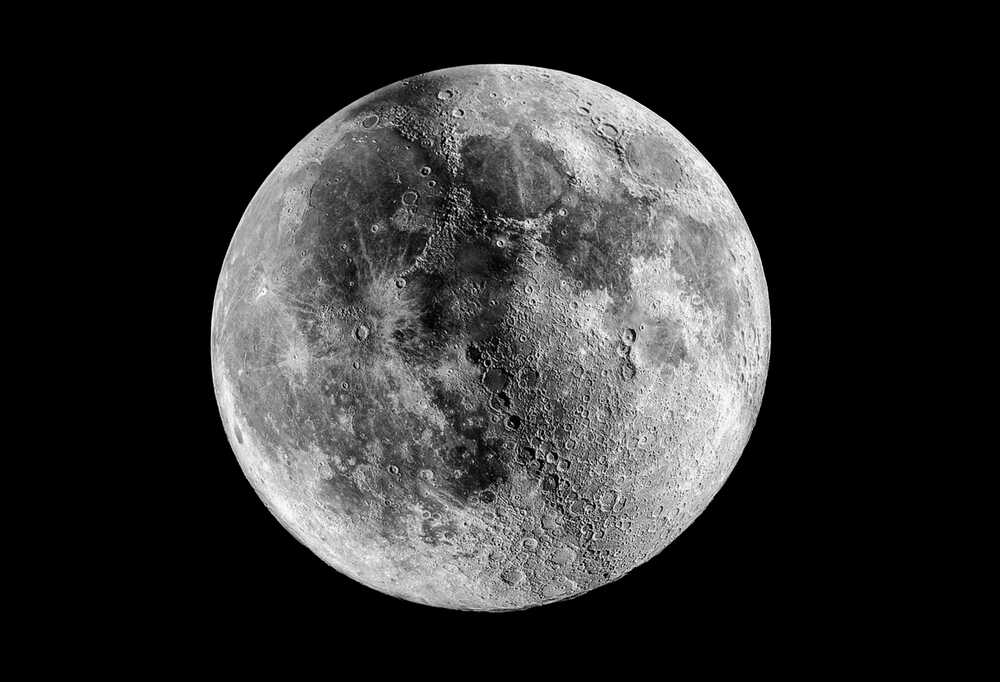
Despite centuries of observation, the definition of a “moon” remains elusive, leaving astronomers and the public in a state of perpetual debate.
Story Snapshot
- The International Astronomical Union (IAU) has not defined “moon,” causing confusion.
- Diverse characteristics of moons challenge simple categorization.
- The debate mirrors the controversy over Pluto’s planetary status.
- Implications for astronomy, education, and public understanding are significant.
Ongoing Ambiguity in Moon Definition
The International Astronomical Union (IAU), the authoritative body responsible for celestial nomenclature, has yet to provide an official definition for what constitutes a “moon.” This lack of clarity has led to ongoing debates among astronomers and planetary scientists. Despite the term’s widespread use, the absence of a formal definition introduces ambiguity, complicating scientific communication and education.
This ambiguity is compounded by the diverse characteristics of moons discovered over the centuries. From geologically active bodies like Io to atmospheric giants such as Titan, moons defy simple categorization. This complexity has made scientists cautious about proposing a singular definition, fearing it could repeat the controversy seen with Pluto’s reclassification as a dwarf planet in 2006.
The universe has quasi-moons, mini-moons, and moonlets, but no official definition of what counts as a moon. https://t.co/7TXx9rU8rq pic.twitter.com/4aJ5Jjp11r
— Yahoo News (@YahooNews) October 28, 2025
The Historical Context of “Moon”
The term “moon” originates from Earth’s satellite, but Galileo’s discovery of Jupiter’s moons in 1610 expanded its application. Early astronomers often viewed moons as planets orbiting other planets, a view that shifted with the discovery of more satellites. Over time, the lines between planets, moons, and asteroids blurred, further complicating attempts at definition.
Advances in planetary science have revealed moons to be complex worlds, some rivaling planets in size and activity. This has reinforced the need for clear definitions to aid in research, mission planning, and public understanding. Nonetheless, the IAU remains hesitant to formalize a definition, reflecting lessons learned from past controversies.
Implications and Expert Opinions
In the short term, the lack of a formal definition leads to confusion in scientific discourse and education. This uncertainty makes it difficult to classify newly discovered satellites and exomoons, impacting planetary science and mission planning. In the long term, the absence of a definition could spark future controversy if a formal definition is proposed, affecting public understanding and interest in astronomy.
Experts like Francis Nimmo from UC Santa Cruz emphasize the need for clarity to avoid miscommunication in scientific circles. The ongoing debate highlights broader questions about classification in planetary science, with some advocating for a stricter dynamical definition, while others propose geophysical criteria recognizing moons as complex worlds.
Sources:
No One Actually Knows What a Moon Is – The Atlantic