
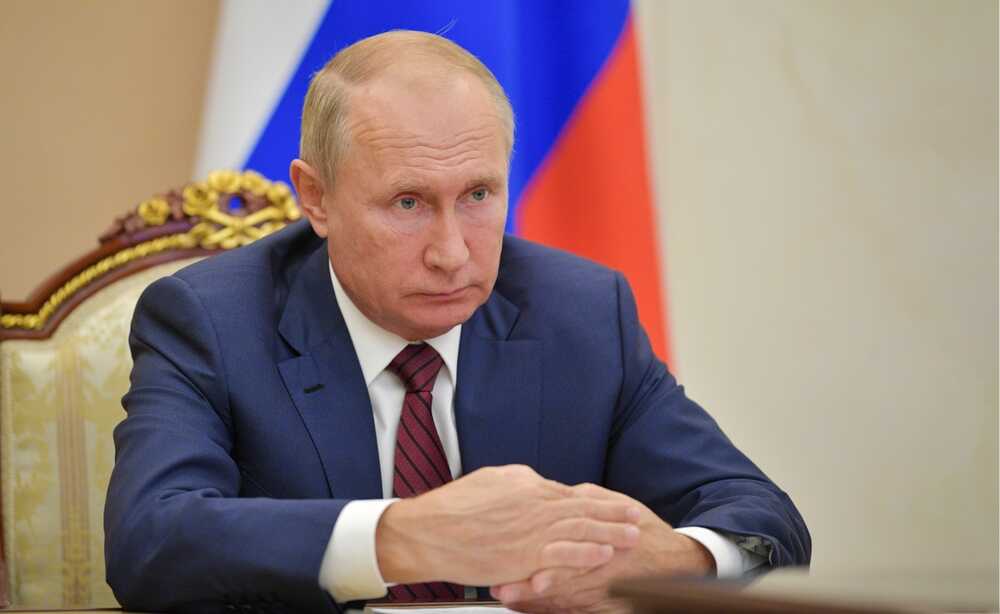
Russia’s economy is experiencing significant challenges, marked by inflation and projected budget deficits. Concurrently, authorities have initiated criminal charges against an exiled opposition leader and members of an anti-war committee. These developments occur as Western sanctions continue to impact key sectors of the Russian economy and discussions regarding political stability and succession plans emerge within the regime.
Story Highlights
- The Federal Security Service (FSB) has filed criminal charges against opposition leader Mikhail Khodorkovsky and 22 members of the Russian Anti-War Committee, alleging a plot for a violent coup.
- Russia’s inflation has reportedly exceeded 40% since February 2022, with the government anticipating substantial budget deficits.
- The absence of a publicly defined succession plan is contributing to uncertainty among political elites.
- Western sanctions are continuing to affect Russia’s oil companies and financial sector.
Kremlin’s Actions Regarding Opposition
In October 2025, the Federal Security Service announced criminal charges against Mikhail Khodorkovsky and the Russian Anti-War Committee, accusing them of plotting a violent coup. Khodorkovsky, who established the opposition group after relocating to Europe in 2022, has denied any intentions of violence. This action by the Kremlin is seen by some analysts as a tactic to divert attention from internal pressures.
The Telegraph: Putin fears a coup as his regime grows weaker
According to the British newspaper, a sense of vulnerability is spreading inside the Kremlin, and the fear of an internal coup has become an obsession for Putin.
The FSB has accused members of the Russian Antiwar… pic.twitter.com/ZrxyHw8zyv
— NEXTA (@nexta_tv) October 26, 2025
Economic Situation in Russia
Economic indicators in Russia suggest a challenging period. Inflation has reportedly surpassed 40% since the start of the Ukraine conflict, and the ruble has weakened against international currencies. The government has projected record budget deficits and indicated plans for tax increases and increased borrowing. Russian banks have allocated approximately $190 billion, or 23% of their corporate loans, to arms companies.
Western sanctions have specifically targeted Russia’s energy sector, affecting export revenues and economic activity. The combined impact of international isolation, military expenditures, and infrastructure damage has created economic strain. Russian officials have acknowledged the possibility of a recession and announced austerity measures.
Putin fearful as Russia teeters on the abyss. https://t.co/0FHb9zYL7b #SlavaUkraïni #Ukraine #PutinsWar
— Paul Stewart II (@PaulStewartII) October 27, 2025
Internal Political Dynamics and Succession
Political analysts have highlighted the lack of a clear successor to President Putin as a significant factor in maintaining regime stability. The Wagner mutiny in 2023 reportedly revealed internal divisions within Russia’s security apparatus. Former U.S. Ambassador John Herbst has suggested that the Kremlin’s actions reflect an effort to identify external threats to justify its policies. Elite cohesion is reportedly weakening amidst economic pressures and military setbacks.
The concentration of power in the presidency has led to institutional vulnerabilities, which become more apparent during periods of crisis. Unlike political systems with established succession mechanisms, Russia’s political structure is largely dependent on the authority of one individual. This situation is believed to contribute to heightened concerns within the regime regarding potential power transitions and its approach to opposition figures operating from outside the country.
Watch the report: Putin is scared of a Russian uprising | Cormac Smith
Sources:
Putin fears a coup as Russia shows its weakness
Putin fears another coup as Russia finally begins to buckle
Putin fears another coup – The Telegraph
Kremlin panic rises as Putin fears coup, faces sanctions, drone strikes and economic collapse